
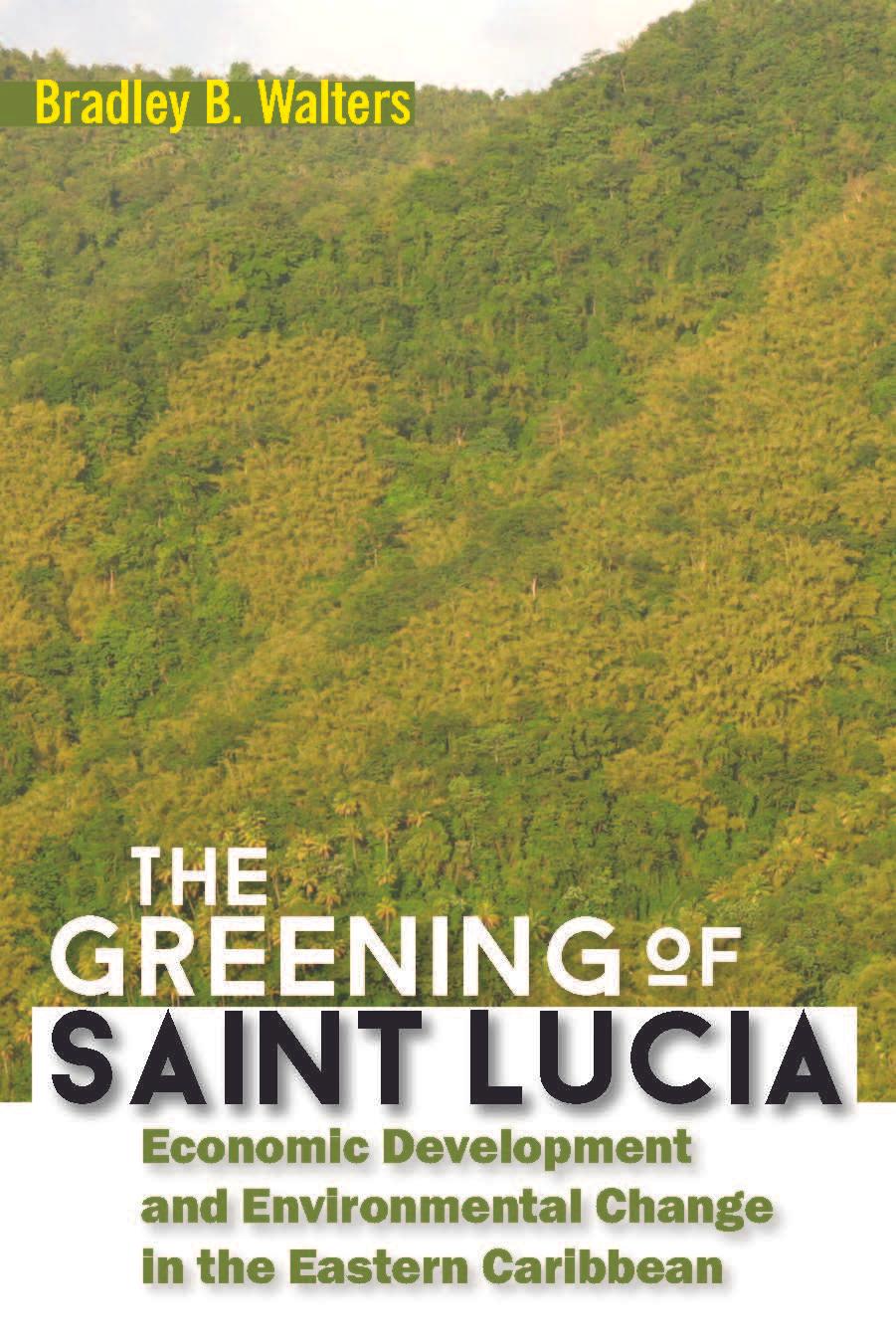
Saint Lucia’s rural landscape is more forested today than at any time in at least seventy-five years (probably much longer). This change is profoundly significant given widespread efforts to achieve sustainable development on small-island states like Saint Lucia. Yet, this seemingly good-news story runs contrary to most conventional narratives about the worsening state of the environment in the Caribbean and elsewhere. How did this remarkable change come about? What role did government, the private sector and other actors play in this? What are the links between this environmental change and wider changes in the Saint Lucian economy, politics and society? Is there more to this story than meets the eye? These questions are explored in this interdisciplinary study of changing human-environment relations since the Second World War.
The Greening of Saint Lucia is based on the results of a long-term, field-based research project that began in 2006. It entails the application of a novel research methodology for doing human-environment research (ACE: abductive causal eventism) that the author co-developed with a colleague from Rutgers University. This causal-historical methodology allows for the rigorous integration of findings derived from natural and social science sources, including ecological and air photo assessments, interviews, secondary data sources, and archival investigations.
Betala smidigt med kort, Klarna, Apple Pay eller Google Pay. Är du inte nöjd har du alltid 14 dagars ångerrätt. Läs mer i våra villkor. Har du några frågor, mejla oss på hello@memmo.org.
Memmo gör det enklare att plugga – var du än är i världen. Hos oss samlar du kursböcker och smarta studieverktyg på ett och samma ställe: sammanfattningar, quiz, poddar och flashcards. Och så Ted, din studiekompis som svarar på allt du undrar. Över 50 000 studenter pluggar redan här – byggt för att du ska lära dig snabbare och stressa mindre.