
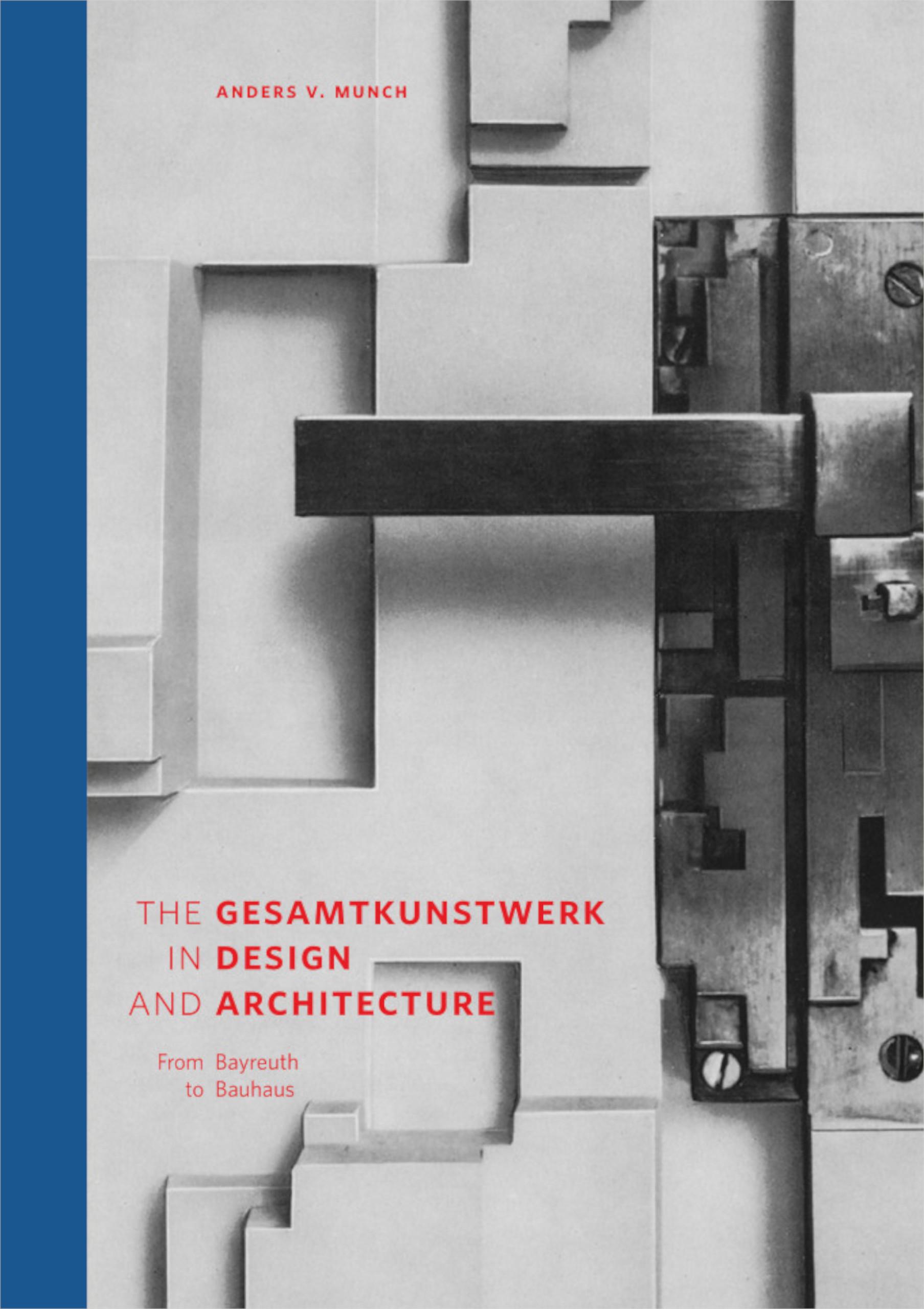
The history of modern design and architecture has seen many attempts to embrace and merge different art forms, and to bring art into the framing of everyday life and the organisation of modern society, in a process understood as total design or total architecture. These attempts were historically based on the romanticist idea of merging all art forms into a uniting and transgressing work of art, mostly associated with – but certainly not limited to – Richard Wagner’s theoretical writings and musical dramas.
This utopian dream of the Gesamtkunstwerk, or Total Work of Art, was intended both to bring unity to the people and to bring art into the everyday life of their homes, as well as into factories, cities and even modern media. As a result, the experiments ranged from music, poetry and drama to architecture, design, visual communication and city-planning. These ideas of merging art forms into more immersive and transgressive installations or design interventions to change everyday life are widespread today, but their complex and often problematic roots are mostly ignored. Design and architecture have delivered some of the broadest and most influential experiments with the Gesamtkunstwerk, from garden cities for workers and corporate identity design to the German AEG corporation.
Betala smidigt med kort, Klarna, Apple Pay eller Google Pay. Är du inte nöjd har du alltid 14 dagars ångerrätt. Läs mer i våra villkor. Har du några frågor, mejla oss på hello@memmo.org.
Memmo gör det enklare att plugga – var du än är i världen. Hos oss samlar du kursböcker och smarta studieverktyg på ett och samma ställe: sammanfattningar, quiz, poddar och flashcards. Och så Ted, din studiekompis som svarar på allt du undrar. Över 75 000 studenter pluggar redan här – byggt för att du ska lära dig snabbare och stressa mindre.
Du kanske också gillar
Köp boken0