
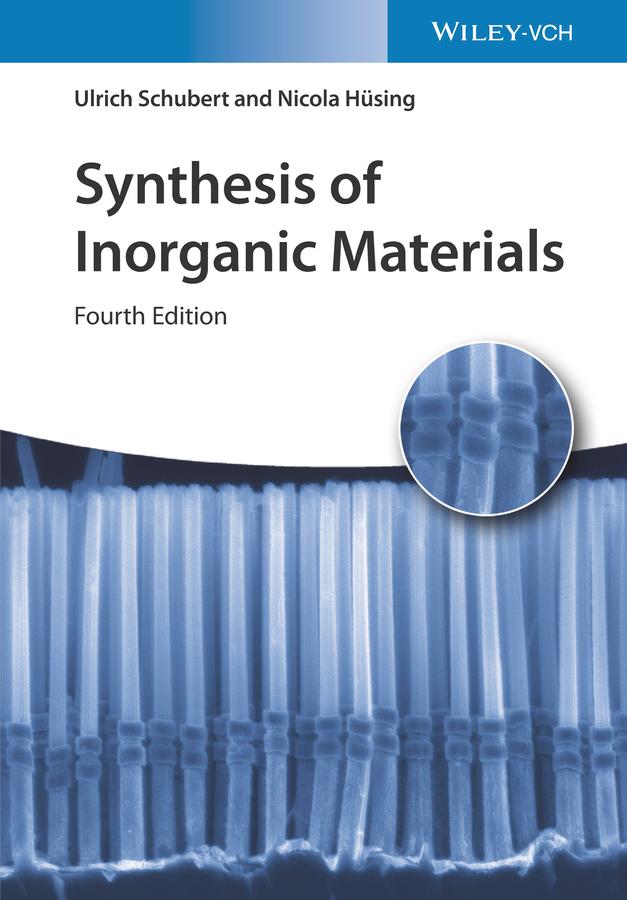
Introduces readers to the field of inorganic materials, while emphasizing synthesis and modification techniques
Written from the chemist's point of view, this newly updated and completely revised fourth edition of Synthesis of Inorganic Materials provides a thorough and pedagogical introduction to the exciting and fast developing field of inorganic materials and features all of the latest developments. New to this edition is a chapter on self-assembly and self-organization, as well as all-new content on: demixing of glasses, non-classical crystallization, precursor chemistry, citrate-gel and Pechini liquid mix methods, ice-templating, and materials with hierarchical porosity.
Synthesis of Inorganic Materials, 4th Edition features chapters covering: solid-state reactions; formation of solids from the gas phase; formation of solids from solutions and melts; preparation and modification of inorganic polymers; self-assembly and self-organization; templated materials; and nanostructured materials. There is also an extensive glossary to help bridge the gap between chemistry, solid state physics and materials science. In addition, a selection of books and review articles is provided at the end of each chapter as a starting point for more in-depth reading.
-Gives the students a thorough overview of the fundamentals and the wide variety of different inorganic materials with applications in research as well as in industry
-Every chapter is updated with new content
-Includes a completely new chapter covering self-assembly and self-organization
-Written by well-known and experienced authors who follow an intuitive and pedagogical approach
Synthesis of Inorganic Materials, 4th Edition is a valuable resource for advanced undergraduate students as well as masters and graduate students of inorganic chemistry and materials science.
Written from the chemist's point of view, this newly updated and completely revised fourth edition of Synthesis of Inorganic Materials provides a thorough and pedagogical introduction to the exciting and fast developing field of inorganic materials and features all of the latest developments. New to this edition is a chapter on self-assembly and self-organization, as well as all-new content on: demixing of glasses, non-classical crystallization, precursor chemistry, citrate-gel and Pechini liquid mix methods, ice-templating, and materials with hierarchical porosity.
Synthesis of Inorganic Materials, 4th Edition features chapters covering: solid-state reactions; formation of solids from the gas phase; formation of solids from solutions and melts; preparation and modification of inorganic polymers; self-assembly and self-organization; templated materials; and nanostructured materials. There is also an extensive glossary to help bridge the gap between chemistry, solid state physics and materials science. In addition, a selection of books and review articles is provided at the end of each chapter as a starting point for more in-depth reading.
-Gives the students a thorough overview of the fundamentals and the wide variety of different inorganic materials with applications in research as well as in industry
-Every chapter is updated with new content
-Includes a completely new chapter covering self-assembly and self-organization
-Written by well-known and experienced authors who follow an intuitive and pedagogical approach
Synthesis of Inorganic Materials, 4th Edition is a valuable resource for advanced undergraduate students as well as masters and graduate students of inorganic chemistry and materials science.
Betala smidigt med kort, Klarna, Apple Pay eller Google Pay. Är du inte nöjd har du alltid 14 dagars ångerrätt. Läs mer i våra villkor. Har du några frågor, mejla oss på hello@memmo.org.
Memmo gör det enklare att plugga – var du än är i världen. Hos oss samlar du kursböcker och smarta studieverktyg på ett och samma ställe: sammanfattningar, quiz, poddar och flashcards. Och så Ted, din studiekompis som svarar på allt du undrar. Över 50 000 studenter pluggar redan här – byggt för att du ska lära dig snabbare och stressa mindre.