
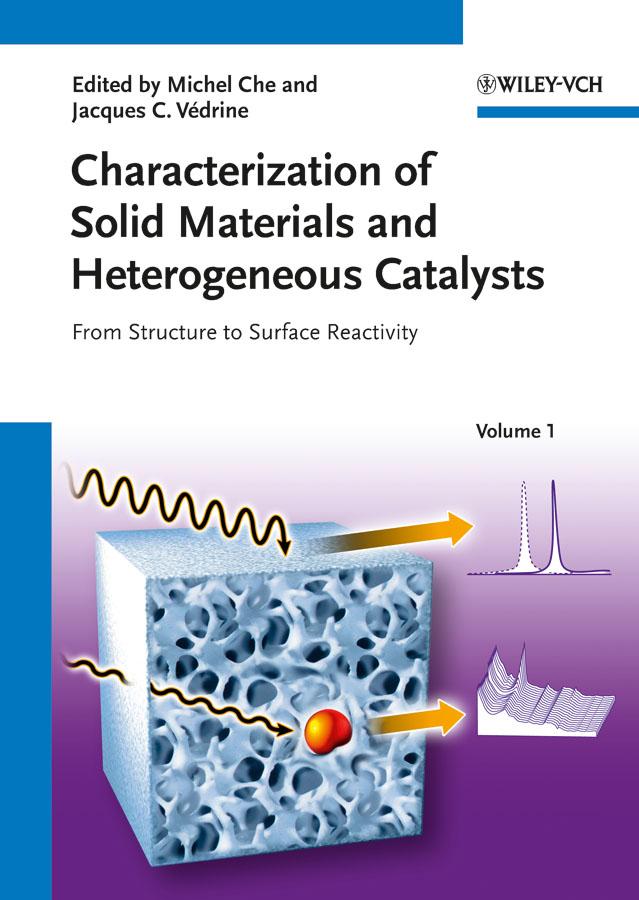
This two-volume book provides an overview of physical techniques used to characterize the structure of solid materials, on the one hand,
and to investigate the reactivity of their surface, on the other. Therefore this book is a must-have for anyone working in fields related to surface
reactivity. Among the latter, and because of its most important industrial impact, catalysis has been used as the directing thread of the book.
After the preface and a general introduction to physical techniques by M. Che and J.C. Vedrine, two overviews on physical techniques are
presented by G. Ertl and Sir J.M. Thomas for investigating model catalysts and porous catalysts, respectively.
The book is organized into four parts: Molecular/Local Spectroscopies, Macroscopic Techniques, Characterization of the Fluid Phase (Gas and/
or Liquid), and Advanced Characterization. Each chapter focuses upon the following important themes: overview of the technique, most important parameters to interpret the experimental data, practical details, applications of the technique, particularly during chemical processes,
with its advantages and disadvantages, conclusions.
and to investigate the reactivity of their surface, on the other. Therefore this book is a must-have for anyone working in fields related to surface
reactivity. Among the latter, and because of its most important industrial impact, catalysis has been used as the directing thread of the book.
After the preface and a general introduction to physical techniques by M. Che and J.C. Vedrine, two overviews on physical techniques are
presented by G. Ertl and Sir J.M. Thomas for investigating model catalysts and porous catalysts, respectively.
The book is organized into four parts: Molecular/Local Spectroscopies, Macroscopic Techniques, Characterization of the Fluid Phase (Gas and/
or Liquid), and Advanced Characterization. Each chapter focuses upon the following important themes: overview of the technique, most important parameters to interpret the experimental data, practical details, applications of the technique, particularly during chemical processes,
with its advantages and disadvantages, conclusions.
Betala smidigt med kort, Klarna, Apple Pay eller Google Pay. Är du inte nöjd har du alltid 14 dagars ångerrätt. Läs mer i våra villkor. Har du några frågor, mejla oss på hello@memmo.org.
Memmo gör det enklare att plugga – var du än är i världen. Hos oss samlar du kursböcker och smarta studieverktyg på ett och samma ställe: sammanfattningar, quiz, poddar och flashcards. Och så Ted, din studiekompis som svarar på allt du undrar. Över 50 000 studenter pluggar redan här – byggt för att du ska lära dig snabbare och stressa mindre.