
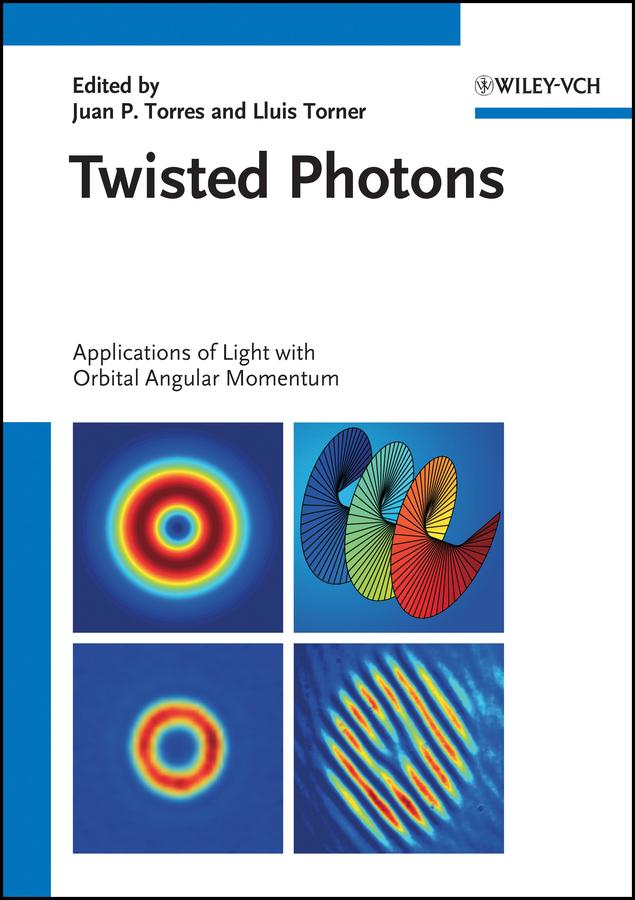
This book deals with applications in several areas of science and technology that make use of light which carries orbital angular momentum. In most practical scenarios, the angular momentum can be decomposed into two independent contributions: the spin angular momentum and the orbital angular momentum. The orbital contribution affords a fundamentally new degree of freedom, with fascinating and wide-spread applications. Unlike spin angular momentum, which is associated with the polarization of light, the orbital angular momentum arises as a consequence of the spatial distribution of the intensity and phase of an optical field, even down to the single photon limit. Researchers have begun to appreciate its implications for our understanding of the ways in which light and matter can interact, and its practical potential in different areas of science and technology.
Betala smidigt med kort, Klarna, Apple Pay eller Google Pay. Är du inte nöjd har du alltid 14 dagars ångerrätt. Läs mer i våra villkor. Har du några frågor, mejla oss på hello@memmo.org.
Memmo gör det enklare att plugga – var du än är i världen. Hos oss samlar du kursböcker och smarta studieverktyg på ett och samma ställe: sammanfattningar, quiz, poddar och flashcards. Och så Ted, din studiekompis som svarar på allt du undrar. Över 50 000 studenter pluggar redan här – byggt för att du ska lära dig snabbare och stressa mindre.