
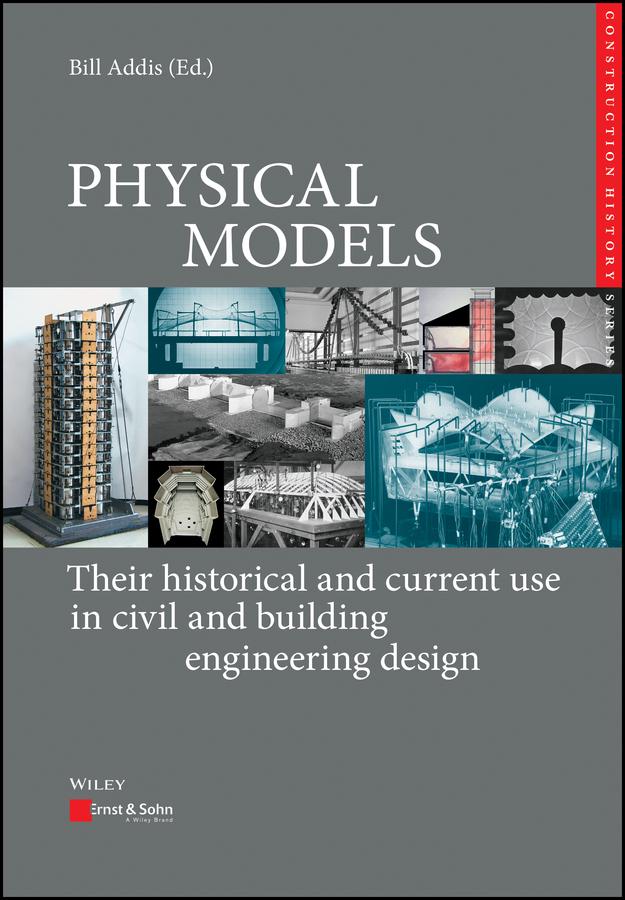
Physical models have been, and continue to be used by engineers when faced with unprecedented challenges, when engineering science has been non-existent or inadequate, and in any other situation when the engineer has needed to raise their confidence in a design proposal to a sufficient level to begin construction. For this reason, models have mostly been used by designers and constructors of highly innovative projects, when previous experience has not been available.
The book covers the history of using of physical models in the design and development of civil and building engineering projects including bridges in the mid-18th century, William Fairbairn?s Britannia bridge in the 1840s, the masonry Aswan Dam in the 1890s, concrete dams in the 1920s, thin concrete shell roofs and the dynamic behaviour of tall buildings in earthquakes from the 1930s, tidal flow in estuaries and the acoustics of concert halls from the 1950s, and cable-net and membrane structures in the 1960s.
Traditionally, progress in engineering has been attributed to the creation and use of engineering science, the understanding materials properties and the development of new construction methods. The book argues that the use of reduced scale models have played an equally important part in the development of civil and building engineering. However, like the history of engineering design itself, this crucial contribution has not been widely reported or celebrated.
The book concludes with reviews of the current use of physical models alongside computer models, for example, in boundary layer wind tunnels, room acoustics, seismic engineering, hydrology, and air flow in buildings.
The book covers the history of using of physical models in the design and development of civil and building engineering projects including bridges in the mid-18th century, William Fairbairn?s Britannia bridge in the 1840s, the masonry Aswan Dam in the 1890s, concrete dams in the 1920s, thin concrete shell roofs and the dynamic behaviour of tall buildings in earthquakes from the 1930s, tidal flow in estuaries and the acoustics of concert halls from the 1950s, and cable-net and membrane structures in the 1960s.
Traditionally, progress in engineering has been attributed to the creation and use of engineering science, the understanding materials properties and the development of new construction methods. The book argues that the use of reduced scale models have played an equally important part in the development of civil and building engineering. However, like the history of engineering design itself, this crucial contribution has not been widely reported or celebrated.
The book concludes with reviews of the current use of physical models alongside computer models, for example, in boundary layer wind tunnels, room acoustics, seismic engineering, hydrology, and air flow in buildings.
Sidor: 1114
Kategori: Ingenjörsvetenskap
e-ISBN: 9783433609637
Fraktvikt: 1.2 kg
Skickas inom: 1-2 dagar
Betala smidigt med kort, Klarna, Apple Pay eller Google Pay. Är du inte nöjd har du alltid 14 dagars ångerrätt. Läs mer i våra villkor. Har du några frågor, mejla oss på hello@memmo.org.
Memmo gör det enklare att plugga – var du än är i världen. Hos oss samlar du kursböcker och smarta studieverktyg på ett och samma ställe: sammanfattningar, quiz, poddar och flashcards. Och så Ted, din studiekompis som svarar på allt du undrar. Över 50 000 studenter pluggar redan här – byggt för att du ska lära dig snabbare och stressa mindre.