
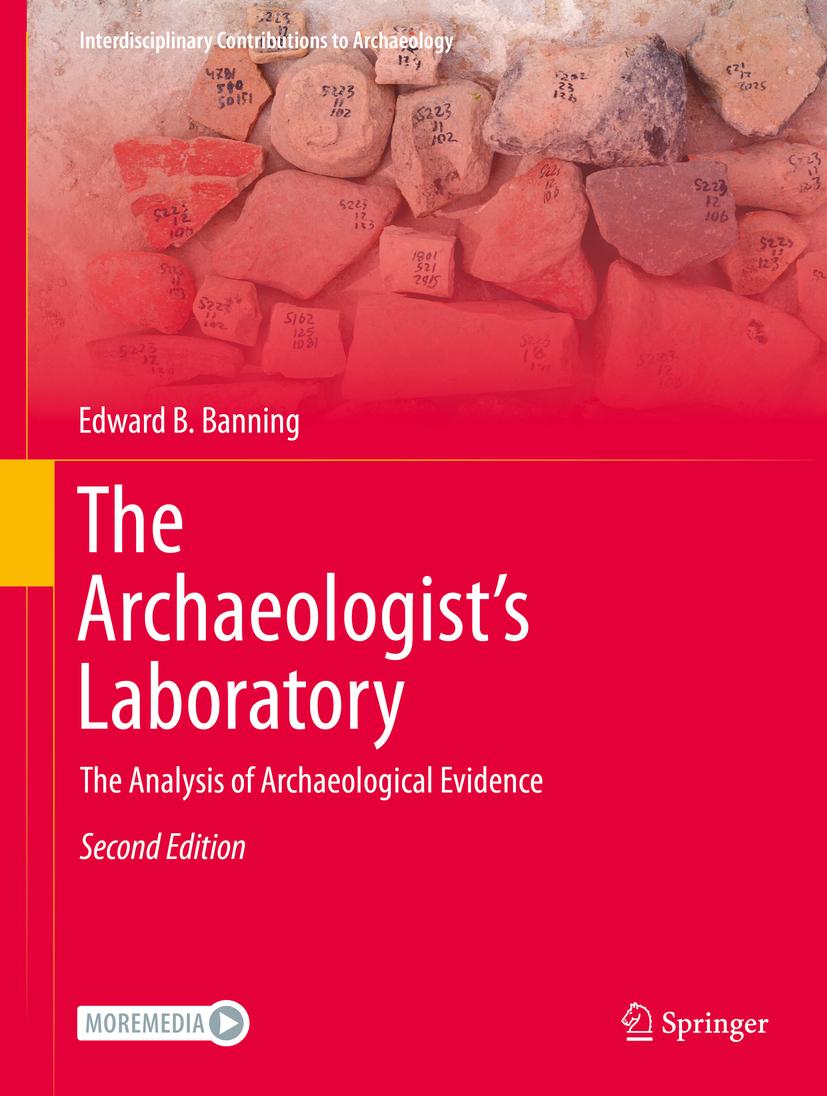
This second edition of the classic textbook, The Archaeologist’s Laboratory, is a substantially revised work that offers updated information on the archaeological work that follows fieldwork, such as the processing and analysis of artifacts and other evidence. An overarching theme of this edition is the quality and validity of archaeological arguments and the data we use to support them. The book introduces many of the laboratory activities that archaeologists carry out and the ways we can present research results, including graphs and artifact illustrations.
Part I introduces general topics concerning measurement error, data quality, research design, typology, probability and databases. It also includes data presentation, basic artifact conservation, and laboratory safety. Part II offers brief surveys of the analysis of lithics and ground stone, pottery, metal artifacts, bone and shell artifacts, animal and plant remains, and sediments, as well as dating by stratigraphy, seriation and chronometric methods. It concludes with a chapter on archaeological illustration and publication.
A new feature of the book is illustration of concepts through case studies from around the world and from the Palaeolithic to historical archaeology.The text is appropriate for senior undergraduate students and will also serve as a useful reference for graduate students and professional archaeologists.
Betala smidigt med kort, Klarna, Apple Pay eller Google Pay. Är du inte nöjd har du alltid 14 dagars ångerrätt. Läs mer i våra villkor. Har du några frågor, mejla oss på hello@memmo.org.
Memmo gör det enklare att plugga – var du än är i världen. Hos oss samlar du kursböcker och smarta studieverktyg på ett och samma ställe: sammanfattningar, quiz, poddar och flashcards. Och så Ted, din studiekompis som svarar på allt du undrar. Över 50 000 studenter pluggar redan här – byggt för att du ska lära dig snabbare och stressa mindre.