
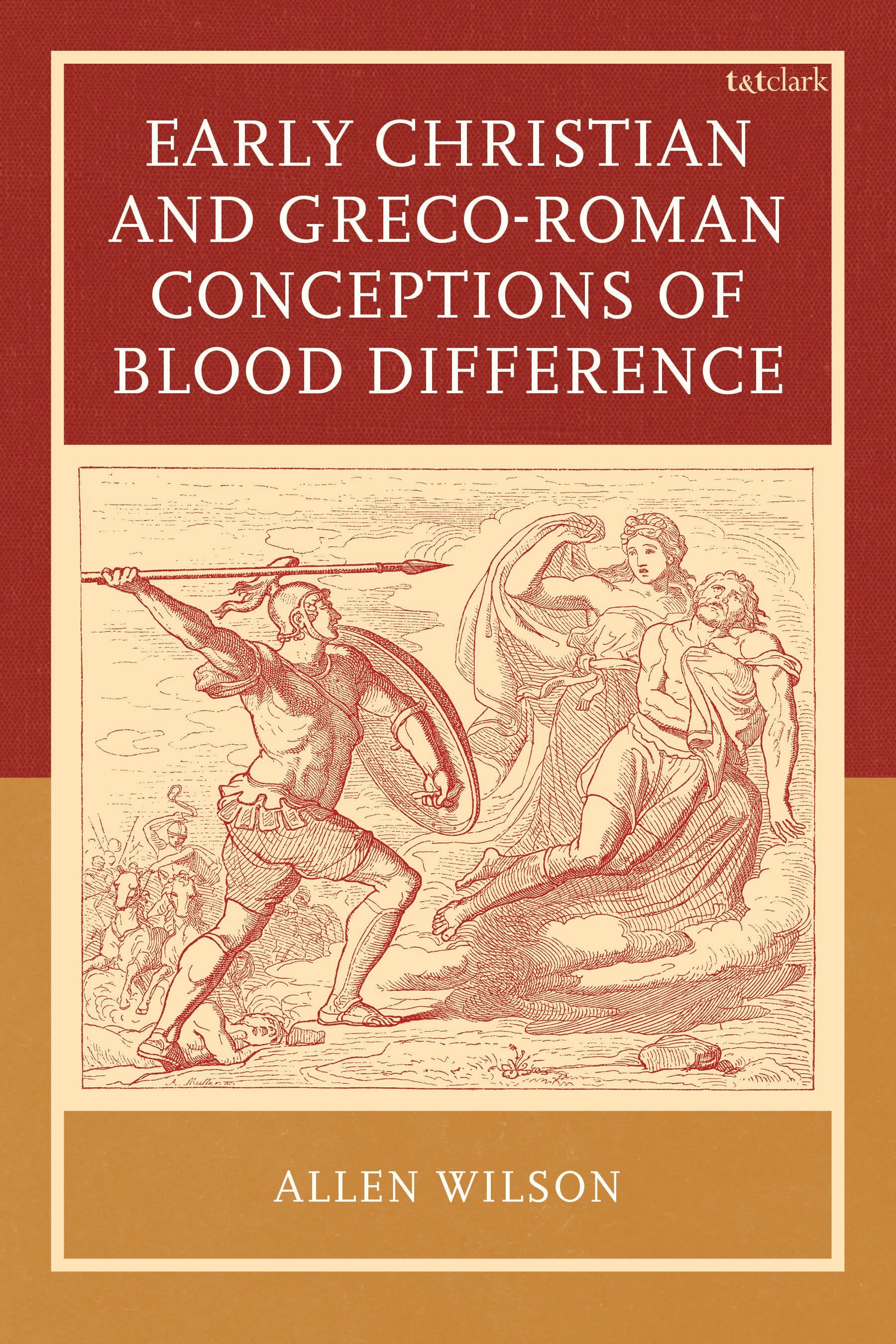
This book interrogates the historical contingency of the common idiom “blood is thicker than water,” asking what the role of Christianity is in the development of blood mythology lurking in everyday speech.
The author examines the concept of blood within Greco-Roman and early Christian contexts, investigating blood's significance beyond a mere biological substance. The analysis traces the evolution of blood's symbolic meaning in order to understand how it relates to conceptions of kinship, purity, and the divine. In the early chapters, the book surveys conceptions of blood and consanguinity in Greco-Roman thought, ranging from the mythologies of Homer and the histories of Livy to the medical descriptions of Galen and Soranus to the ritual descriptions of Jubilees and Ephrem the Syrian. By providing a general survey of Greco-Roman understandings of blood, the book shows, in the remaining chapters, the way specific early Christians drew upon Greco-Roman notions of blood. By outlining how the singularity of the blood of Christ produces different understandings of blood in the writings of Irenaeus, Tertullian, and Origen, the author argues that Christians did not invent blood differentiation but they do intensify the symbolic power of blood to make a difference.
The author examines the concept of blood within Greco-Roman and early Christian contexts, investigating blood's significance beyond a mere biological substance. The analysis traces the evolution of blood's symbolic meaning in order to understand how it relates to conceptions of kinship, purity, and the divine. In the early chapters, the book surveys conceptions of blood and consanguinity in Greco-Roman thought, ranging from the mythologies of Homer and the histories of Livy to the medical descriptions of Galen and Soranus to the ritual descriptions of Jubilees and Ephrem the Syrian. By providing a general survey of Greco-Roman understandings of blood, the book shows, in the remaining chapters, the way specific early Christians drew upon Greco-Roman notions of blood. By outlining how the singularity of the blood of Christ produces different understandings of blood in the writings of Irenaeus, Tertullian, and Origen, the author argues that Christians did not invent blood differentiation but they do intensify the symbolic power of blood to make a difference.
Betala smidigt med kort, Klarna, Apple Pay eller Google Pay. Är du inte nöjd har du alltid 14 dagars ångerrätt. Läs mer i våra villkor. Har du några frågor, mejla oss på hello@memmo.org.
Memmo gör det enklare att plugga – var du än är i världen. Hos oss samlar du kursböcker och smarta studieverktyg på ett och samma ställe: sammanfattningar, quiz, poddar och flashcards. Och så Ted, din studiekompis som svarar på allt du undrar. Över 50 000 studenter pluggar redan här – byggt för att du ska lära dig snabbare och stressa mindre.