
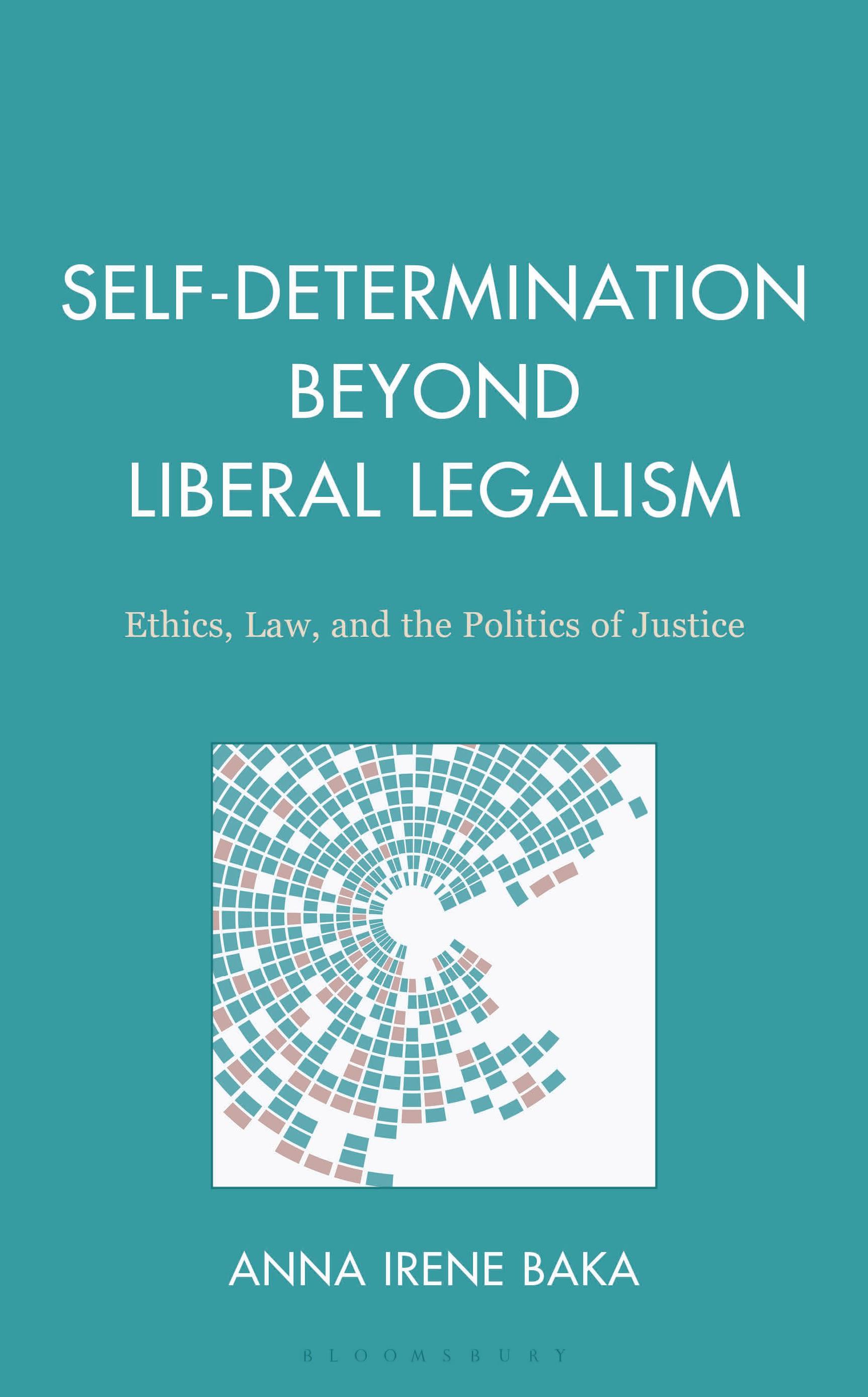
Anna Irene Baka challenges dominant liberal and legalist paradigms in international law by reinterpreting the right of peoples to self-determination through the lenses of Aristotelian philosophy, phenomenology, social psychology, and corrective justice.
Focusing on high-profile postcolonial conflicts in Kosovo, Cyprus, and Palestine, Baka argues that abstract international and constitutional legal doctrines on self-determination fail to account for the lived realities of collective deprivation and historical trauma. Baka offers a compelling critique not only of mainstream theories of self-determination, but also of the shortcomings of critical movements such as Critical Legal Studies. In their place, she advances a renewed ethical and conceptual framework for international law-one grounded in responsibility, rational judgment, and moral engagement. This interdisciplinary method brings fresh insight into questions of collective identity, legitimacy, and the moral accountability of law itself. Ultimately suggesting that meaningful responses to historical injustice require international jurists to cultivate intellectual independence and legal virtue, this is a timely and essential contribution for scholars and practitioners of international law, human rights, legal philosophy, and global justice.
Focusing on high-profile postcolonial conflicts in Kosovo, Cyprus, and Palestine, Baka argues that abstract international and constitutional legal doctrines on self-determination fail to account for the lived realities of collective deprivation and historical trauma. Baka offers a compelling critique not only of mainstream theories of self-determination, but also of the shortcomings of critical movements such as Critical Legal Studies. In their place, she advances a renewed ethical and conceptual framework for international law-one grounded in responsibility, rational judgment, and moral engagement. This interdisciplinary method brings fresh insight into questions of collective identity, legitimacy, and the moral accountability of law itself. Ultimately suggesting that meaningful responses to historical injustice require international jurists to cultivate intellectual independence and legal virtue, this is a timely and essential contribution for scholars and practitioners of international law, human rights, legal philosophy, and global justice.
Betala smidigt med kort, Klarna, Apple Pay eller Google Pay. Är du inte nöjd har du alltid 14 dagars ångerrätt. Läs mer i våra villkor. Har du några frågor, mejla oss på hello@memmo.org.
Memmo gör det enklare att plugga – var du än är i världen. Hos oss samlar du kursböcker och smarta studieverktyg på ett och samma ställe: sammanfattningar, quiz, poddar och flashcards. Och så Ted, din studiekompis som svarar på allt du undrar. Över 50 000 studenter pluggar redan här – byggt för att du ska lära dig snabbare och stressa mindre.