
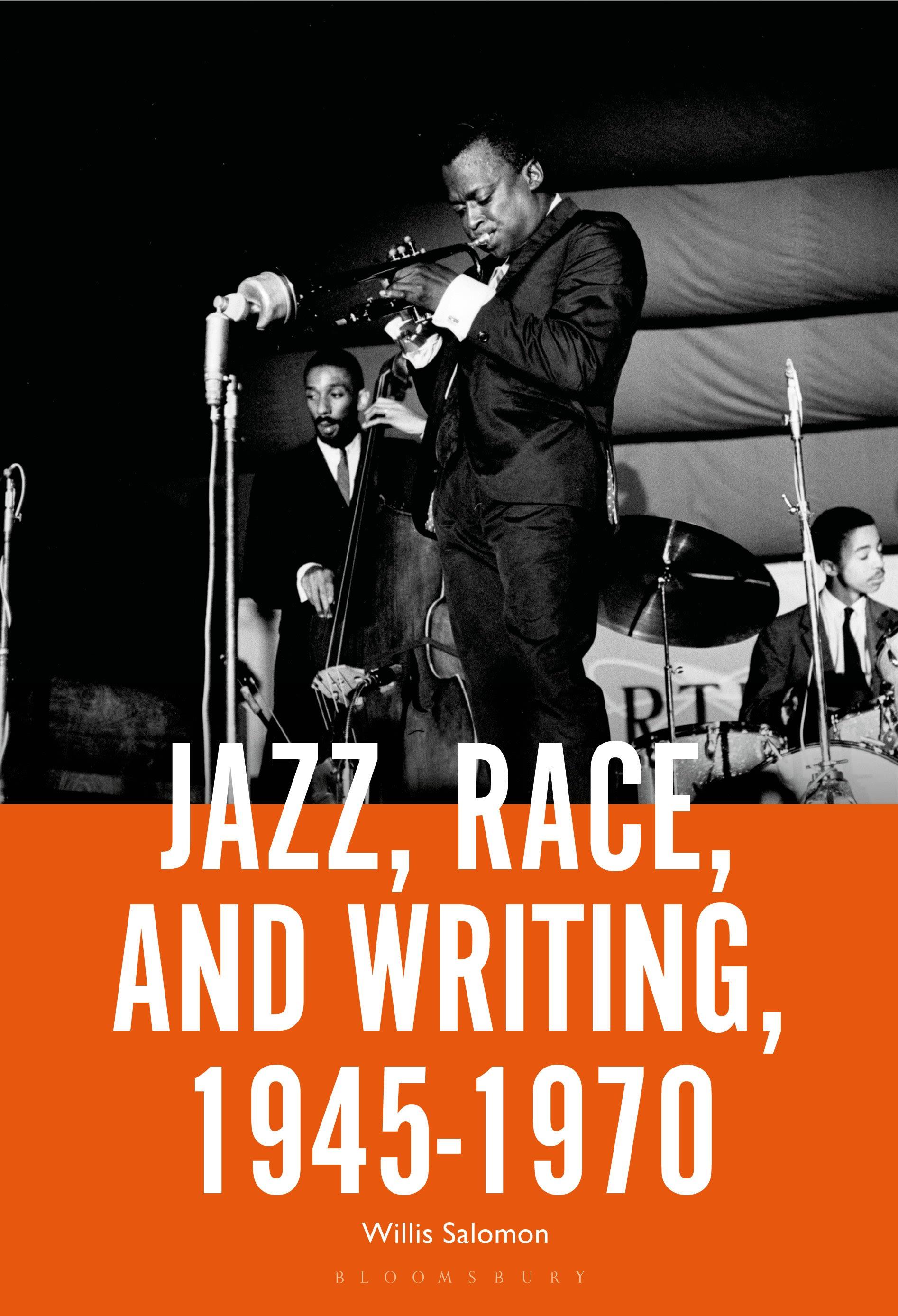
This book widens the context of our understanding of the “modern” American jazz of the 1940s, 50s, and 60s by looking at writing about it by both musicians and commentators.
Jazz, Race, and Writing, 1945-1970 addresses jazz at its modernist apotheosis, from the 1940s to the 1970s, both the music and its cultural resonances. The author begins by examining autobiographical texts by two highly influential musicians: Miles Davis's Miles: The Autobiography (1990) and Charles Mingus's Beneath the Underdog (1971). The book then moves to discussions of the music by the late poet and cultural critic Amiri Baraka, the contemporary cultural critic and poet Fred Moten, and the late critic and public intellectual Stanley Crouch.
The Davis and Mingus texts, in their highly distinctive autobiographical voices, highlight the volatile creative energy of jazz improvisation during this period and the correspondingly impeding cultural conditions that surrounded these musical advances. In talking about their lives, their music, and the cultural conditions surrounding both, Davis and Mingus, in very different ways, reveal how the very texture of jazz, as well as its efficient mode of production, ensemble improvisation, reflects and refracts these very American social conditions, producing the arresting achievements of mid-century modern jazz despite social odds and financial impediments.
Baraka, Moten, and Crouch, also in very different ways, reinforce the character of these musicians' voices and fill in some of the theoretical and social aspects of the music's conditions of production, as these writers critically engage some of the intersections of musical, political, and ethical life enacted in the autobiographies, including issues of improvisational practice, race, economic exploitation, gendered performance, and political agency.
Jazz, Race, and Writing, 1945-1970 addresses jazz at its modernist apotheosis, from the 1940s to the 1970s, both the music and its cultural resonances. The author begins by examining autobiographical texts by two highly influential musicians: Miles Davis's Miles: The Autobiography (1990) and Charles Mingus's Beneath the Underdog (1971). The book then moves to discussions of the music by the late poet and cultural critic Amiri Baraka, the contemporary cultural critic and poet Fred Moten, and the late critic and public intellectual Stanley Crouch.
The Davis and Mingus texts, in their highly distinctive autobiographical voices, highlight the volatile creative energy of jazz improvisation during this period and the correspondingly impeding cultural conditions that surrounded these musical advances. In talking about their lives, their music, and the cultural conditions surrounding both, Davis and Mingus, in very different ways, reveal how the very texture of jazz, as well as its efficient mode of production, ensemble improvisation, reflects and refracts these very American social conditions, producing the arresting achievements of mid-century modern jazz despite social odds and financial impediments.
Baraka, Moten, and Crouch, also in very different ways, reinforce the character of these musicians' voices and fill in some of the theoretical and social aspects of the music's conditions of production, as these writers critically engage some of the intersections of musical, political, and ethical life enacted in the autobiographies, including issues of improvisational practice, race, economic exploitation, gendered performance, and political agency.
Betala smidigt med kort, Klarna, Apple Pay eller Google Pay. Är du inte nöjd har du alltid 14 dagars ångerrätt. Läs mer i våra villkor. Har du några frågor, mejla oss på hello@memmo.org.
Memmo gör det enklare att plugga – var du än är i världen. Hos oss samlar du kursböcker och smarta studieverktyg på ett och samma ställe: sammanfattningar, quiz, poddar och flashcards. Och så Ted, din studiekompis som svarar på allt du undrar. Över 50 000 studenter pluggar redan här – byggt för att du ska lära dig snabbare och stressa mindre.