
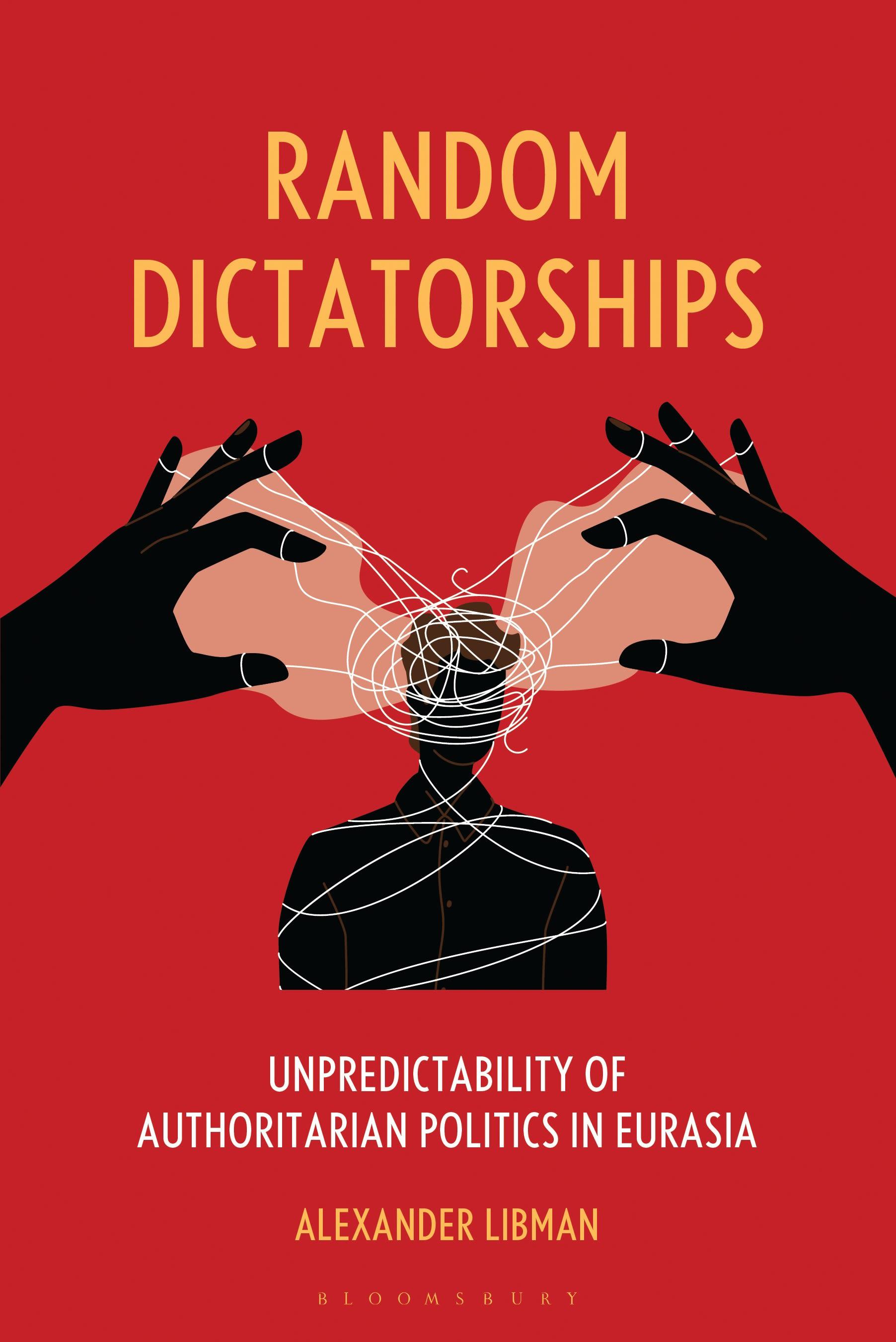
Post-Soviet Eurasia continues to puzzle observers, defying expectations of experts. Most Russia watchers failed to predict the full-scale invasion against Ukraine in 2022, and this failure triggered intensive debates and multiple rounds of self-reflection. Random Dictatorships: Unpredictability of Authoritarian Politics in Eurasia argues that the supposedly unexpected turns of Eurasian politics are a manifestation of a deeper phenomenon – researchers' limited ability to predict the policymaking in authoritarian regimes in general. Alexander Libman identifies three main factors making authoritarian politics difficult to predict: mistakes of authoritarian leaders, untransparent competition of elite factions, and omnipresent secrecy cultivated by autocrats. While scholars oscillate between two visions of authoritarian regimes – their presentation as highly rational and capable to adapt and as highly inefficient and doomed to poor performance – Libman suggests that many autocracies alternate between these two extremes in a difficult-to-predict fashion. The book explores three important cases from the post-Soviet Eurasia, when autocracies of this region defied expectations of external observers – Russia's annexation of Crimea in 2014, the Bloody January in Kazakhstan in 2022 and Russia's invasion of Ukraine in 2022. It discusses the reasons for the apparent unpredictability of autocracies in each of these cases, and identifies implications for how authoritarian regimes should be studied.
Betala smidigt med kort, Klarna, Apple Pay eller Google Pay. Är du inte nöjd har du alltid 14 dagars ångerrätt. Läs mer i våra villkor. Har du några frågor, mejla oss på hello@memmo.org.
Memmo gör det enklare att plugga – var du än är i världen. Hos oss samlar du kursböcker och smarta studieverktyg på ett och samma ställe: sammanfattningar, quiz, poddar och flashcards. Och så Ted, din studiekompis som svarar på allt du undrar. Över 50 000 studenter pluggar redan här – byggt för att du ska lära dig snabbare och stressa mindre.