
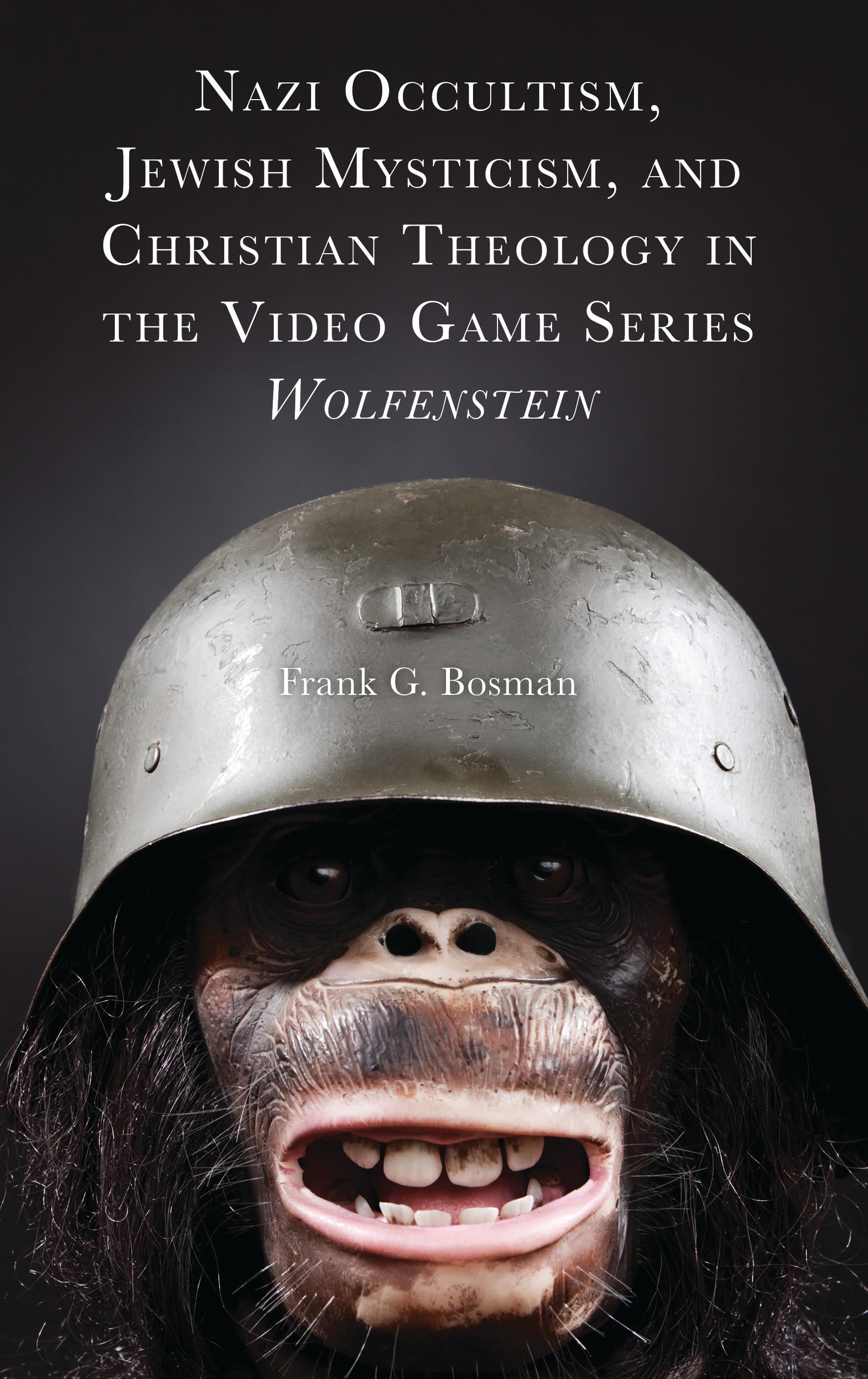
The critically acclaimed if controversial game series Wolfenstein is famous for its inclusion of historical objects and figures from the realm of Nazi Occultism, including the Swastika, the Spear of Destiny, the Thule Medallion, Heinrich Himmler, Helena Blavatsky, and Karl Wiligut. The series was criticized for its alleged Nazi glorification and for completely neglecting primary victims of the Second World War, the Jewish people. But since its reboot with Wolfenstein: New Order in 2014, the series has a new, distinct filo semitic flavor, including a number of explicit Jewish characters, a playable concentration camp level, and several theological discussions on God and the existence of evil. In Nazi Occultism, Jewish Mysticism, and Christian Theology in the Video Game Series Wolfenstein, game theologian Frank G. Bosman critically examines both the Nazi occultist and Judaist inspirations and aspirations of the game series, putting forth the question if the series has not invertedly ventured into implicit antisemitic territory by including the Da’at Yichud, a fictional, ancient, and distinct Jewish organization harboring the great minds of history.
Betala smidigt med kort, Klarna, Apple Pay eller Google Pay. Är du inte nöjd har du alltid 14 dagars ångerrätt. Läs mer i våra villkor. Har du några frågor, mejla oss på hello@memmo.org.
Memmo gör det enklare att plugga – var du än är i världen. Hos oss samlar du kursböcker och smarta studieverktyg på ett och samma ställe: sammanfattningar, quiz, poddar och flashcards. Och så Ted, din studiekompis som svarar på allt du undrar. Över 50 000 studenter pluggar redan här – byggt för att du ska lära dig snabbare och stressa mindre.