
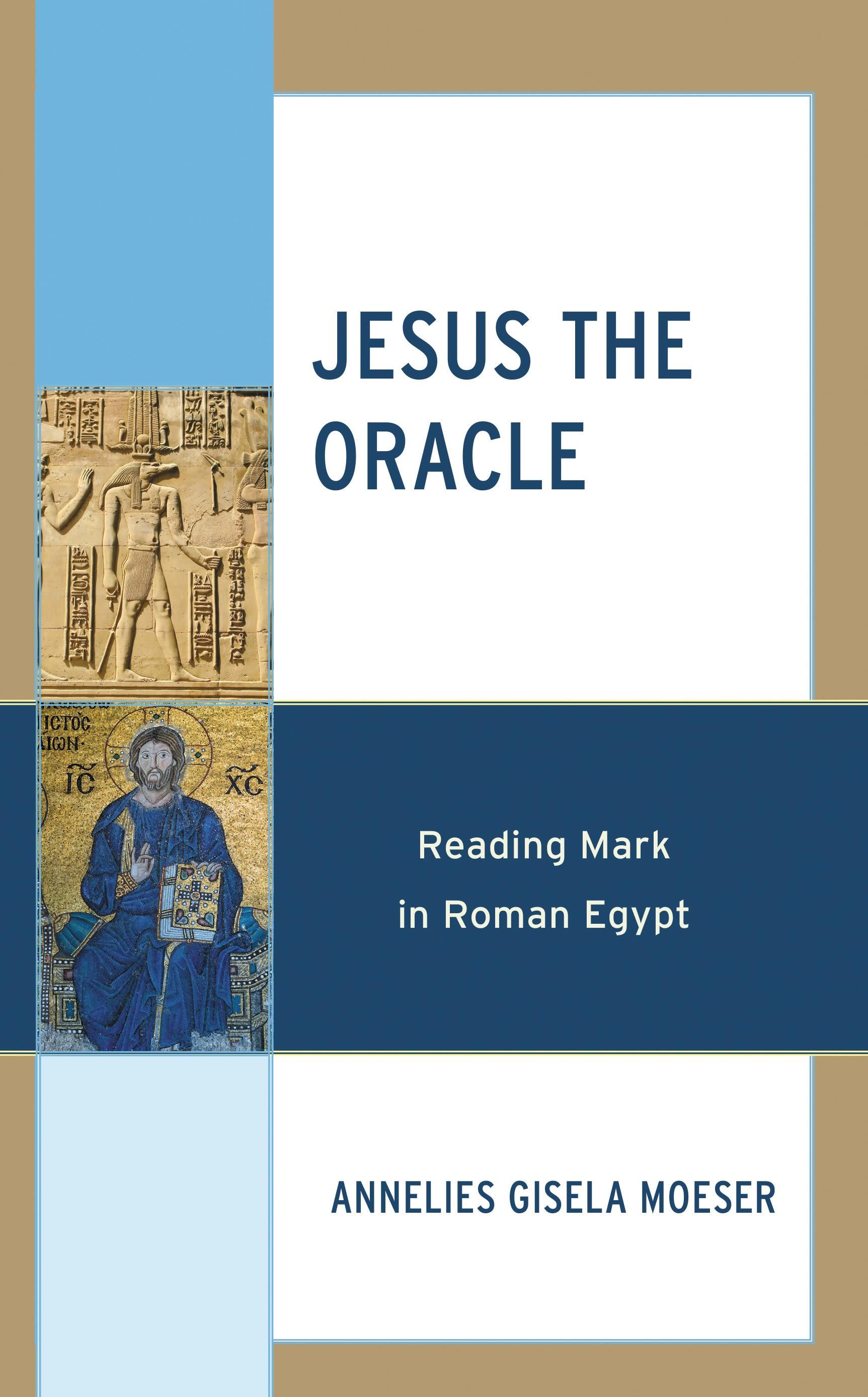
In Jesus the Oracle, Annelies Gisela Moeser reads Jesus’s journey from Capernaum to Jerusalem in Mark’s gospel through the cultural context of second/third century Roman Egypt. Moeser provides a rich description of the Egyptian practice of oracles, including processional oracles, to build a model with which to read Mark. This prism brings attention to descriptions of Jesus’s supernatural knowledge and wisdom, such as in the story of the Rich Man (Mk 10:17–22). In contrast to Clement of Alexandria’s homily on the Rich Man which counseled detachment from possessions, this reading from a non-elite perspective considers Jesus’s advice to be more radical. This model of processional oracles highlights the importance of access to the divine, including by non-elite crowds, by persons with disabilities (e.g., in comparing Bartimaeus [Mk 10:46–52] with Gemellus Horion of Karanis [a town in Egypt]), and by children. Traditional Egyptian religion upheld the existing sociopolitical regime. However, Jesus’s procession and proclamation of the basileia (reign) of G*d subverts the Roman world order and that of their local, elite allies.
Betala smidigt med kort, Klarna, Apple Pay eller Google Pay. Är du inte nöjd har du alltid 14 dagars ångerrätt. Läs mer i våra villkor. Har du några frågor, mejla oss på hello@memmo.org.
Memmo gör det enklare att plugga – var du än är i världen. Hos oss samlar du kursböcker och smarta studieverktyg på ett och samma ställe: sammanfattningar, quiz, poddar och flashcards. Och så Ted, din studiekompis som svarar på allt du undrar. Över 50 000 studenter pluggar redan här – byggt för att du ska lära dig snabbare och stressa mindre.