
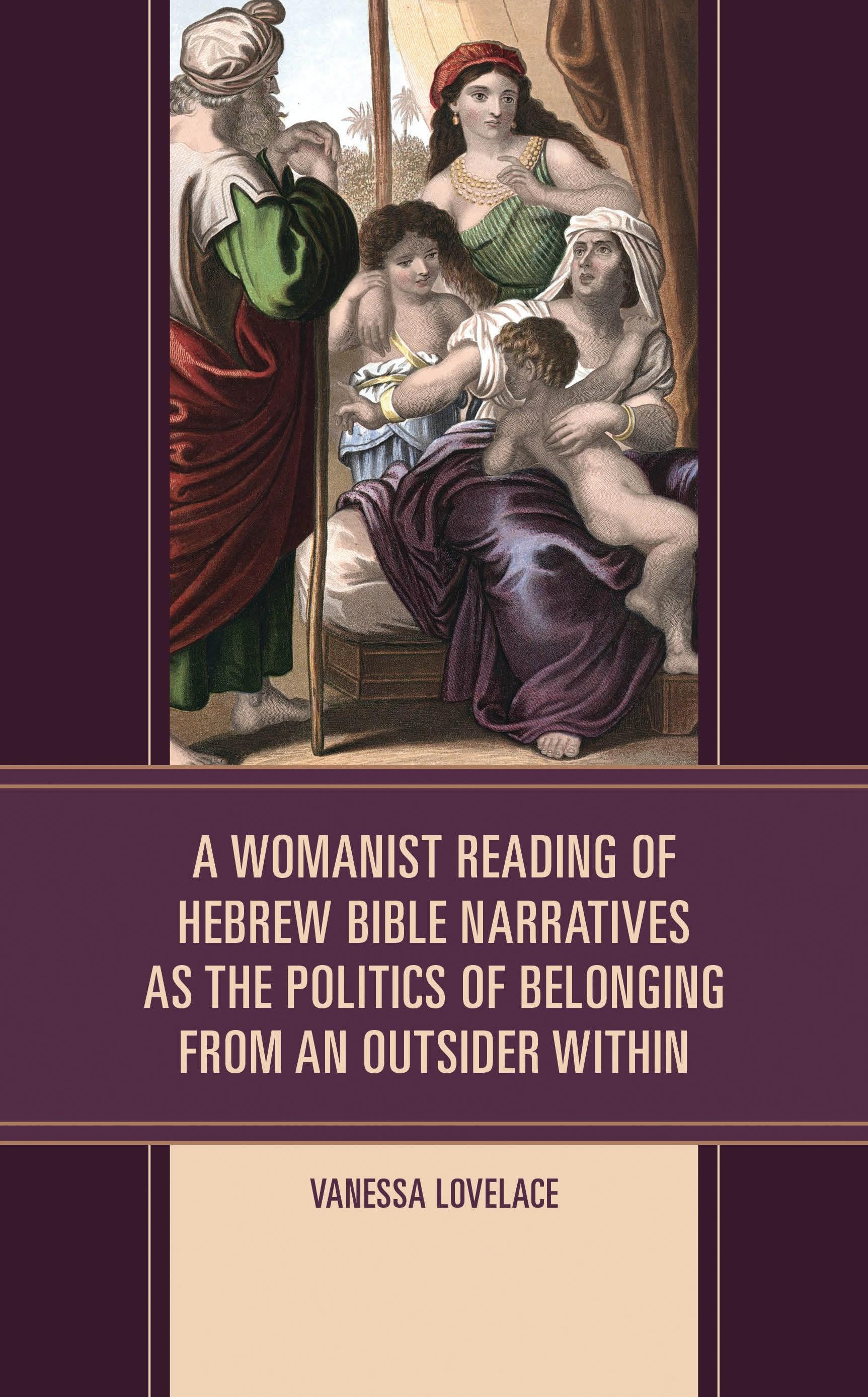
The U.S. Declaration of Independence of 1776 decreed that all men were created equal and were endowed by their Creator with “certain unalienable Rights.” Yet, U.S.-born free and enslaved Black people were not recognized as citizens with “equal protections under the law” until the passage of the Fourteenth Amendment. Even then, White supremacists impeded the equal rights of Black people as citizens due to their beliefs in the inferiority of Black people and that America was a nation for White people. White supremacists turned to biblical passages to lend divine justification for their views. A Womanist Reading of Hebrew Bible Narratives as the Politics of Belonging from an Outsider Within analyzes select biblical narratives, including Noah’s curse in Genesis 9; Sarah and Hagar in Genesis 16 and 21; Mother in Israel in Judges 5; and Jezebel, Phoenician Princess and Queen of Israel in 1 and 2 Kings. This analysis demonstrates how these narratives were first used by ancient biblical writers to include some and exclude others as members of the nation of Israel and then appropriated by White supremacists in the antebellum era and the early twentieth century to do the same in America. The book analyzes the simultaneously intersecting and interconnecting dynamics among race, gender, class, and sexuality and biblical narratives to construct boundaries between “us versus them,” particularly the politicization of motherhood to deny certain groups’ inclusion.
Betala smidigt med kort, Klarna, Apple Pay eller Google Pay. Är du inte nöjd har du alltid 14 dagars ångerrätt. Läs mer i våra villkor. Har du några frågor, mejla oss på hello@memmo.org.
Memmo gör det enklare att plugga – var du än är i världen. Hos oss samlar du kursböcker och smarta studieverktyg på ett och samma ställe: sammanfattningar, quiz, poddar och flashcards. Och så Ted, din studiekompis som svarar på allt du undrar. Över 50 000 studenter pluggar redan här – byggt för att du ska lära dig snabbare och stressa mindre.