
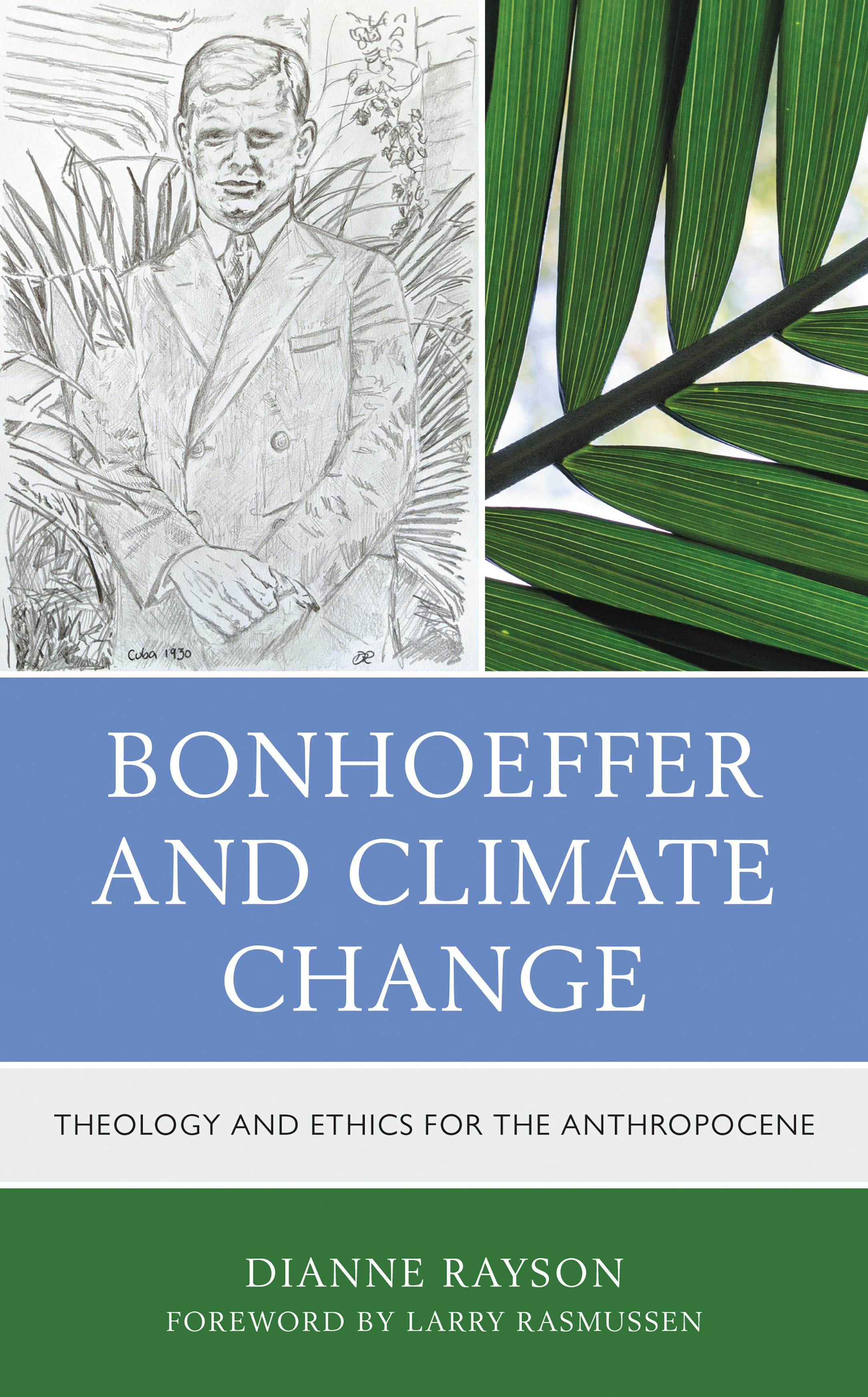
Where is the voice of theology in the public discourse around anthropogenic climate change? How do we understand the human relationship to Earth and the ecology of which we are a part? How can we account for the human attempt to dominate nature and the devastation we have caused to our own home?
Dianne Rayson addresses these questions. She uses the creation theology of Dietrich Bonhoeffer to examine what it means to be human in the post-Holocene age. Employing a range of Bonhoeffer’s texts, Rayson posits that Bonhoeffer’s Christological theology and this-worldly ethical orientation provide the tools for an Earthly Christianity. She responds to Bonhoeffer’s question, “who actually is Jesus Christ, for us, today?” and proposes a Bonhoefferian ecoethic.
Dianne Rayson addresses these questions. She uses the creation theology of Dietrich Bonhoeffer to examine what it means to be human in the post-Holocene age. Employing a range of Bonhoeffer’s texts, Rayson posits that Bonhoeffer’s Christological theology and this-worldly ethical orientation provide the tools for an Earthly Christianity. She responds to Bonhoeffer’s question, “who actually is Jesus Christ, for us, today?” and proposes a Bonhoefferian ecoethic.
Betala smidigt med kort, Klarna, Apple Pay eller Google Pay. Är du inte nöjd har du alltid 14 dagars ångerrätt. Läs mer i våra villkor. Har du några frågor, mejla oss på hello@memmo.org.
Memmo gör det enklare att plugga – var du än är i världen. Hos oss samlar du kursböcker och smarta studieverktyg på ett och samma ställe: sammanfattningar, quiz, poddar och flashcards. Och så Ted, din studiekompis som svarar på allt du undrar. Över 50 000 studenter pluggar redan här – byggt för att du ska lära dig snabbare och stressa mindre.