
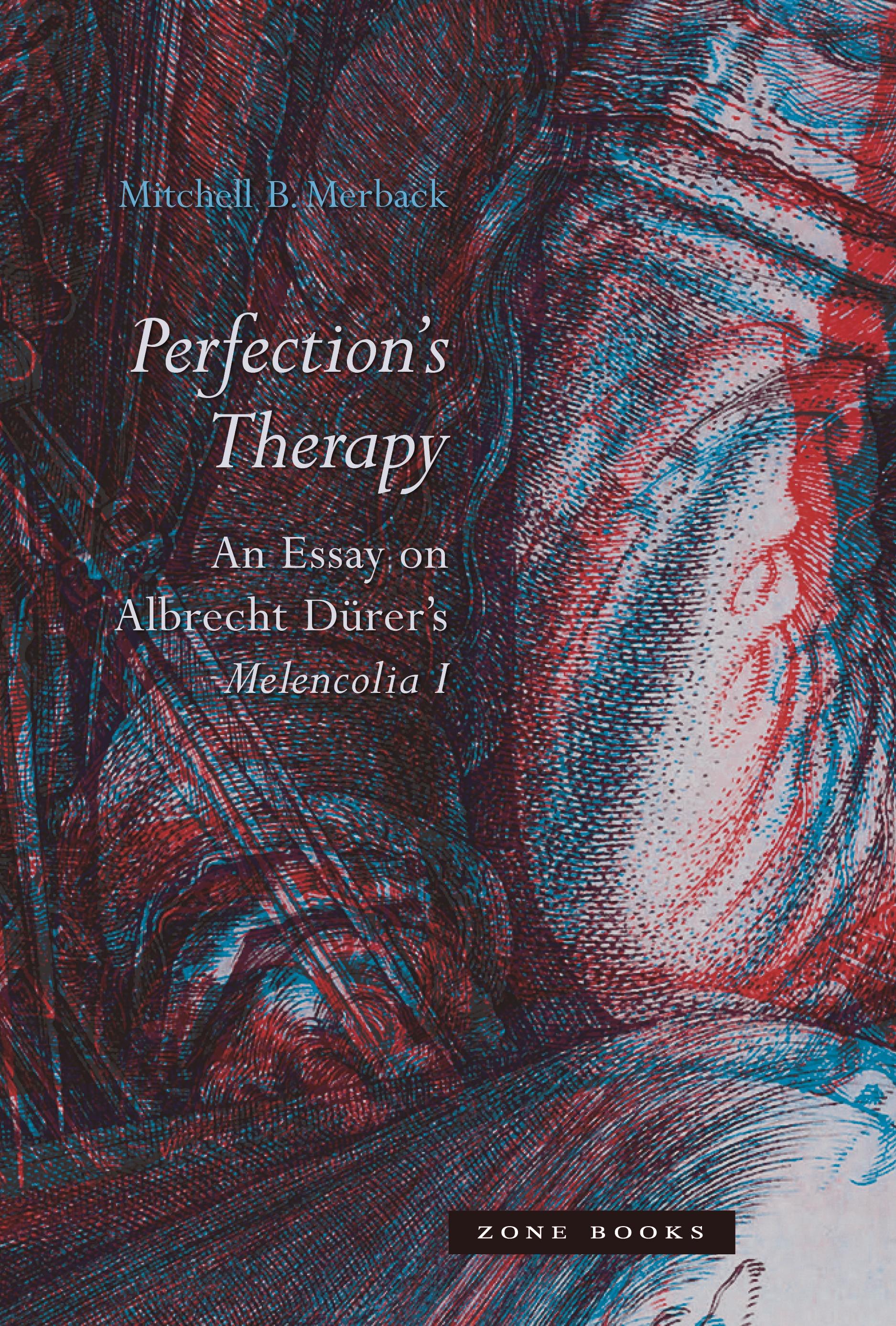
Albrecht Dürer’s master engraving, Melencolia I, has stood for centuries as a pictorial summa of knowledge about melancholia and an allegory of the limits of earthbound arts and sciences. Zealously interpreted since the nineteenth century, the work also presides over the origins of modern iconology. Yet more than a century of research has left us with a tangle of mutually contradictory theories.
In Perfection’s Therapy, Mitchell Merback discovers in Melencolia’s opacity a fascinating possibility: that Dürer’s masterpiece is not only an arresting diagnosis of melancholic distress, but an innovative instrument for its undoing. Merback deftly analyses the visual and narrative structure of Dürer’s image, revisits its philosophical and medical contexts, and resituates it within the long history of the therapeutic artifact. Placing Dürer’s project in dialogue with that of humanism’s founder, Francesco Petrarch, Merback also unearths the German artist’s ambition to act as a physician of the soul.
Celebrated by contemporaries as the “Apelles of our age,” and ever since as Germany’s first Renaissance painter-theorist, the Dürer we encounter here is also the first modern Christian artist, addressing himself to the distress of souls, including his own. Melencolia thus emerges as a key reference point in a project of spiritual-ethical therapy, a work designed to exercise the mind, rebalance the passions, remedy the soul, and help in getting on with the project of perfection.
Betala smidigt med kort, Klarna, Apple Pay eller Google Pay. Är du inte nöjd har du alltid 14 dagars ångerrätt. Läs mer i våra villkor. Har du några frågor, mejla oss på hello@memmo.org.
Memmo gör det enklare att plugga – var du än är i världen. Hos oss samlar du kursböcker och smarta studieverktyg på ett och samma ställe: sammanfattningar, quiz, poddar och flashcards. Och så Ted, din studiekompis som svarar på allt du undrar. Över 75 000 studenter pluggar redan här – byggt för att du ska lära dig snabbare och stressa mindre.