
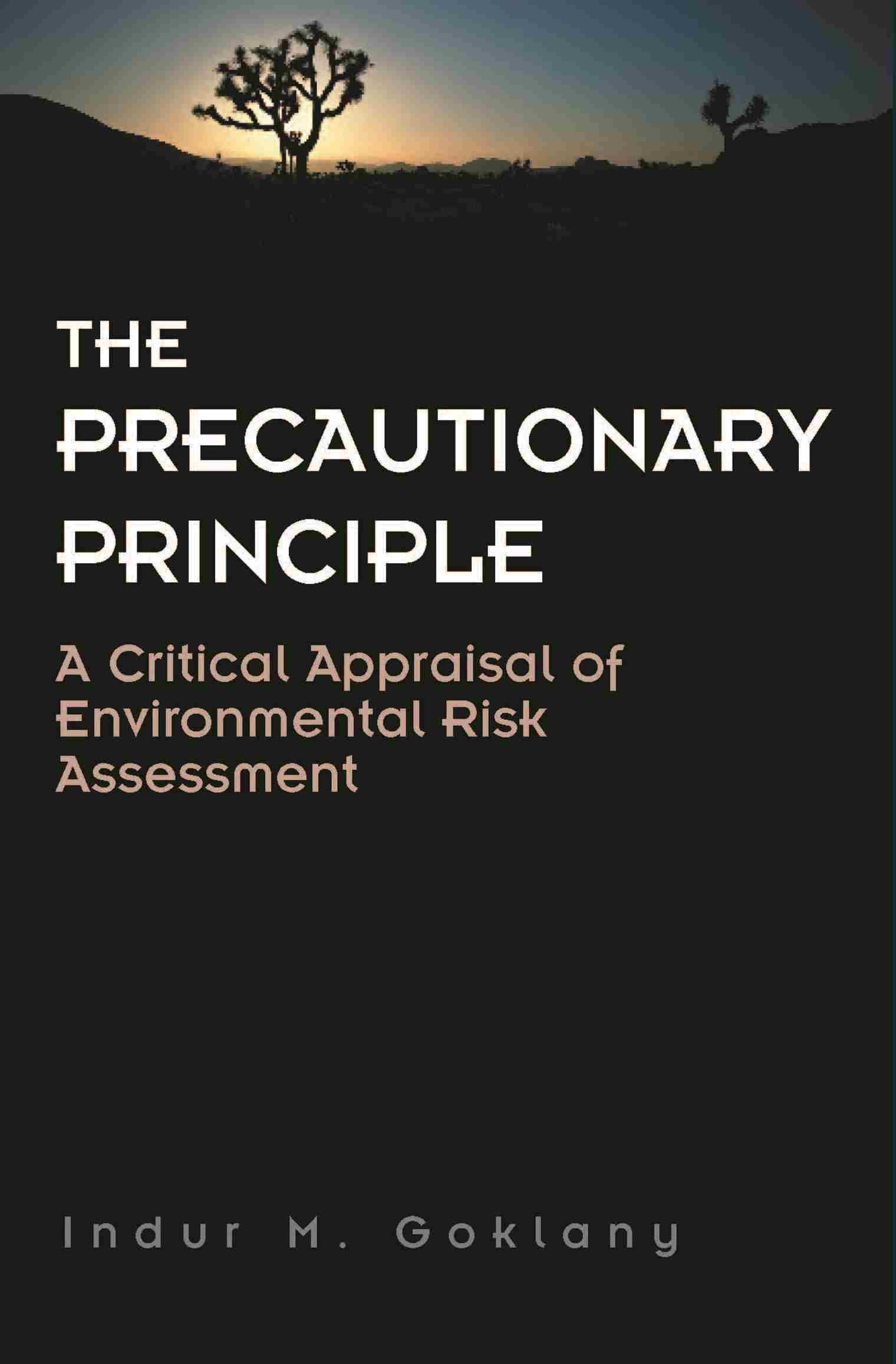
The "precautionary principle" -- the environmental version of the admonition first, do no harm -- is now enshrined in numerous international environmental agreements including treaties addressing global warming, biological diversity, and various pollutants. Some environmentalists have invoked this principle to justify policies to control, if not ban, any technology that cannot be proven to cause no harm. In this innovative book, Goklany shows that the current use of the precautionary principle to justify such policies is flawed and could be counterproductive because it ignores the possible calamities those very policies might simultaneously create or prolong.
The precautionary principle, unfortunately, does not provide any method of resolving such dilemmas, which are commonplace in the field of environmental policy. To address that problem, Goklany develops a framework consistent with the precautionary principle to resolve such dilemmas. That framework ranks potential threats to the environment on the basis of their nature, magnitude, immediacy, uncertainty, persistence, and the extent to which they can be alleviated. Applying that framework to three contentious environmental policy issues facing humanity and the globe -- DDT, bioengineered crops, and global warming -- Goklany shows that some popular policy prescriptions, despite good intentions, are in fact likely to do more harm than good.
Betala smidigt med kort, Klarna, Apple Pay eller Google Pay. Är du inte nöjd har du alltid 14 dagars ångerrätt. Läs mer i våra villkor. Har du några frågor, mejla oss på hello@memmo.org.
Memmo gör det enklare att plugga – var du än är i världen. Hos oss samlar du kursböcker och smarta studieverktyg på ett och samma ställe: sammanfattningar, quiz, poddar och flashcards. Och så Ted, din studiekompis som svarar på allt du undrar. Över 50 000 studenter pluggar redan här – byggt för att du ska lära dig snabbare och stressa mindre.