
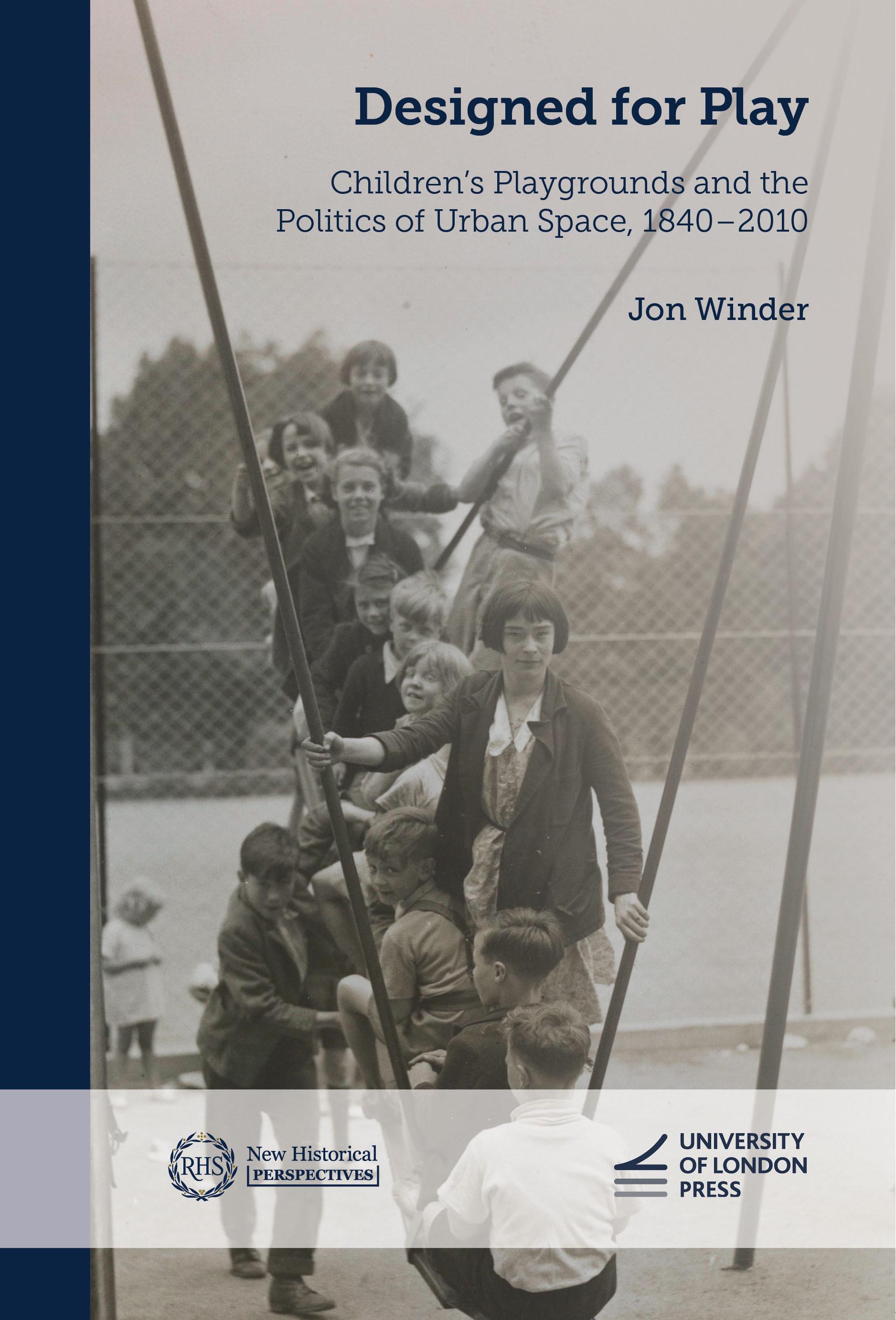
Children’s playgrounds are commonly understood as the obvious place for children to play: safe, natural and out of the way. But these expectations hide a convoluted and overlooked history of children’s place in public space – one shaped by implicit social, political and environmental values, and by government intervention in spaces and lives across the nineteenth and twentieth centuries. This book is the first empirically grounded historical account of the modern playground, drawing on the archival materials of social reformers, park superintendents, equipment manufacturers and architects in Britain and beyond to chart the playground’s journey from marginal obscurity to popular ubiquity. In exploring the evolution of play space design, the book shows that the ideal playground has long represented a space where changing conceptions of nature, health, childhood, commerce and technology have all been played out. It covers the development of garden gymnasiums in the 1890s, the influence of Charles Wicksteed, increasing standardisation in the interwar period, the impact of progressive education, pioneering female designers and the adventure playground movement in the twentieth century, and more recent challenges to the playground’s status as a site of health, nature and safety.
Designed for Play is an original and accessible contribution to modern British history, urban and environmental history, and histories and geographies of childhood.
Betala smidigt med kort, Klarna, Apple Pay eller Google Pay. Är du inte nöjd har du alltid 14 dagars ångerrätt. Läs mer i våra villkor. Har du några frågor, mejla oss på hello@memmo.org.
Memmo gör det enklare att plugga – var du än är i världen. Hos oss samlar du kursböcker och smarta studieverktyg på ett och samma ställe: sammanfattningar, quiz, poddar och flashcards. Och så Ted, din studiekompis som svarar på allt du undrar. Över 75 000 studenter pluggar redan här – byggt för att du ska lära dig snabbare och stressa mindre.