
This book is available as open access through the Bloomsbury Open Access programme and is available on www.bloomsburycollections.com.
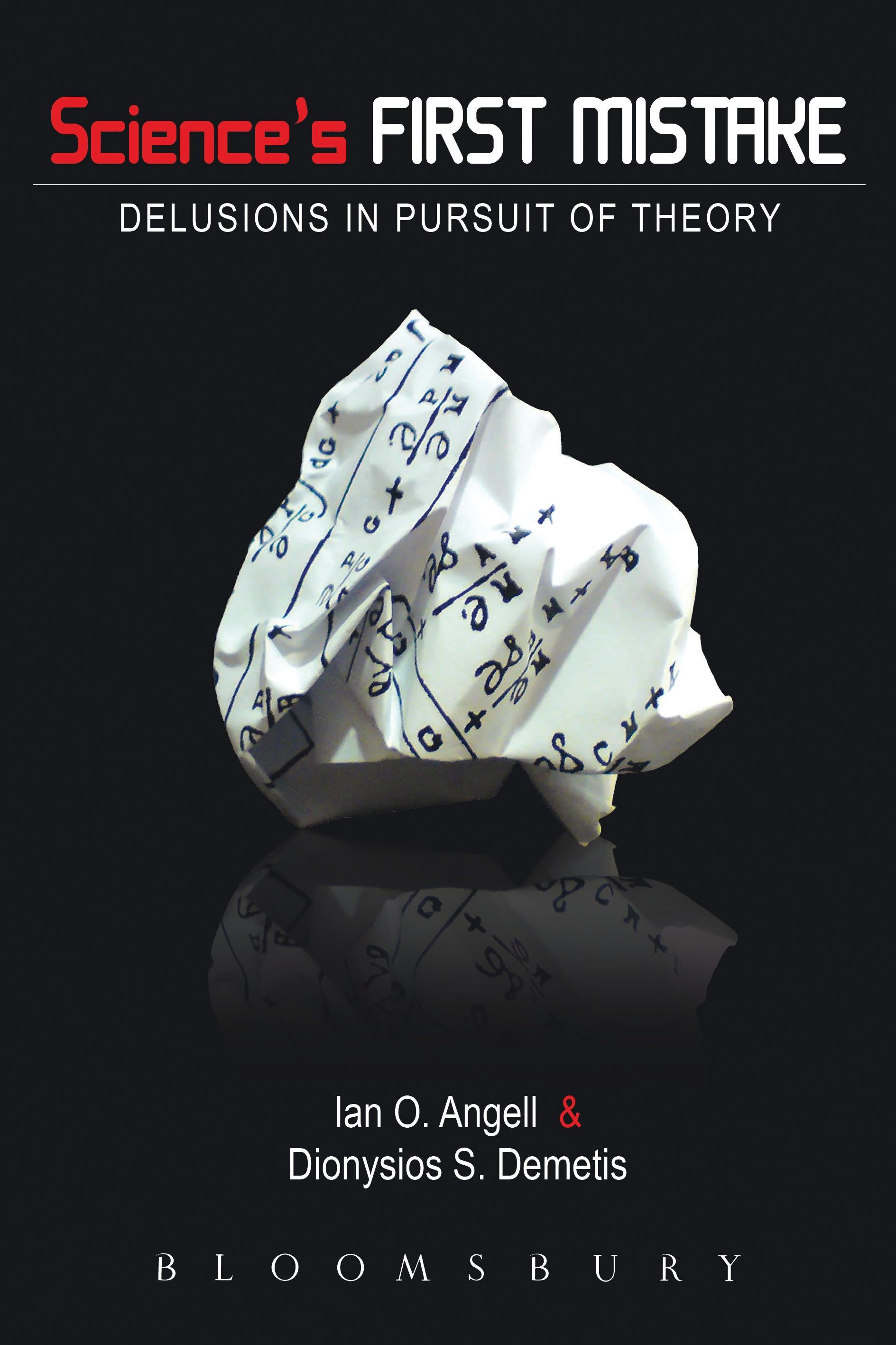
The purpose of the book is to deconstruct the process of knowledge discovery and theory construction. Grounded in the tradition of second-order cybernetics, the concept of self-reference is used in the context of systems theory in order to examine the mode in which observation, paradox and delusion become 'structurally coupled' with cognition.
To put this simply, physical scientists take it as a given that all the universe is explainable once we've discovered the underlying rules. Whereas social scientists and philosophers are more sensitive to the issues around how the observer actually impacts that which is being observed.
The authors work in the fields of Information Studies, which is within the technical or physical realm, and Management Studies, which is about human behaviour. Their argument is that all scientists (physical and social) rely too much on the absolutism and certainty of the methods of traditional physical science and that we should acknowledge the limitations of how we know what we know. Rooted in information systems analysis this fresh and audacious examination of knowledge discovery and theory construction makes an important contribution to the understanding of how we employ scientific method.
The purpose of the book is to deconstruct the process of knowledge discovery and theory construction. Grounded in the tradition of second-order cybernetics, the concept of self-reference is used in the context of systems theory in order to examine the mode in which observation, paradox and delusion become 'structurally coupled' with cognition.
To put this simply, physical scientists take it as a given that all the universe is explainable once we've discovered the underlying rules. Whereas social scientists and philosophers are more sensitive to the issues around how the observer actually impacts that which is being observed.
The authors work in the fields of Information Studies, which is within the technical or physical realm, and Management Studies, which is about human behaviour. Their argument is that all scientists (physical and social) rely too much on the absolutism and certainty of the methods of traditional physical science and that we should acknowledge the limitations of how we know what we know. Rooted in information systems analysis this fresh and audacious examination of knowledge discovery and theory construction makes an important contribution to the understanding of how we employ scientific method.
Sidor: 256
Kategori: Vetenskapsteori och forskningsmetod
e-ISBN: 9781849660686
Fraktvikt: 1.2 kg
Skickas inom: 1-2 dagar
Betala smidigt med kort, Klarna, Apple Pay eller Google Pay. Är du inte nöjd har du alltid 14 dagars ångerrätt. Läs mer i våra villkor. Har du några frågor, mejla oss på hello@memmo.org.
Memmo gör det enklare att plugga – var du än är i världen. Hos oss samlar du kursböcker och smarta studieverktyg på ett och samma ställe: sammanfattningar, quiz, poddar och flashcards. Och så Ted, din studiekompis som svarar på allt du undrar. Över 50 000 studenter pluggar redan här – byggt för att du ska lära dig snabbare och stressa mindre.