
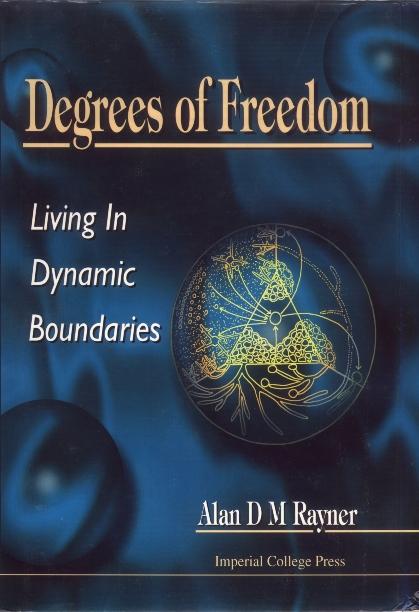
Drawing especially on insights emerging from studies of the cellular networks formed by fungi, this book describes the fundamental indeterminacy that enables life forms to thrive in and create inconstant circumstances. It explains how indeterminacy arises from counteraction between associative and dissociative processes at the reactive interfaces between living systems and their surroundings. It stresses the relevance of these processes to understanding the dynamic contexts within which living systems of all kinds — including human societies-explore for, use up, conserve and recycle sources of energy.By focusing on dynamic boundaries, the book counterbalances the discretist view that living systems are assembled entirely from building-block-like units — individuals and genes — that can be freely sifted, as opposed to channeled, by natural selection. It also shows how the versatility that enables life forms to proliferate in rich environments, whilst minimizing losses in restrictive environments, depends on capacities for error and co-operation within a fluid, non-hierarchical power structure. Understanding this point yields a more compassionate, less competitive and less self-centred outlook on life's successes and failures.
Betala smidigt med kort, Klarna, Apple Pay eller Google Pay. Är du inte nöjd har du alltid 14 dagars ångerrätt. Läs mer i våra villkor. Har du några frågor, mejla oss på hello@memmo.org.
Memmo gör det enklare att plugga – var du än är i världen. Hos oss samlar du kursböcker och smarta studieverktyg på ett och samma ställe: sammanfattningar, quiz, poddar och flashcards. Och så Ted, din studiekompis som svarar på allt du undrar. Över 75 000 studenter pluggar redan här – byggt för att du ska lära dig snabbare och stressa mindre.
Du kanske också gillar
Köp boken0