
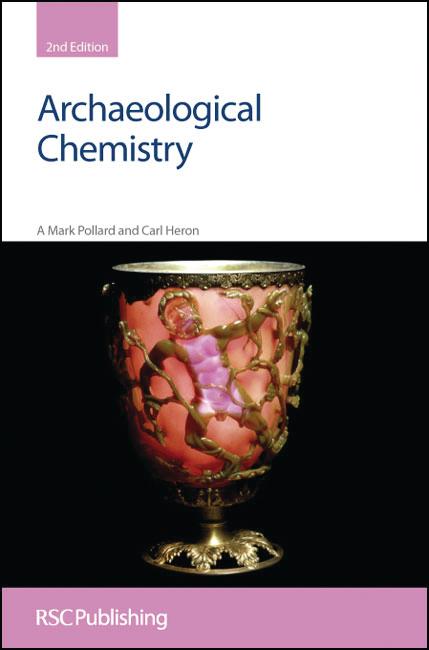
The application of chemistry within archaeology is an important and fascinating area. It allows the archaeologist to answer such questions as "what is this artefact made of?", "where did it come from?" and "how has it been changed through burial in the ground?", providing pointers to the earliest history of mankind. Archaeological Chemistry begins with a brief description of the goals and history of archaeological science, and the place of chemistry within it. It sets out the most widely used analytical techniques in archaeology and compares them in the light of relevant applications. The book includes an analysis of several specific archaeological investigations in which chemistry has been employed in tracing the origins of or in preserving artefacts. The choice of these investigations conforms to themes based on analytical techniques, and includes chapters on obsidian, ceramics, glass, metals and resins. Finally, it suggests a future role for chemical and biochemical applications in archaeology. Archaeological Chemistry enables scientists to tackle the fundamental issues of chemical change in the archaeological materials, in order to advance the study of the past. It will prove an essential companion to students in archaeological science and chemistry, field and museum archaeologists, and all those involved in conserving human artefacts.
Betala smidigt med kort, Klarna, Apple Pay eller Google Pay. Är du inte nöjd har du alltid 14 dagars ångerrätt. Läs mer i våra villkor. Har du några frågor, mejla oss på hello@memmo.org.
Memmo gör det enklare att plugga – var du än är i världen. Hos oss samlar du kursböcker och smarta studieverktyg på ett och samma ställe: sammanfattningar, quiz, poddar och flashcards. Och så Ted, din studiekompis som svarar på allt du undrar. Över 50 000 studenter pluggar redan här – byggt för att du ska lära dig snabbare och stressa mindre.