
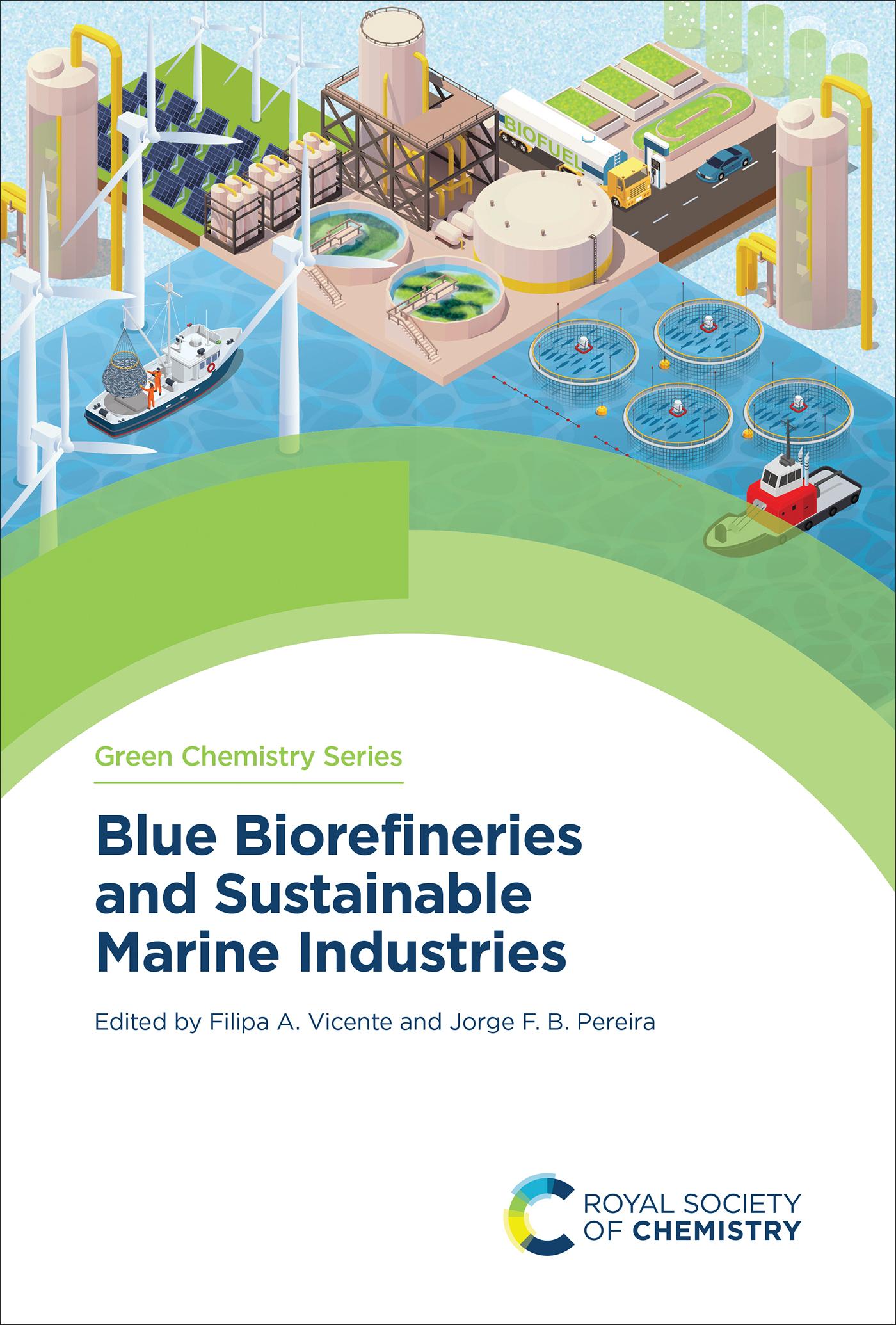
The integration of biorefinery concepts into traditional industries is key to enabling the transition to a bio-based economy model (bioeconomy), where renewable sources and the circular economy are the foundation. The development of cost-effective, environmentally friendly, and circular technologies for processing biomass and waste, and converting it into value-added compounds are key factors in successfully implementing sustainable marine biorefineries. The marine environment offers a source of chemically interesting compounds, many of which are regularly discarded as waste from fish and shellfish industries. By incorporating these biorefinery technologies into marine industries we can simultaneously reduce waste production, use of non-renewable feedstocks and energy requirements for these industries.
Highlighting the importance and urgency of developing efficient and sustainable blue biorefineries, this book provides an overview on the different types of marine biomasses (micro- and macroalgae, crustacean and fish waste) and their high added value compounds as well as the latest advances in their extraction, purification and applications. Industrial case-studies and techno-economic and environmental analysis for the different blue biorefineries all add to a valuable vision for the future sustainability of marine industries.
Betala smidigt med kort, Klarna, Apple Pay eller Google Pay. Är du inte nöjd har du alltid 14 dagars ångerrätt. Läs mer i våra villkor. Har du några frågor, mejla oss på hello@memmo.org.
Memmo gör det enklare att plugga – var du än är i världen. Hos oss samlar du kursböcker och smarta studieverktyg på ett och samma ställe: sammanfattningar, quiz, poddar och flashcards. Och så Ted, din studiekompis som svarar på allt du undrar. Över 50 000 studenter pluggar redan här – byggt för att du ska lära dig snabbare och stressa mindre.