
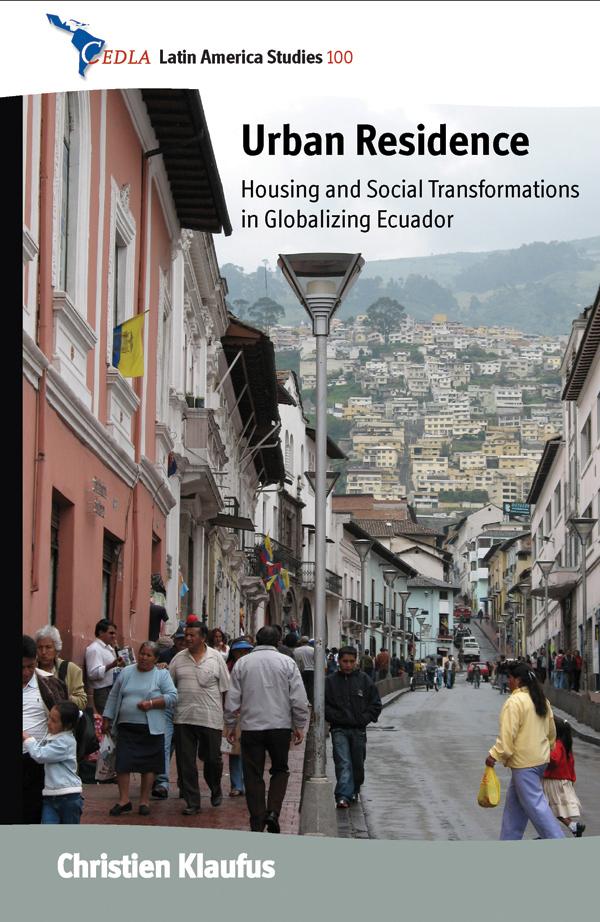
Riobamba and Cuenca, two intermediate cities in Ecuador, have become part of global networks through transnational migration, incoming remittances, tourism, and global economic connections. Their landscape is changing in several significant ways, a reflection of the social and urban transformations occurring in contemporary Ecuadorian society. Exploring the discourses and actions of two contrasting population groups, rarely studied in tandem, within these cities—popular-settlement residents and professionals in the planning and construction sector—this study analyzes how each is involved in house designs and neighborhood consolidation. Ideas, ambitions, and power relations come into play at every stage of the production and use of urban space, and as a result individual decisions about both house designs and the urban layout influence the development of the urban fabric. Knowledge about intermediate cities is crucial in order to understand current trends in the predominantly urban societies of Latin America, and this study is an example of needed interdisciplinary scholarship that contributes to the fields of urban studies, urban anthropology, sociology, and architecture.
Betala smidigt med kort, Klarna, Apple Pay eller Google Pay. Är du inte nöjd har du alltid 14 dagars ångerrätt. Läs mer i våra villkor. Har du några frågor, mejla oss på hello@memmo.org.
Memmo gör det enklare att plugga – var du än är i världen. Hos oss samlar du kursböcker och smarta studieverktyg på ett och samma ställe: sammanfattningar, quiz, poddar och flashcards. Och så Ted, din studiekompis som svarar på allt du undrar. Över 75 000 studenter pluggar redan här – byggt för att du ska lära dig snabbare och stressa mindre.