
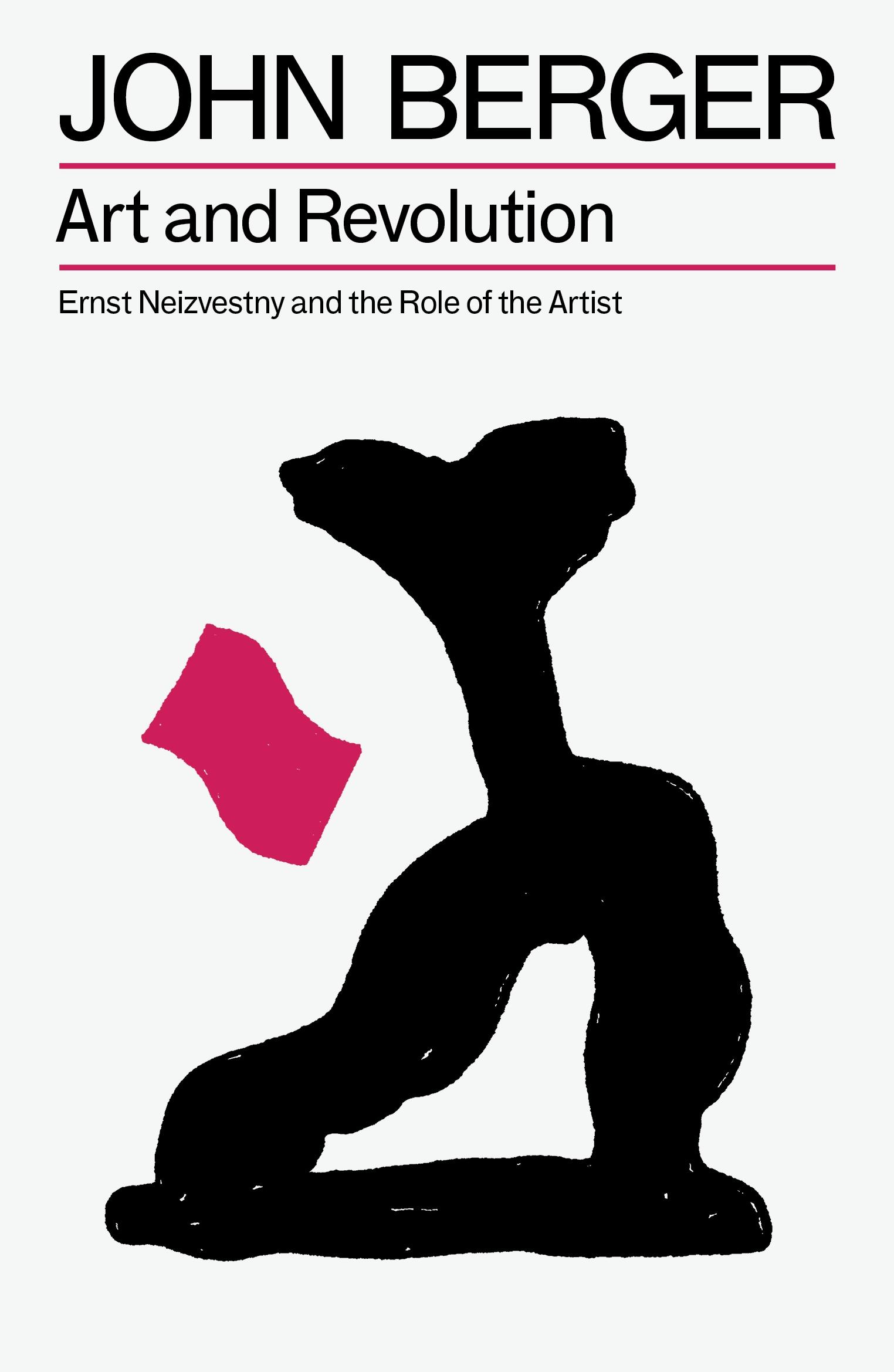
John Berger explores the life and work of Ernst Neizvestny, who, after clashing with Khrushchev, was excluded from the ranks of officially approved Soviet artists. Abandoned to obscurity, Neizvestny laboured to realize a monumental and very public vision of art. Exiled to the United States, he finally found recognition, returning to his homeland with the fall of the Berlin Wall.
Berger's account illuminates the very meaning of revolutionary art. In his struggle against official orthodoxy - which brought him into face-to-face conflict with Khrushchev himself - Neizvestny was fight-ing not for a merely personal or aesthetic vision, but for recognition of the social role of art. His sculptures earn a place in the world by reflecting the courage of a whole people, commemorating, in an age of mass suffering, the resistance and endurance of millions.
Berger's account illuminates the very meaning of revolutionary art. In his struggle against official orthodoxy - which brought him into face-to-face conflict with Khrushchev himself - Neizvestny was fight-ing not for a merely personal or aesthetic vision, but for recognition of the social role of art. His sculptures earn a place in the world by reflecting the courage of a whole people, commemorating, in an age of mass suffering, the resistance and endurance of millions.
Betala smidigt med kort, Klarna, Apple Pay eller Google Pay. Är du inte nöjd har du alltid 14 dagars ångerrätt. Läs mer i våra villkor. Har du några frågor, mejla oss på hello@memmo.org.
Memmo gör det enklare att plugga – var du än är i världen. Hos oss samlar du kursböcker och smarta studieverktyg på ett och samma ställe: sammanfattningar, quiz, poddar och flashcards. Och så Ted, din studiekompis som svarar på allt du undrar. Över 75 000 studenter pluggar redan här – byggt för att du ska lära dig snabbare och stressa mindre.
Du kanske också gillar
Köp boken0