
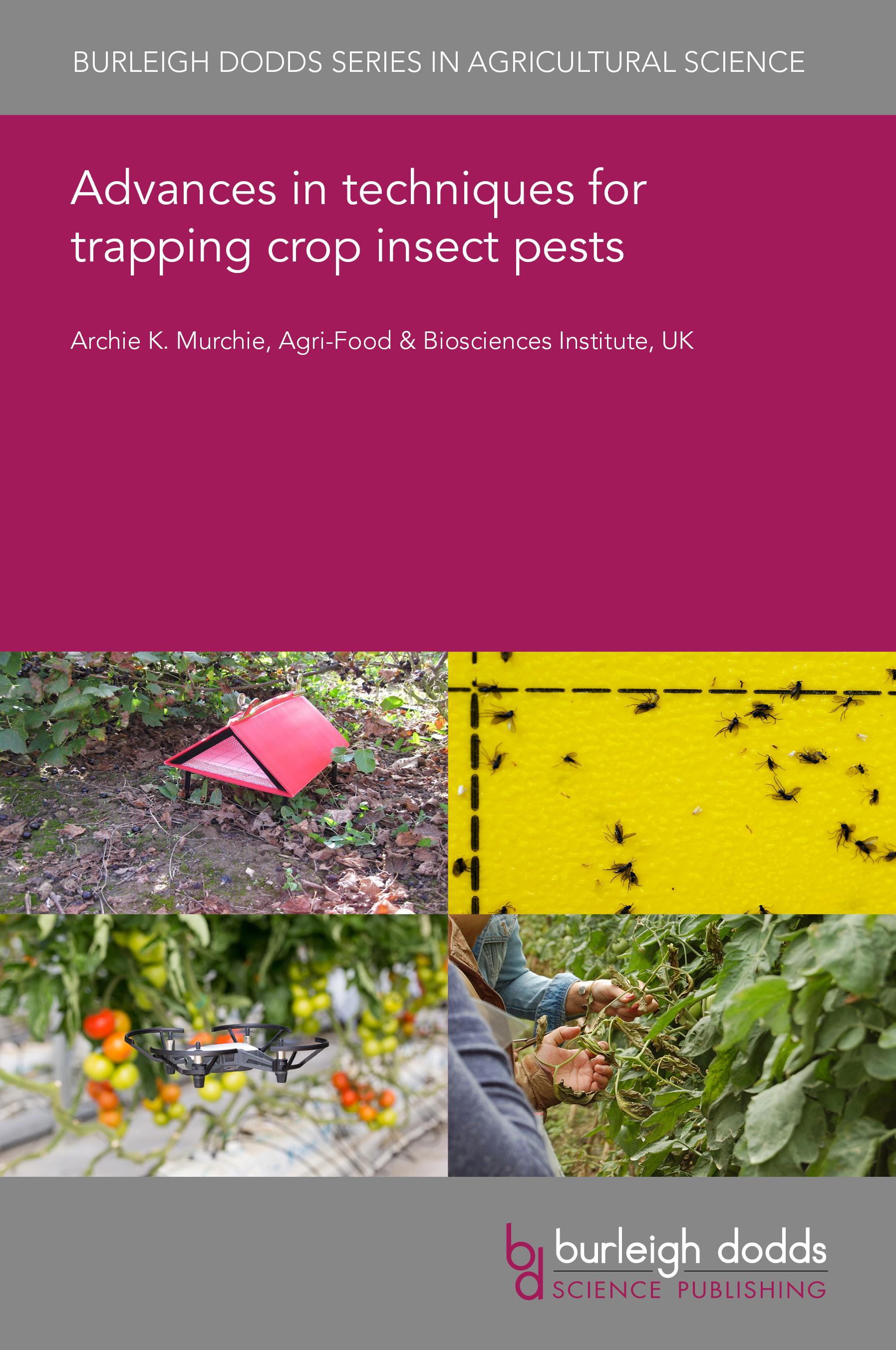
Pest monitoring is a fundamental requirement of integrated pest management. To minimise and target the use of pesticides, it is necessary to know when insect pests are present within the crop and whether their densities warrant control. There are many designs of trap to monitor insect pests. This chapter gives an overview of the principles of trap design, including the requirements of selectivity, accuracy, processing time and cost. Attracting insects to traps is key, and visual and olfactory responses to traps are explained. The following trap categories are described: water, sticky, suction, interception, funnel and cone traps; along with case studies of their usage and an evaluation of their merits and limitations. Sorting and identification of catches can be time-consuming. Automation of counting and identification of trap catches using image and wingbeat analyses is an exciting prospect with many recent advances using developments in electronic sensors, machine learning and cloud technology.
Betala smidigt med kort, Klarna, Apple Pay eller Google Pay. Är du inte nöjd har du alltid 14 dagars ångerrätt. Läs mer i våra villkor. Har du några frågor, mejla oss på hello@memmo.org.
Memmo gör det enklare att plugga – var du än är i världen. Hos oss samlar du kursböcker och smarta studieverktyg på ett och samma ställe: sammanfattningar, quiz, poddar och flashcards. Och så Ted, din studiekompis som svarar på allt du undrar. Över 50 000 studenter pluggar redan här – byggt för att du ska lära dig snabbare och stressa mindre.