
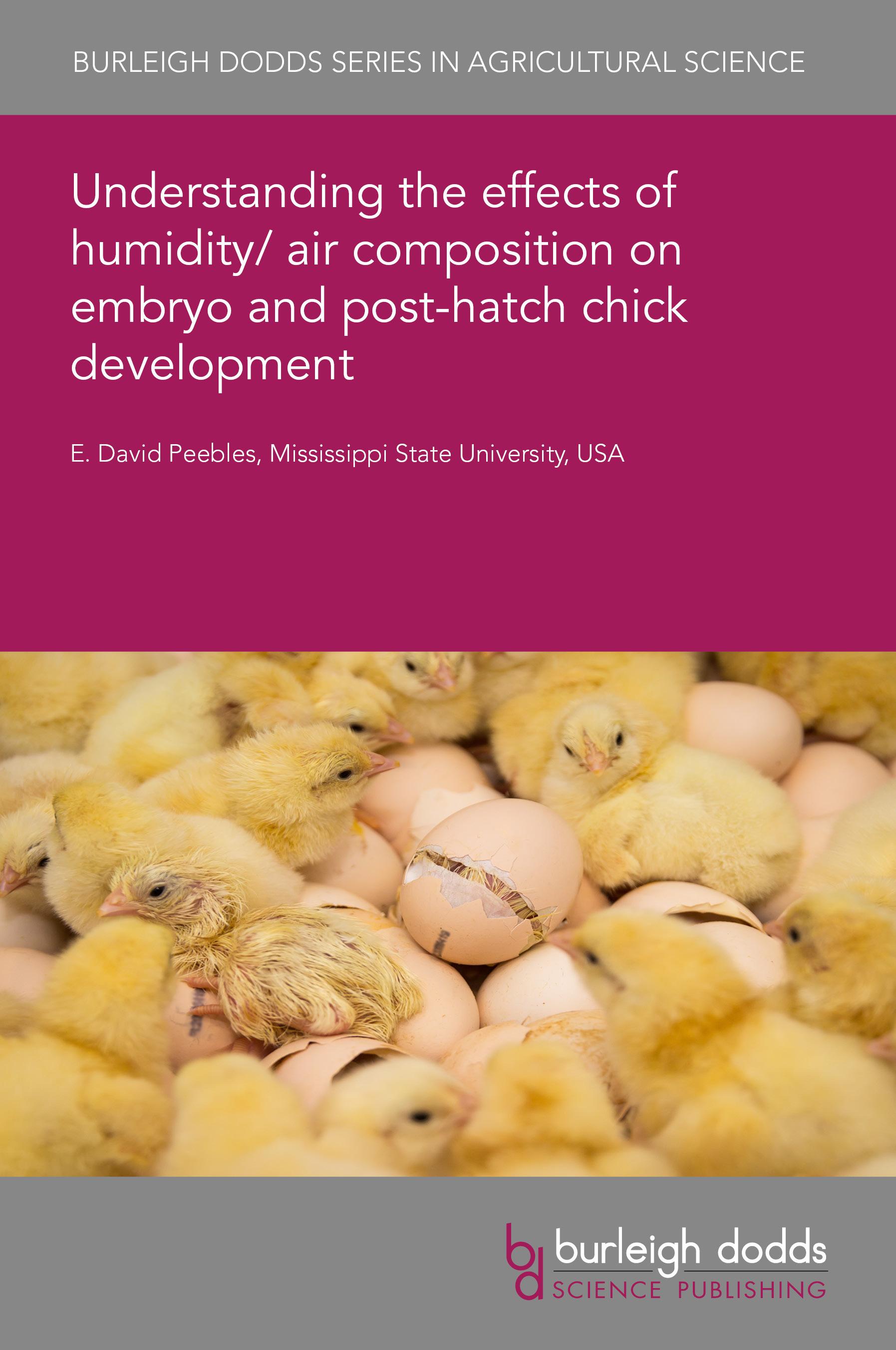
Incubational conditions influence embryo growth and viability, which subsequently affect egg hatchability. Along with temperature, environmental factors in the incubator that are of primary importance for optimum hatchability and chick quality include humidity and vital gas (carbon dioxide (CO2) and oxygen (O2)) levels. Because the movements of gases across the eggshell occur by diffusion, avian embryos are dependent on the composition of the surrounding air, with their development and hatching success being dependent on the ambient partial pressures of O2, CO2, and water vapor. The influences of the incubational environment can extend beyond embryonic development into the post-hatch period with ensuing effects on chick survival, quality, and performance. Various studies have been conducted to establish humidity and vital gas levels during incubation that will optimize the embryonic and post-hatch livability and development of poultry. The prospects for the pragmatic commercial use of these incubational regimens, as well as the physiological bases for their observed effects, are explored in this chapter.
Betala smidigt med kort, Klarna, Apple Pay eller Google Pay. Är du inte nöjd har du alltid 14 dagars ångerrätt. Läs mer i våra villkor. Har du några frågor, mejla oss på hello@memmo.org.
Memmo gör det enklare att plugga – var du än är i världen. Hos oss samlar du kursböcker och smarta studieverktyg på ett och samma ställe: sammanfattningar, quiz, poddar och flashcards. Och så Ted, din studiekompis som svarar på allt du undrar. Över 75 000 studenter pluggar redan här – byggt för att du ska lära dig snabbare och stressa mindre.