
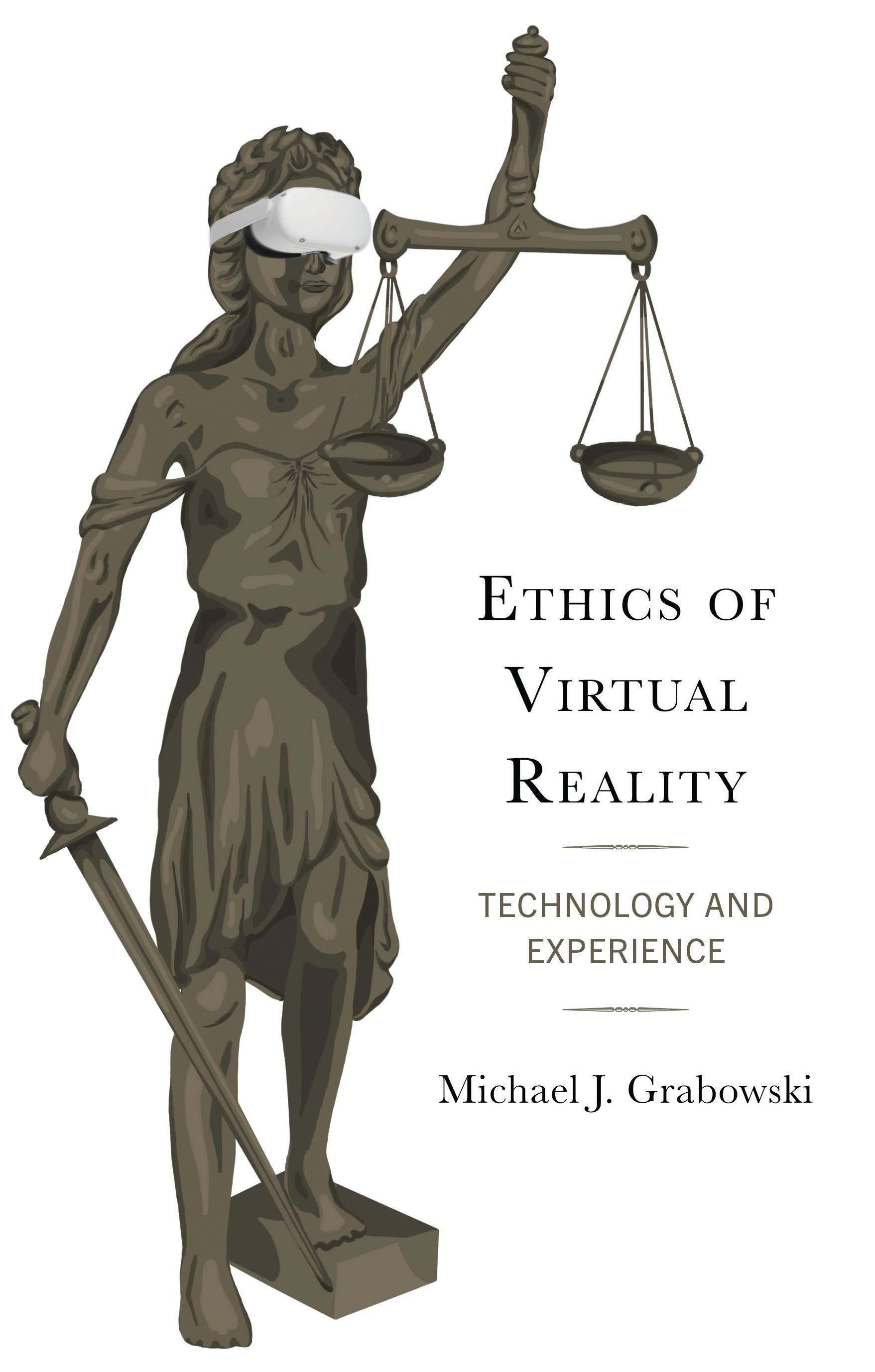
In this book, Michael Grabowski draws on established theories of ethics to consider critical questions surrounding the growing adoption of virtual reality (VR) technologies. These questions include who should control and have access to VR, its impact on privacy, its potential for misrepresentation and bias, and how to provide a platform for free expression while mitigating harassment and abuse.
Grabowski examines use cases of other digital technologies, including social media and artificial intelligence, to examine who is helped and harmed by the widespread implementation of VR and how it might transform existing institutions, social relationships, and communication. Finally, Grabowski forecasts the possible futures of VR and what limits, if any, should be placed on representing the real world or imagining new ones. Scholars of media studies, technology studies, communication, and ethics will find this book of particular interest.
Grabowski examines use cases of other digital technologies, including social media and artificial intelligence, to examine who is helped and harmed by the widespread implementation of VR and how it might transform existing institutions, social relationships, and communication. Finally, Grabowski forecasts the possible futures of VR and what limits, if any, should be placed on representing the real world or imagining new ones. Scholars of media studies, technology studies, communication, and ethics will find this book of particular interest.
Betala smidigt med kort, Klarna, Apple Pay eller Google Pay. Är du inte nöjd har du alltid 14 dagars ångerrätt. Läs mer i våra villkor. Har du några frågor, mejla oss på hello@memmo.org.
Memmo gör det enklare att plugga – var du än är i världen. Hos oss samlar du kursböcker och smarta studieverktyg på ett och samma ställe: sammanfattningar, quiz, poddar och flashcards. Och så Ted, din studiekompis som svarar på allt du undrar. Över 50 000 studenter pluggar redan här – byggt för att du ska lära dig snabbare och stressa mindre.