
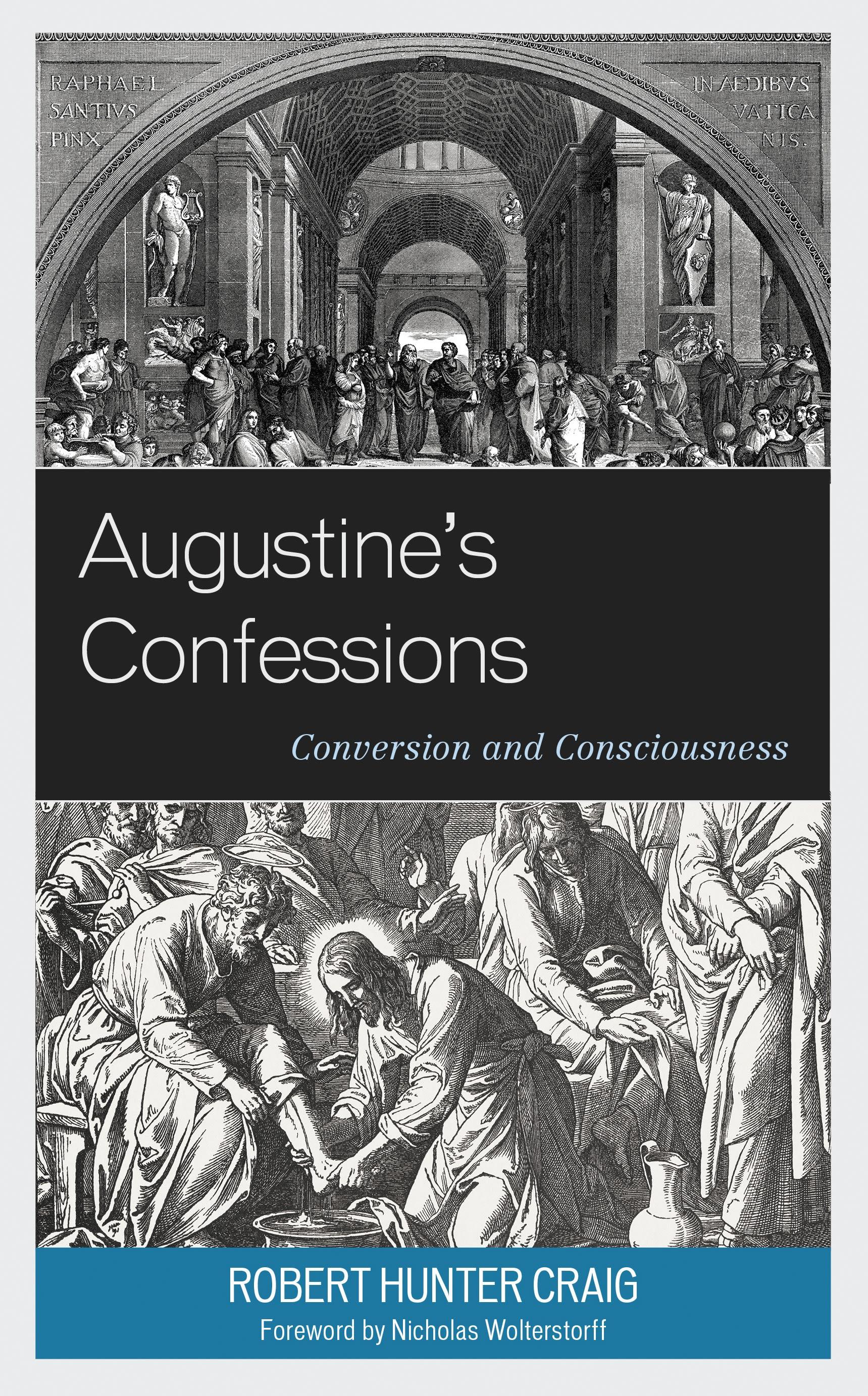
Augustine's Confessions: Conversion and Consciousness argues two original positions concerning the structure and meaning of the Confessions by Augustine. The structure is found to be a tool used by Augustine in his earlier pre-Confessions writings in which he uses the Allegory of the Cave in book VII of the Republic by Plato to both describe human consciousness and as a structural framework for his own life story. As with Plato's allegory, Augustine then uses Books X-XIII to do, what the author calls, "Scriptural Philosophical" analysis of the allegorical prayer previously given. The author shows that the Confessions is really an allegorical quasi-prayer that shows Augustine's state of mind or disposition through space/time—and at the same time uses different personas, schools of thought and metaphysical constructs to show the inadequacy of Plato's consciousness model of the cave to truly describe human ratiocination within consciousness in its totality—Synchronic-Synthetic-Triplex (SST) or body, mind, God-Will substance. Instead, Augustine demonstrates the superiority of the Christian conversion to that of the Platonic as described both by Platonic books and the books of the Platonists. The Christian conversion is based on the incarnate Wisdom of Christ Jesus within the Cave/World.
Betala smidigt med kort, Klarna, Apple Pay eller Google Pay. Är du inte nöjd har du alltid 14 dagars ångerrätt. Läs mer i våra villkor. Har du några frågor, mejla oss på hello@memmo.org.
Memmo gör det enklare att plugga – var du än är i världen. Hos oss samlar du kursböcker och smarta studieverktyg på ett och samma ställe: sammanfattningar, quiz, poddar och flashcards. Och så Ted, din studiekompis som svarar på allt du undrar. Över 50 000 studenter pluggar redan här – byggt för att du ska lära dig snabbare och stressa mindre.