
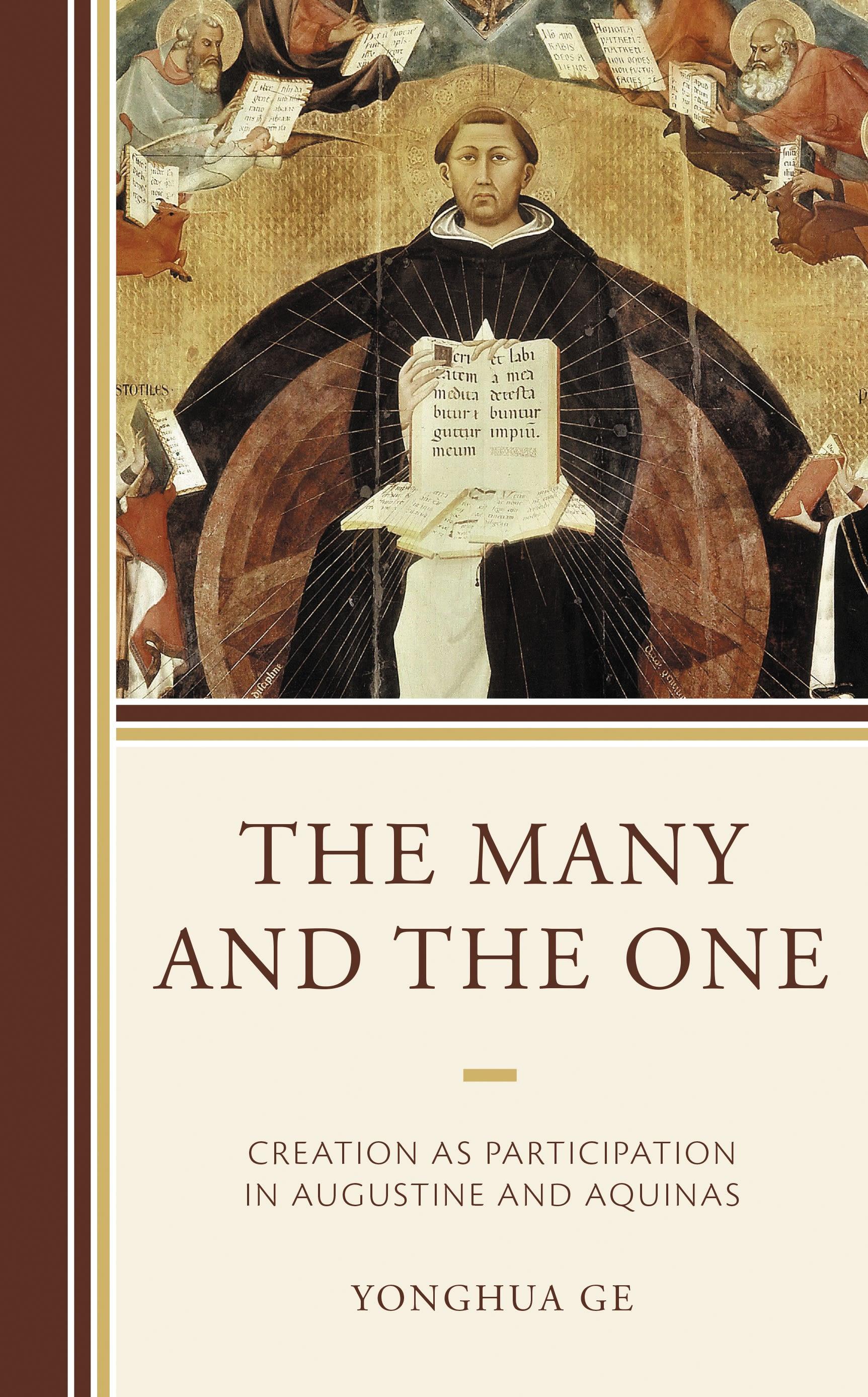
How God relates to the world lies at the heart of the most intense debates in modern theology and philosophy. Movements of Nouvelle Théologie, process theology, radical orthodoxy, modern Trinitarian theology and postmodern theology (i.e. Jean-Luc Marion) all seek to reconsider God’s relation to the world as a corrective of what they perceive as problematic. Of particular significance is the recent revival of the theology of participation, as promoted by Radical Orthodoxy in UK and Hans Boersma in North America. Facing excessive secularism and fragmentation of the modern Western world, Radical Orthodoxy and Boersma resort to the pre-modern theology of participation as the way forward. Relying heavily on Platonism, however, their participatory theology, as critics pointed out, tends to compromise the intrinsic goodness of the creation. In this book, Ge proposes that a distinctively Christian theology of participation anchored in creatio ex nihilo, developed by Augustine and brought to the fore by Aquinas, provides a more promising solution which not only secures the unity of things in God but also the goodness of creaturely plurality.
Since participation in its origin is a solution to the problem of the One and the Many, Ge employs Gunton’s framework of the one and the many in his discussion of Augustine and Aquinas’s theologies of participation. By reshaping their concepts of participation in the light of the doctrine of creation, Ge argues, these thinkers have profoundly transformed the metaphysics of participation, making it finally more suitable for describing the unique relationship between God’s unity and creaturely plurality. This Christian metaphysics of participation is not only an advance on Radical Orthodoxy and Boersma, but also superior to competing theories of reality such as pluralism and reductionist physicalism. The book will also bring out implications for modern science-religion dialogues, the core of which concerns how God relates to the world.
Since participation in its origin is a solution to the problem of the One and the Many, Ge employs Gunton’s framework of the one and the many in his discussion of Augustine and Aquinas’s theologies of participation. By reshaping their concepts of participation in the light of the doctrine of creation, Ge argues, these thinkers have profoundly transformed the metaphysics of participation, making it finally more suitable for describing the unique relationship between God’s unity and creaturely plurality. This Christian metaphysics of participation is not only an advance on Radical Orthodoxy and Boersma, but also superior to competing theories of reality such as pluralism and reductionist physicalism. The book will also bring out implications for modern science-religion dialogues, the core of which concerns how God relates to the world.
Betala smidigt med kort, Klarna, Apple Pay eller Google Pay. Är du inte nöjd har du alltid 14 dagars ångerrätt. Läs mer i våra villkor. Har du några frågor, mejla oss på hello@memmo.org.
Memmo gör det enklare att plugga – var du än är i världen. Hos oss samlar du kursböcker och smarta studieverktyg på ett och samma ställe: sammanfattningar, quiz, poddar och flashcards. Och så Ted, din studiekompis som svarar på allt du undrar. Över 50 000 studenter pluggar redan här – byggt för att du ska lära dig snabbare och stressa mindre.