
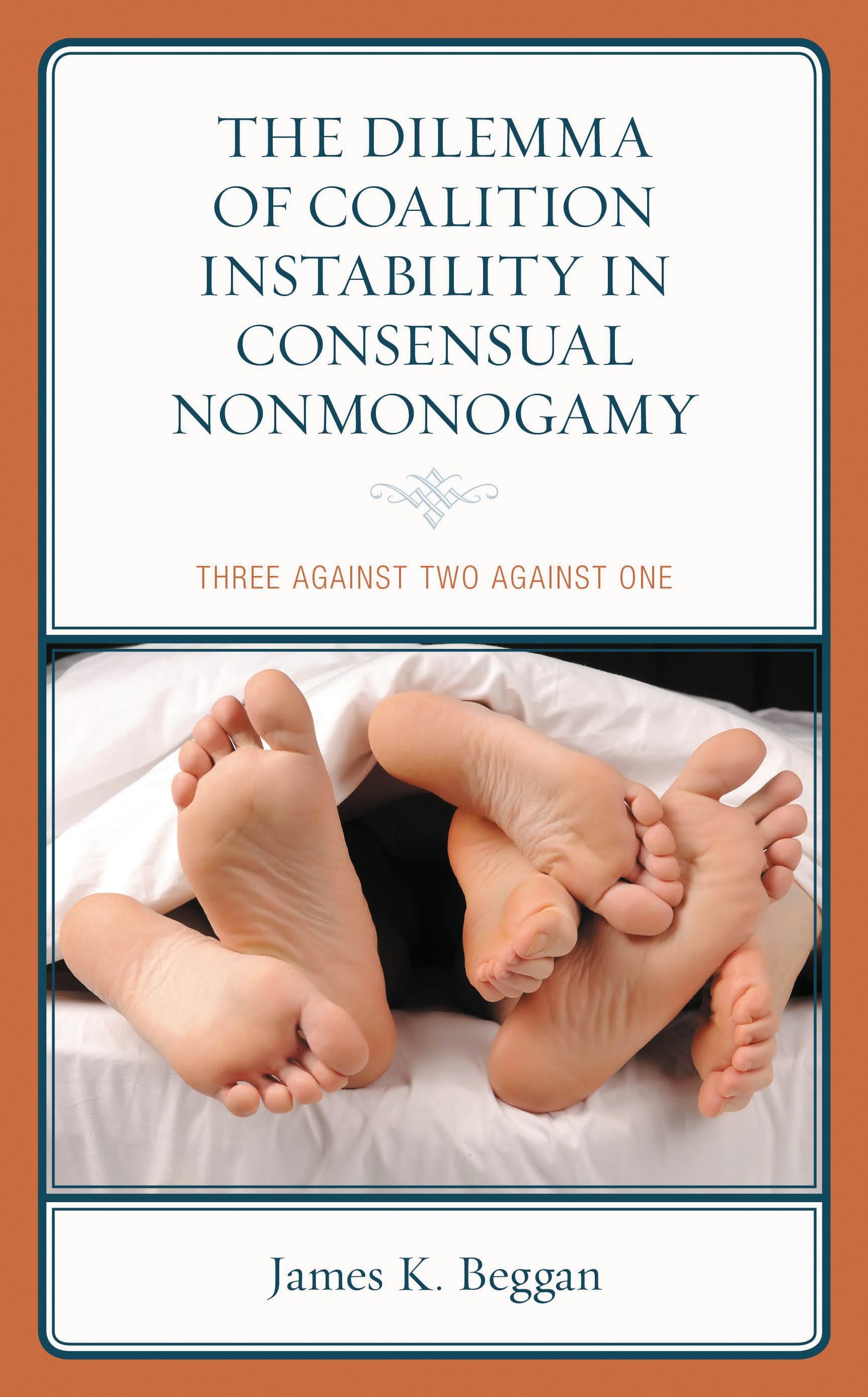
Different forms of consensual nonmonogamy, such as polyamory and swinging, have achieved greater prominence in daily conversation and representation in mass media. Although advocates recognize that the presence of additional people creates difficulties, the author argues that this greater complexity may lead to unavoidable instability. Drawing from classic work by Georg Simmel as well as modern research in the social sciences, James K. Beggan considers how the presence of a third person is what allows the formation of coalitions which then become part of the process that can break apart the triad. This paradox—explained with reference to game theory and social interdependence—represents the existential threat to the quest for consensual nonmonogamy. Beggan describes how psychological processes involving social comparison and gender and sexual orientation can limit the formation of certain types of coalitions which, in turn, influence which relationships can be expected to emerge in the context of consensual nonmonogamy. His analysis includes macro-level social issues related to establishing consensual nonmonogamy as a valid social identity and alternative to conventional marriage. Using insights from game theory, he suggests possible meta-solutions to coalition conflicts that emerge in triadic romantic and sexual relationships.
Betala smidigt med kort, Klarna, Apple Pay eller Google Pay. Är du inte nöjd har du alltid 14 dagars ångerrätt. Läs mer i våra villkor. Har du några frågor, mejla oss på hello@memmo.org.
Memmo gör det enklare att plugga – var du än är i världen. Hos oss samlar du kursböcker och smarta studieverktyg på ett och samma ställe: sammanfattningar, quiz, poddar och flashcards. Och så Ted, din studiekompis som svarar på allt du undrar. Över 50 000 studenter pluggar redan här – byggt för att du ska lära dig snabbare och stressa mindre.