
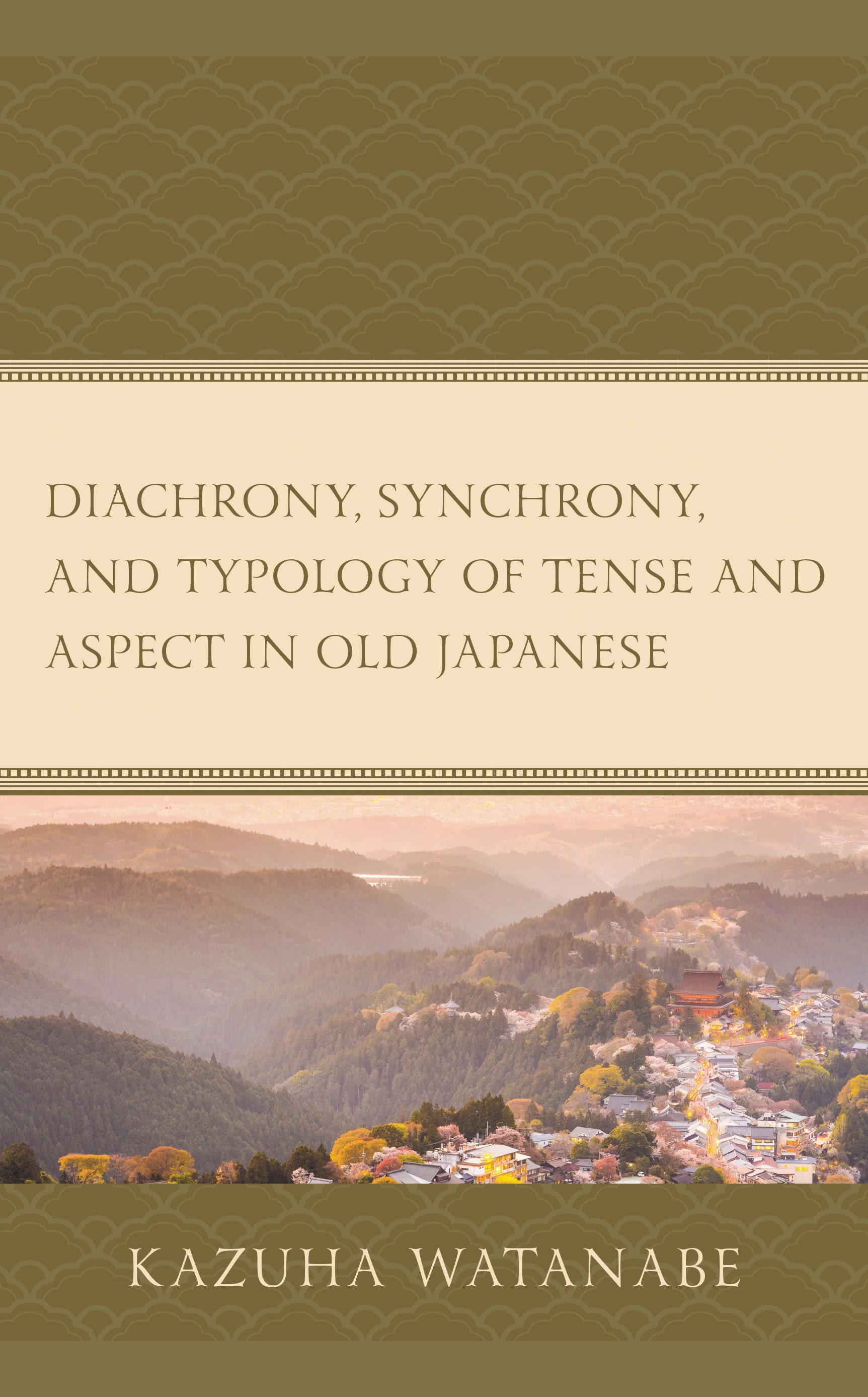
Diachrony, Synchrony, and Typology of Tense and Aspect in Old Japanese reconstructs the synchronic system of tense and aspect in Old Japanese, which until now had not been examined using the tools of contemporary linguistic theory. Kazuha Watanabe analyzes syntactic distribution of the temporal suffixes in the Man'yoshu, an eighth-century poetry collection, and compares the results with data from well-attested languages. The author then integrates the semantic property of each suffix into the overall synchronic tense-aspect system of Old Japanese. Watanabe further compares the reconstructed system with the distributions of the same suffixes in Early Modern Japanese using Genji Monogatari, an eleventh-century novel, in order to provide further support for the synchronic analysis of Old Japanese. This approach is fundamentally different from traditional analyses, which identify the meanings of the temporal suffixes based on contextual information. In addition, previous analyses have produced a uniform analysis covering the entire 700-year period from Old to Early Modern Japanese. Instead, Watanabe proposes that Old Japanese had a temporal system distinct from the later period.
Betala smidigt med kort, Klarna, Apple Pay eller Google Pay. Är du inte nöjd har du alltid 14 dagars ångerrätt. Läs mer i våra villkor. Har du några frågor, mejla oss på hello@memmo.org.
Memmo gör det enklare att plugga – var du än är i världen. Hos oss samlar du kursböcker och smarta studieverktyg på ett och samma ställe: sammanfattningar, quiz, poddar och flashcards. Och så Ted, din studiekompis som svarar på allt du undrar. Över 75 000 studenter pluggar redan här – byggt för att du ska lära dig snabbare och stressa mindre.