
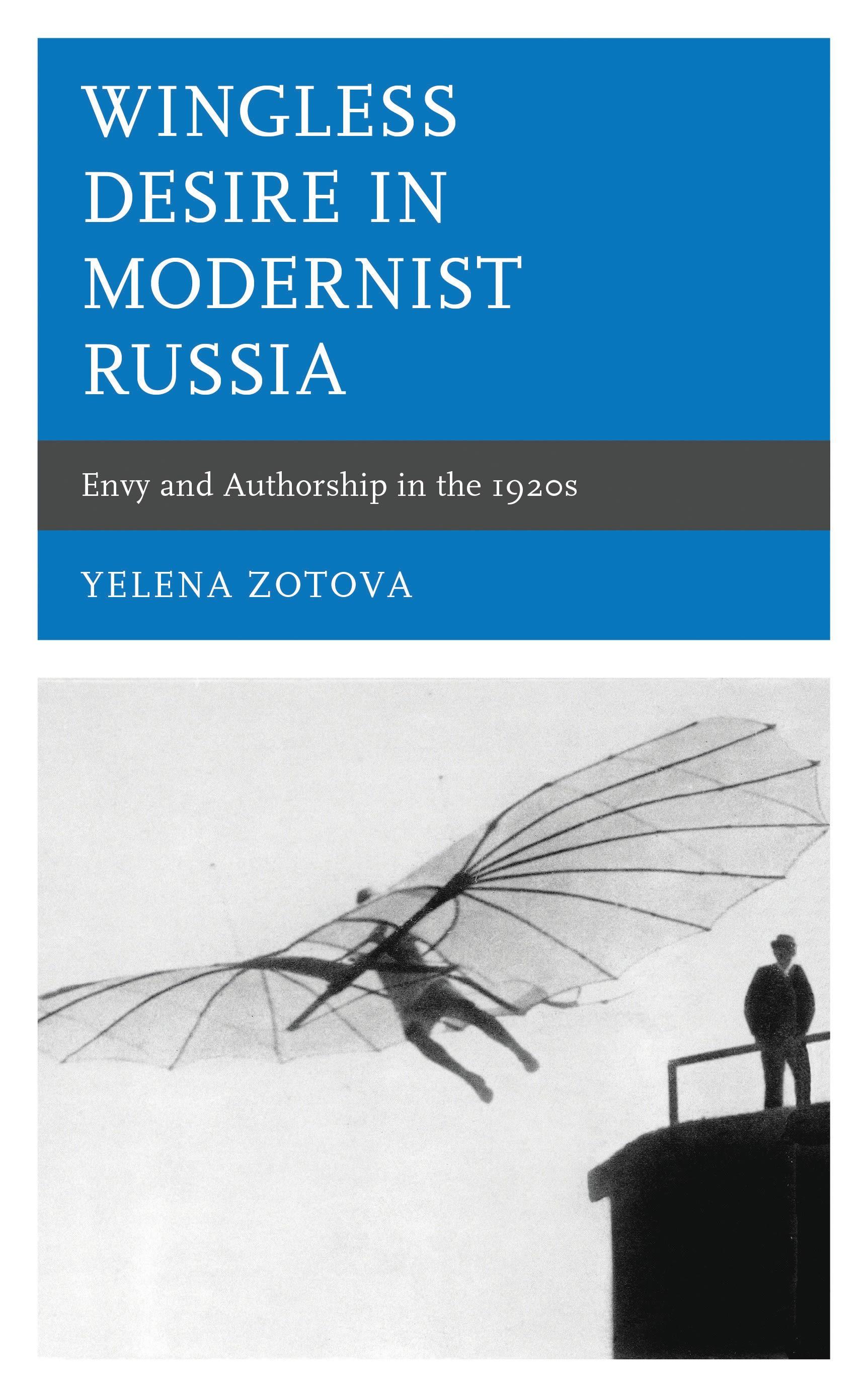
In Wingless Desire in Modernist Russia, Yelena Zotova argues that the concept of envy underwent a peculiar transformation in the Russian Modernist prose of the 1920s due to a series of radical shifts in societal values, with each subsequent change thwarting Russia’s volatile axiological hierarchy. Industriousness and austerity, inferior to playful genius in Pushkin’s “Mozart and Salieri,” became virtues, while the intrinsic value of nonutilitarian art was officially nullified by the Bolshevik state.Consequently, a new literary type emerged, and envy, described as “wingless desire” by Russia’s chief poet Alexander Pushkin, obtained new ownership as the envied became the envier. Superimposing twentieth-century theories of envy onto Mikhail Bakhtin’s “Author and Hero in the Aesthetic Activity” (1923), Zotova proposes that Salieri’s envy could be the wingless embryo of the Bakhtinian authorship.
Betala smidigt med kort, Klarna, Apple Pay eller Google Pay. Är du inte nöjd har du alltid 14 dagars ångerrätt. Läs mer i våra villkor. Har du några frågor, mejla oss på hello@memmo.org.
Memmo gör det enklare att plugga – var du än är i världen. Hos oss samlar du kursböcker och smarta studieverktyg på ett och samma ställe: sammanfattningar, quiz, poddar och flashcards. Och så Ted, din studiekompis som svarar på allt du undrar. Över 50 000 studenter pluggar redan här – byggt för att du ska lära dig snabbare och stressa mindre.