
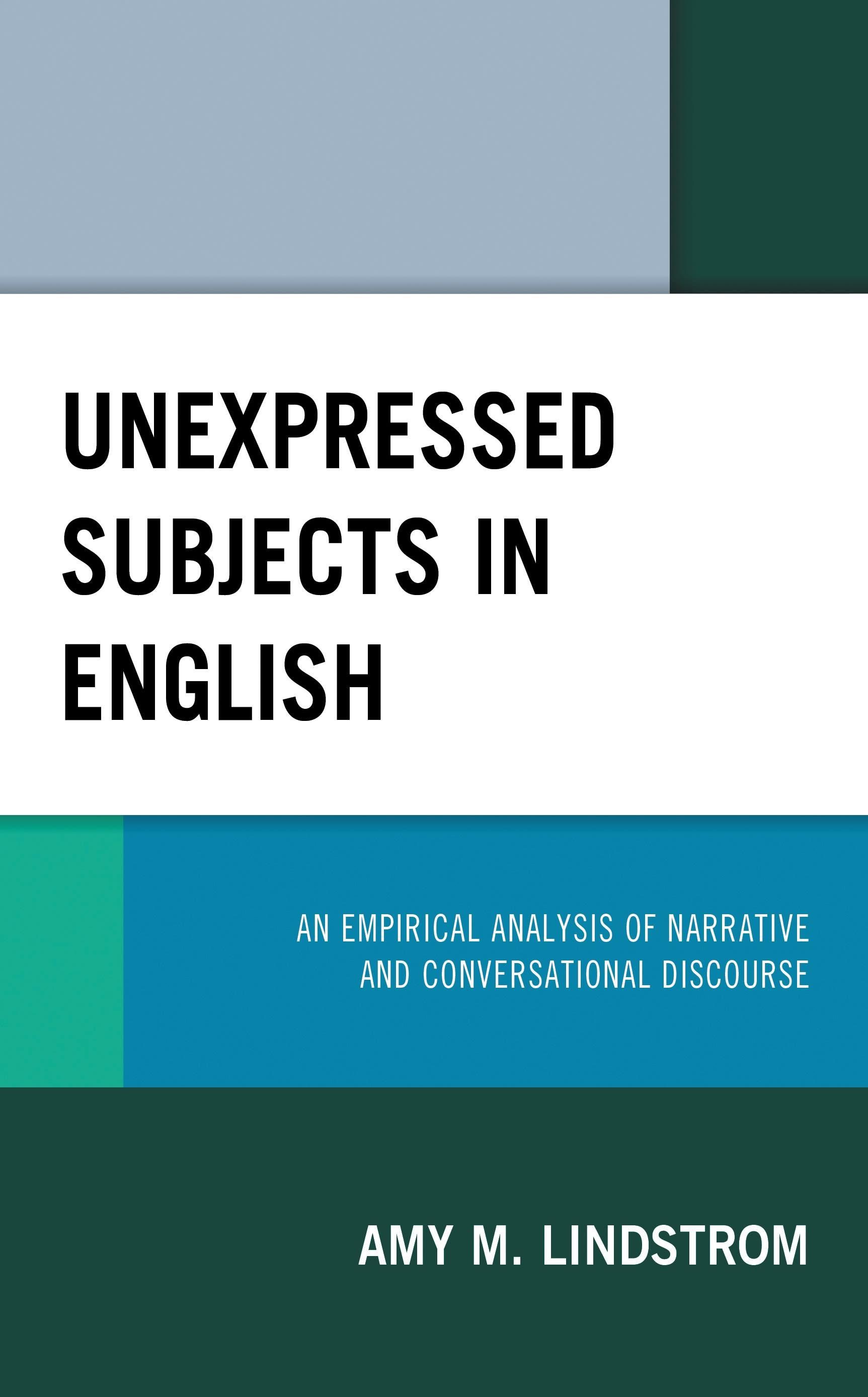
Unexpressed Subjects in English: An Empirical Analysis of Narrative and Conversational Discourse challenges previous assumptions of what is grammatically possible in English through an examination of contexts in which speakers omit subjects, demonstrating how language structure is influenced by communicative needs.
Through corpus-based analysis of both interactive conversations and monologic narratives, Amy M. Lindstrom reveals how the discourse/pragmatic factors of accessibility and chronological ordering, the prosodic effect of linking, and the mechanical effect of priming intersect to provide a rigorous account of subject (un)expression in spoken American English. Higher degrees of linking, cohesion, and connection lead to more unexpressed subjects. Lindstrom also analyzes frequent constructions with unexpressed subjects vis-à-vis paths of grammaticalization. The author presents a measurement of discourse connectedness that shows how the intersection of prosody and pragmatics illustrates the powerful effect of spontaneous discourse in shaping grammar. This study adds to our understanding of language and cognition by contributing to our knowledge of the conceptualization, categorization, and representation of experience and memory.
Through corpus-based analysis of both interactive conversations and monologic narratives, Amy M. Lindstrom reveals how the discourse/pragmatic factors of accessibility and chronological ordering, the prosodic effect of linking, and the mechanical effect of priming intersect to provide a rigorous account of subject (un)expression in spoken American English. Higher degrees of linking, cohesion, and connection lead to more unexpressed subjects. Lindstrom also analyzes frequent constructions with unexpressed subjects vis-à-vis paths of grammaticalization. The author presents a measurement of discourse connectedness that shows how the intersection of prosody and pragmatics illustrates the powerful effect of spontaneous discourse in shaping grammar. This study adds to our understanding of language and cognition by contributing to our knowledge of the conceptualization, categorization, and representation of experience and memory.
Betala smidigt med kort, Klarna, Apple Pay eller Google Pay. Är du inte nöjd har du alltid 14 dagars ångerrätt. Läs mer i våra villkor. Har du några frågor, mejla oss på hello@memmo.org.
Memmo gör det enklare att plugga – var du än är i världen. Hos oss samlar du kursböcker och smarta studieverktyg på ett och samma ställe: sammanfattningar, quiz, poddar och flashcards. Och så Ted, din studiekompis som svarar på allt du undrar. Över 50 000 studenter pluggar redan här – byggt för att du ska lära dig snabbare och stressa mindre.