
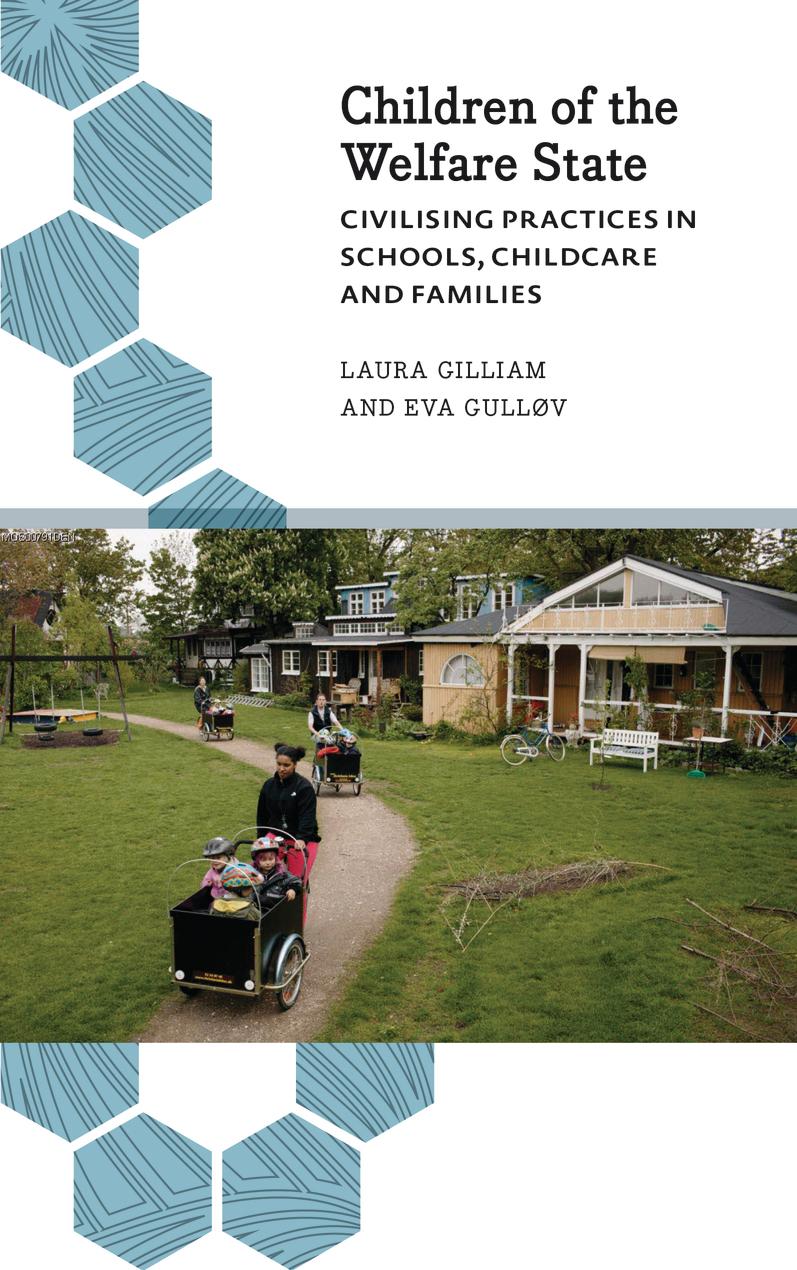
This original ethnographic study looks at how children are ‘civilised’ within child institutions, such as schools, day care centres and families, under the auspices of the welfare state.
As part of a general discussion on civilising projects and the role of state institutions, the authors focus on Denmark, a country characterised by the extent of time children use in public institutions from an early age. They look at the extraordinary amount of attention and effort put into the process of upbringing by the state, as well as the widespread co-operation in this by parents across the social spectrum.
Taking as its point of departure the sociologist Norbert Elias’ concept of civilising, Children of the Welfare State explores the ideals of civilised conduct expressed through institutional upbringing and examine how children of different age, gender, ethnicity and social backgrounds experience and react to these norms and efforts. The analysis demonstrates that welfare state institutions, though characterised by a strong egalitarian ideal, create distinctions between social groups, teach children about moral hierarchies in society and prompts them to identify as more or less civilised citizens of the state.
As part of a general discussion on civilising projects and the role of state institutions, the authors focus on Denmark, a country characterised by the extent of time children use in public institutions from an early age. They look at the extraordinary amount of attention and effort put into the process of upbringing by the state, as well as the widespread co-operation in this by parents across the social spectrum.
Taking as its point of departure the sociologist Norbert Elias’ concept of civilising, Children of the Welfare State explores the ideals of civilised conduct expressed through institutional upbringing and examine how children of different age, gender, ethnicity and social backgrounds experience and react to these norms and efforts. The analysis demonstrates that welfare state institutions, though characterised by a strong egalitarian ideal, create distinctions between social groups, teach children about moral hierarchies in society and prompts them to identify as more or less civilised citizens of the state.
Betala smidigt med kort, Klarna, Apple Pay eller Google Pay. Är du inte nöjd har du alltid 14 dagars ångerrätt. Läs mer i våra villkor. Har du några frågor, mejla oss på hello@memmo.org.
Memmo gör det enklare att plugga – var du än är i världen. Hos oss samlar du kursböcker och smarta studieverktyg på ett och samma ställe: sammanfattningar, quiz, poddar och flashcards. Och så Ted, din studiekompis som svarar på allt du undrar. Över 50 000 studenter pluggar redan här – byggt för att du ska lära dig snabbare och stressa mindre.
Du kanske också gillar
Köp boken0