
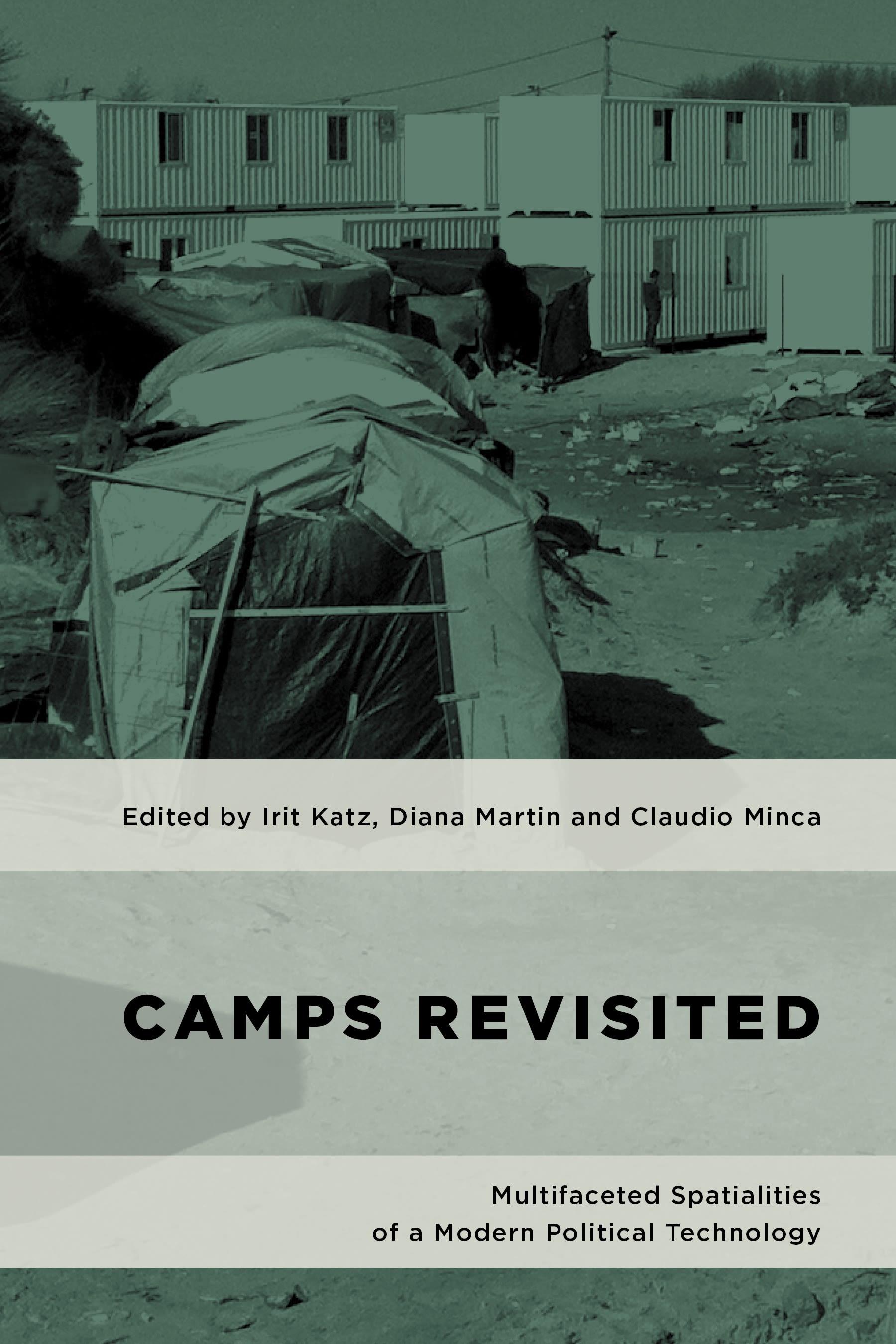
Facing the current growing global archipelago of encampments, this book project intends to develop a geographical reflection on ‘the camp’, as a modern institution and as a spatial bio-political technology.
This book focuses on past and present camp geographies and on the dispositifs that make them an ever-present spatial formation in the management of unwanted populations characterizing many authoritarian regimes as well as many contemporary democracies. It also offers and investigates possible ways to resist the present-day proliferating manifestations of camps and ‘camp thinking’, by calling for the incorporation of ‘camp studies’ into the broader field of political geography and to consider the geographies of the camp as constitutive of much broader modern geo-political economies.
By linking spatial theory to the geopolitical and biopolitical workings and practices of contemporary camps, the contributions in this collection argue that the camps seem to be here-to-stay, like a permanent/temporary presence giving shape to improvised, semi-structured and hyper-orderly structured spatialities in our cities and our countryside. Camps are also a specific response, for example, to the changing conditions of European borders due to the ‘refugee crisis’ and the rise of nationalism in many countries affected by such crisis.
This book focuses on past and present camp geographies and on the dispositifs that make them an ever-present spatial formation in the management of unwanted populations characterizing many authoritarian regimes as well as many contemporary democracies. It also offers and investigates possible ways to resist the present-day proliferating manifestations of camps and ‘camp thinking’, by calling for the incorporation of ‘camp studies’ into the broader field of political geography and to consider the geographies of the camp as constitutive of much broader modern geo-political economies.
By linking spatial theory to the geopolitical and biopolitical workings and practices of contemporary camps, the contributions in this collection argue that the camps seem to be here-to-stay, like a permanent/temporary presence giving shape to improvised, semi-structured and hyper-orderly structured spatialities in our cities and our countryside. Camps are also a specific response, for example, to the changing conditions of European borders due to the ‘refugee crisis’ and the rise of nationalism in many countries affected by such crisis.
Betala smidigt med kort, Klarna, Apple Pay eller Google Pay. Är du inte nöjd har du alltid 14 dagars ångerrätt. Läs mer i våra villkor. Har du några frågor, mejla oss på hello@memmo.org.
Memmo gör det enklare att plugga – var du än är i världen. Hos oss samlar du kursböcker och smarta studieverktyg på ett och samma ställe: sammanfattningar, quiz, poddar och flashcards. Och så Ted, din studiekompis som svarar på allt du undrar. Över 50 000 studenter pluggar redan här – byggt för att du ska lära dig snabbare och stressa mindre.