
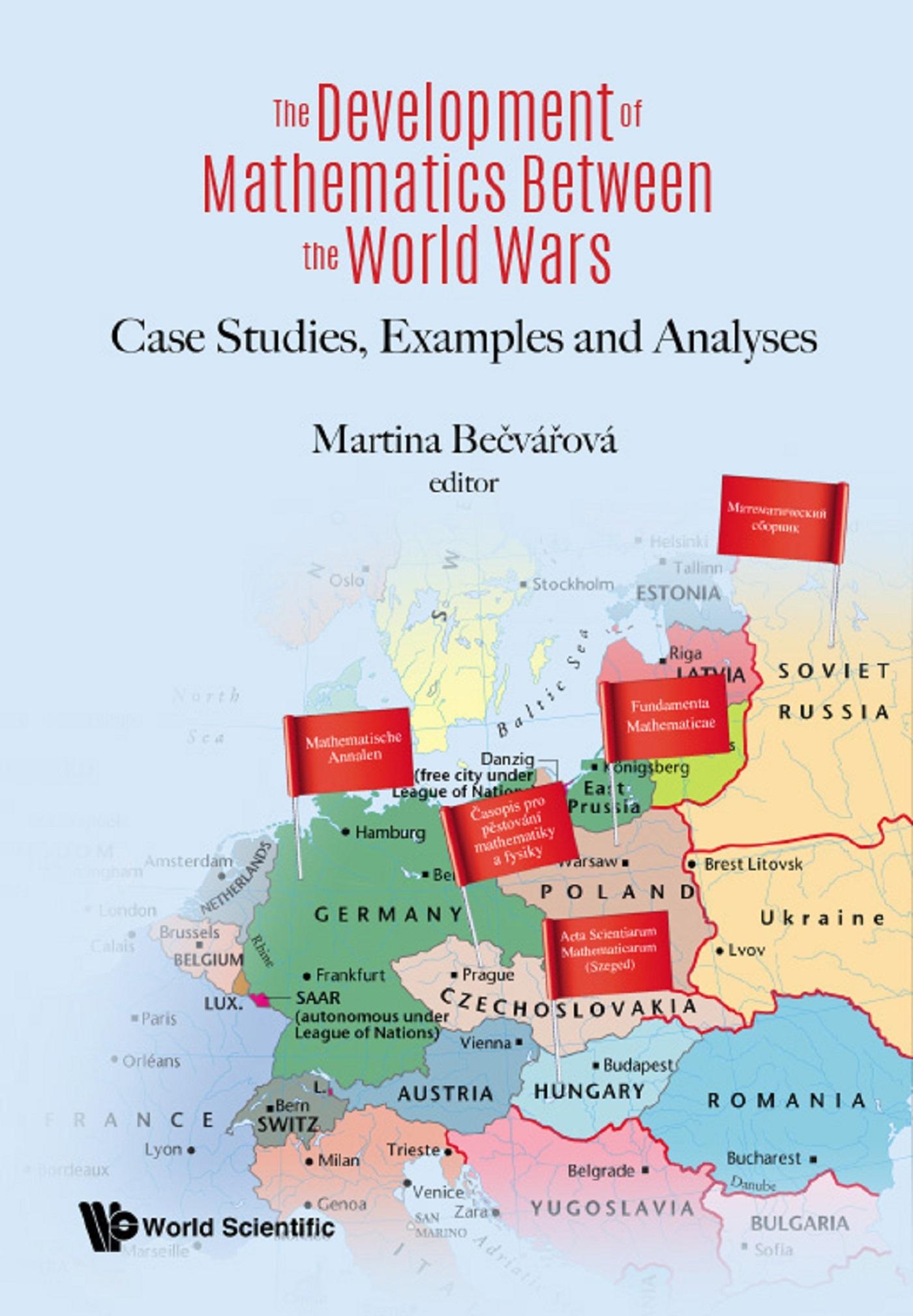
The Development of Mathematics Between the World Wars traces the transformation of scientific life within mathematical communities during the interwar period in Central and Eastern Europe, specifically in Germany, Russia, Poland, Hungary, and Czechoslovakia. Throughout the book, in-depth mathematical analyses and examples are included for the benefit of the reader.World War I heavily affected academic life. In European countries, many talented researchers and students were killed in action and scientific activities were halted to resume only in the postwar years. However, this inhibition turned out to be a catalyst for the birth of a new generation of mathematicians, for the emergence of new ideas and theories and for the surprising creation of new and outstanding scientific schools.The final four chapters are not restricted to Central and Eastern Europe and deal with the development of mathematics between World War I and World War II. After describing the general state of mathematics at the end of the 19th century and the first third of the 20th century, three case studies dealing with selected mathematical disciplines are presented (set theory, potential theory, combinatorics), in a way accessible to a broad audience of mathematicians as well as historians of mathematics.
Betala smidigt med kort, Klarna, Apple Pay eller Google Pay. Är du inte nöjd har du alltid 14 dagars ångerrätt. Läs mer i våra villkor. Har du några frågor, mejla oss på hello@memmo.org.
Memmo gör det enklare att plugga – var du än är i världen. Hos oss samlar du kursböcker och smarta studieverktyg på ett och samma ställe: sammanfattningar, quiz, poddar och flashcards. Och så Ted, din studiekompis som svarar på allt du undrar. Över 50 000 studenter pluggar redan här – byggt för att du ska lära dig snabbare och stressa mindre.
Du kanske också gillar
Köp boken0