
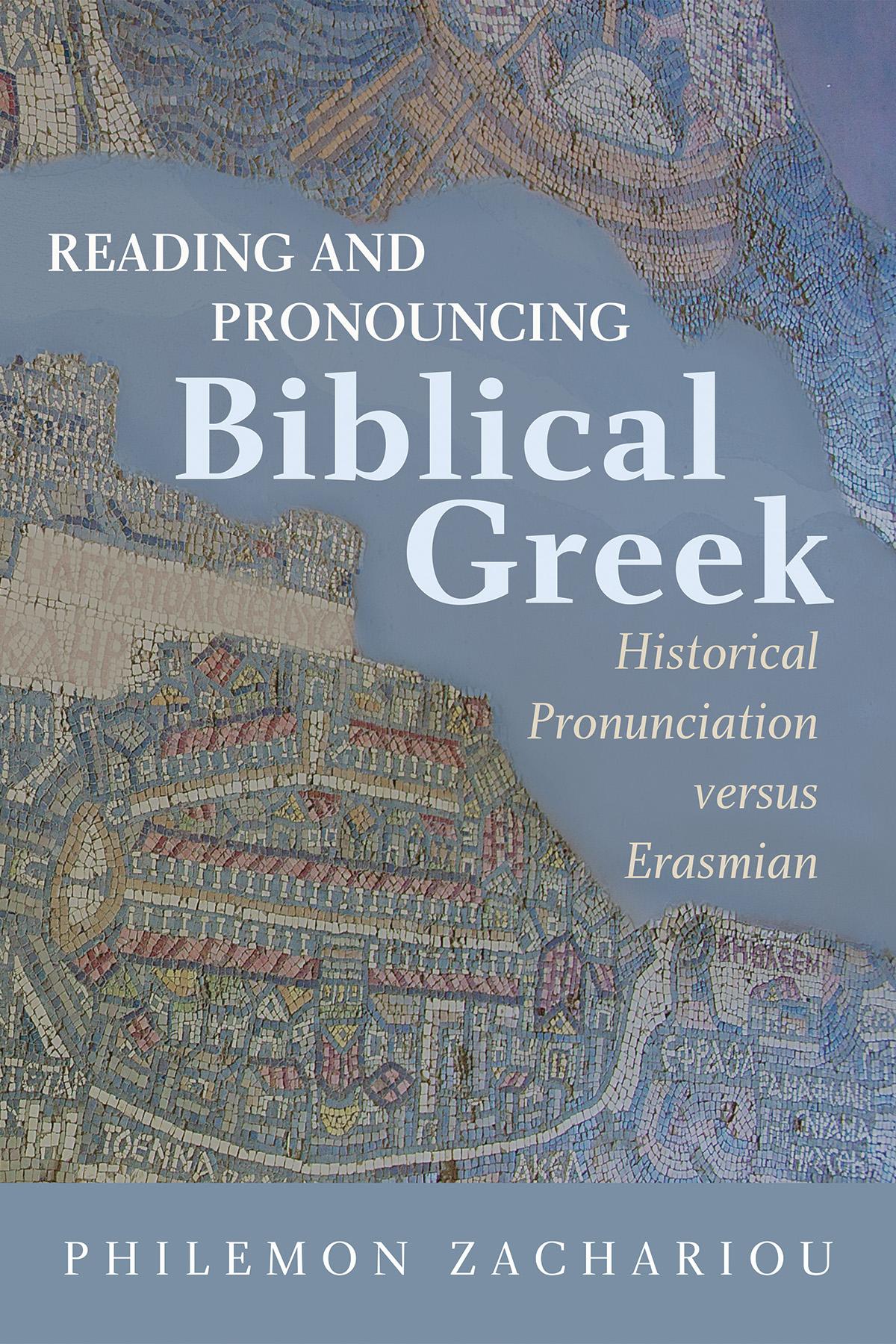
This book invites you to see not only how Hellenistic Koine ought to be pronounced but also why. Rigorously investigating the history of Greek orthography and sounds from classical times to the present, the author places linguistic findings on one side of the scale and related events on the other. The result is a balance between the evidence of the historical Greek sounds in Koine and pre-Koine times, and the political events that derailed those sounds as they were being transported through Europe's Renaissance academia and replaced them with Erasmian.
This book argues for a return to the historical Greek sounds now preserved in Neohellenic (Modern Greek) as a step toward mending the Erasmian dichotomy that rendered post-Koine Greek irrelevant to New Testament Greek studies. The goal is a holistic and diachronic application of the Hellenic language and literature to illume exegetically the Greek text, as the New Testament contains numerous features that have close affinity with Neohellenic and should not be left unexplored.
Betala smidigt med kort, Klarna, Apple Pay eller Google Pay. Är du inte nöjd har du alltid 14 dagars ångerrätt. Läs mer i våra villkor. Har du några frågor, mejla oss på hello@memmo.org.
Memmo gör det enklare att plugga – var du än är i världen. Hos oss samlar du kursböcker och smarta studieverktyg på ett och samma ställe: sammanfattningar, quiz, poddar och flashcards. Och så Ted, din studiekompis som svarar på allt du undrar. Över 50 000 studenter pluggar redan här – byggt för att du ska lära dig snabbare och stressa mindre.
Du kanske också gillar
Köp boken0