
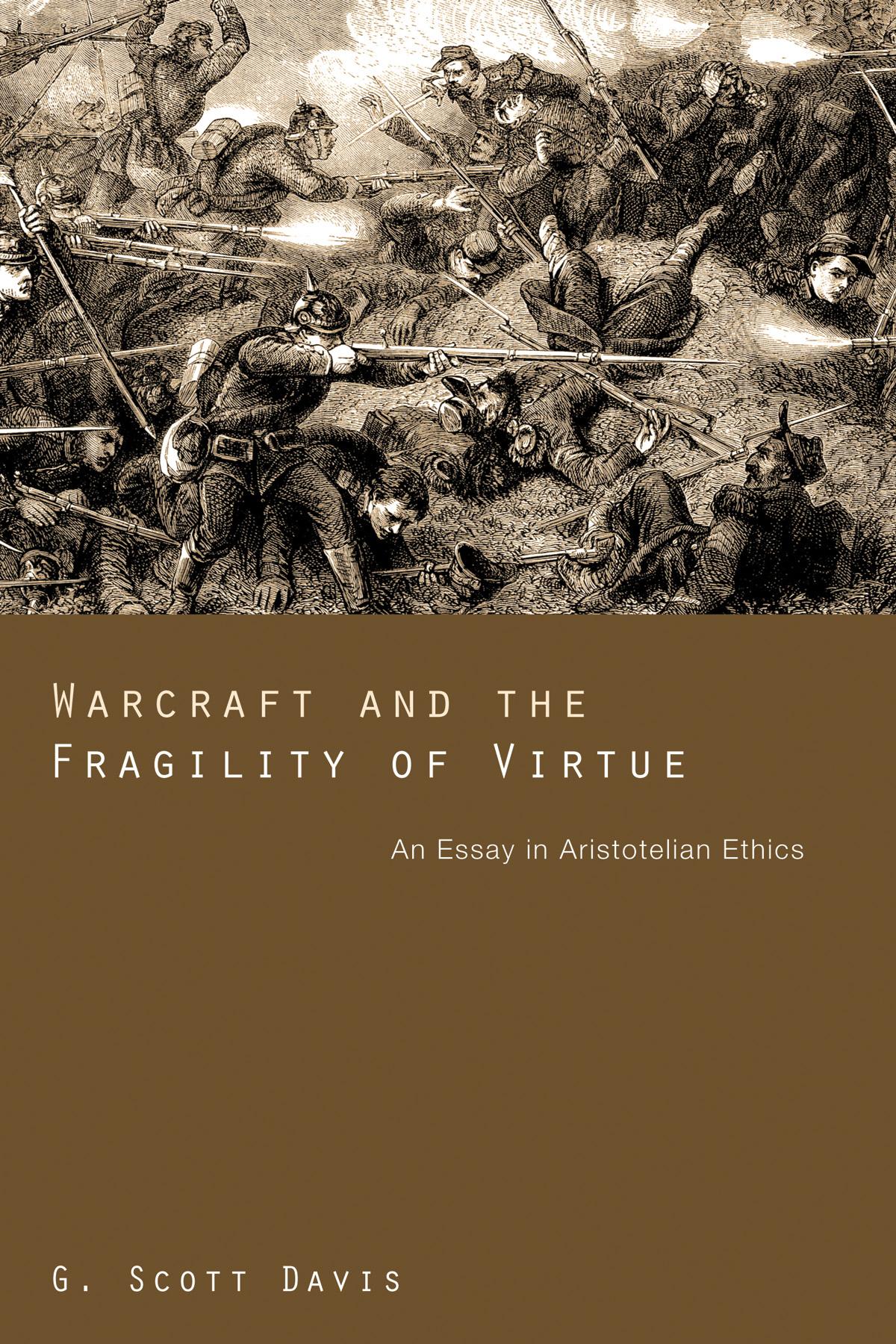
Recent work by Stanley Hauerwas, Alasdair MacIntyre, and Robert Bellah has brought considerable attention to bear on the ethics of virtue. Little clarity has, however, emerged from that discussion on what difference such an ethic would make in practical and political deliberations. Warcraft and the Fragility of Virtue presents, for the first time, a well-developed and effective Aristotelian perspective on reasoning about war and warfare.
Author G. Scott Davis first sketches the fundamentals of as Aristotelian approach to the ethics of war, arguing that the virtue is a craft, of itself fragile, that must be sustained by a community that makes the highest demands upon itself. Introduced as a criterion for evaluating alliances and international relations, the concept of moral community is also of the highest significance for interpreting those ruptures within the community, including resistance and rebellion, that arise concomitantly with the prospect and onset of war.
Betala smidigt med kort, Klarna, Apple Pay eller Google Pay. Är du inte nöjd har du alltid 14 dagars ångerrätt. Läs mer i våra villkor. Har du några frågor, mejla oss på hello@memmo.org.
Memmo gör det enklare att plugga – var du än är i världen. Hos oss samlar du kursböcker och smarta studieverktyg på ett och samma ställe: sammanfattningar, quiz, poddar och flashcards. Och så Ted, din studiekompis som svarar på allt du undrar. Över 50 000 studenter pluggar redan här – byggt för att du ska lära dig snabbare och stressa mindre.
Du kanske också gillar
Köp boken0