
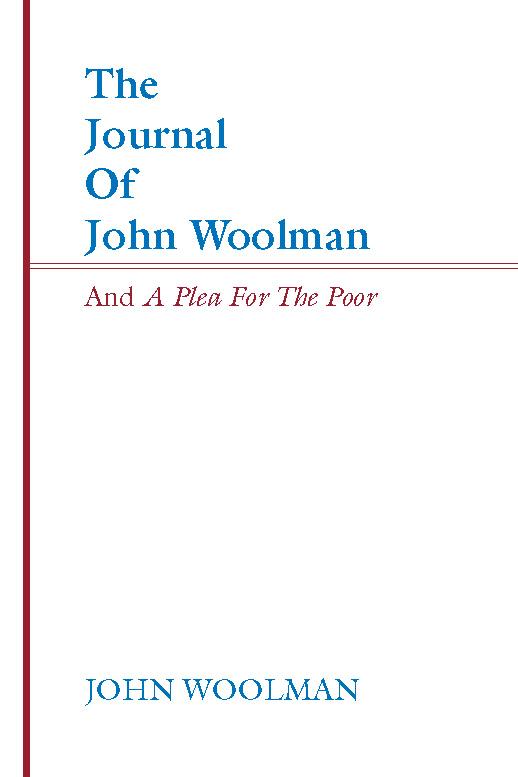
Woolman's "Journal" was first published in 1774 (shortly after his death). His life, as recorded by himself, was the finest flower of a unique Quaker culture, whose focus, as Howard H. Brinton has put is, was not on the literary or plastic arts but on "life itself in home, meeting and community," a life which was an "artistic creation as beautiful in its simplicity and proportion as was the architecture of its meeting houses..." Its distinguishing marks were not dogmas but practical testimonies for equality, simplicity and peace. These testimonies, once revolutionary in their social implications, were already becoming institutionalized in Woolman's time as the badges of a "peculiar" people." In his quiet way (he must have been the quietest radical in history) John Woolman reforged the testimonies, tempered them in the stream of love and converted them once again into instruments of social revolution.
Betala smidigt med kort, Klarna, Apple Pay eller Google Pay. Är du inte nöjd har du alltid 14 dagars ångerrätt. Läs mer i våra villkor. Har du några frågor, mejla oss på hello@memmo.org.
Memmo gör det enklare att plugga – var du än är i världen. Hos oss samlar du kursböcker och smarta studieverktyg på ett och samma ställe: sammanfattningar, quiz, poddar och flashcards. Och så Ted, din studiekompis som svarar på allt du undrar. Över 75 000 studenter pluggar redan här – byggt för att du ska lära dig snabbare och stressa mindre.
Du kanske också gillar
Köp boken0