
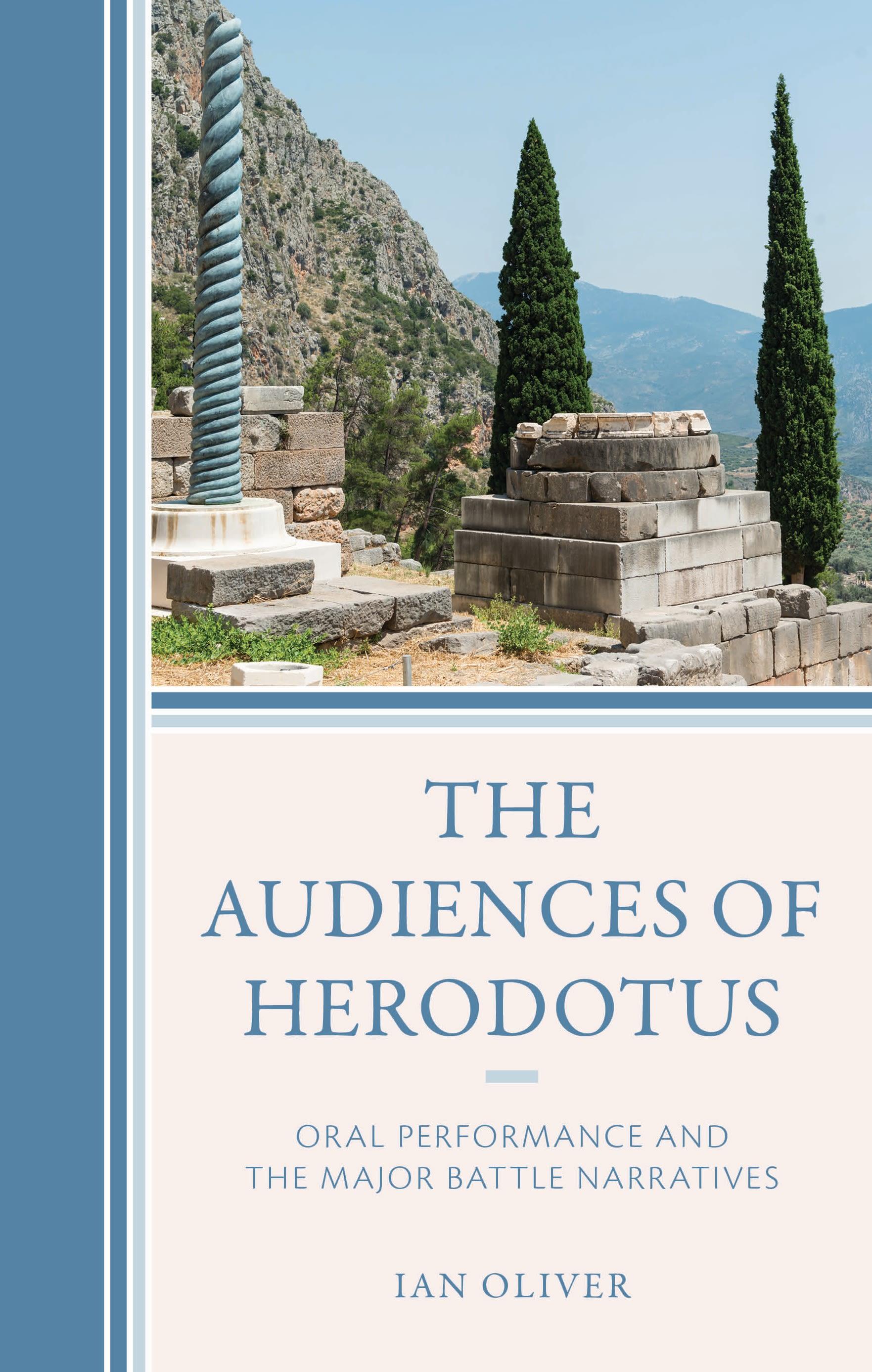
By recognizing the pervasive influence that Herodotus’s career as an oral performer had on his composition of the Histories, The Audiences of Herodotus: Oral Performance and the Battle Narratives argues that the Histories’ versions of the three most important battles in the Persian Wars—the battles of Thermopylae, Salamis, and Plataea—persistently and disproportionately advance the interests, biases, and political agendas of distinct audiences in the mid-fifth century, well before Herodotus assembled his famous work of history as it survives to us. The Salamis and Plataea narratives reflect a mid-century audience of Athenians and their allies; the Thermopylae narrative reflects an Amphictyonic audience gathered at the Pythian Festival. Ian Oliver concludes that, as a participant in a culture of wisdom performance (epideixis), Herodotus originally composed short, ideologically motivated performance pieces that he intended to promote tendentious reinterpretations of these momentous events, then relied on these narratives when he composed his final text: the unitary Histories.
Betala smidigt med kort, Klarna, Apple Pay eller Google Pay. Är du inte nöjd har du alltid 14 dagars ångerrätt. Läs mer i våra villkor. Har du några frågor, mejla oss på hello@memmo.org.
Memmo gör det enklare att plugga – var du än är i världen. Hos oss samlar du kursböcker och smarta studieverktyg på ett och samma ställe: sammanfattningar, quiz, poddar och flashcards. Och så Ted, din studiekompis som svarar på allt du undrar. Över 50 000 studenter pluggar redan här – byggt för att du ska lära dig snabbare och stressa mindre.