
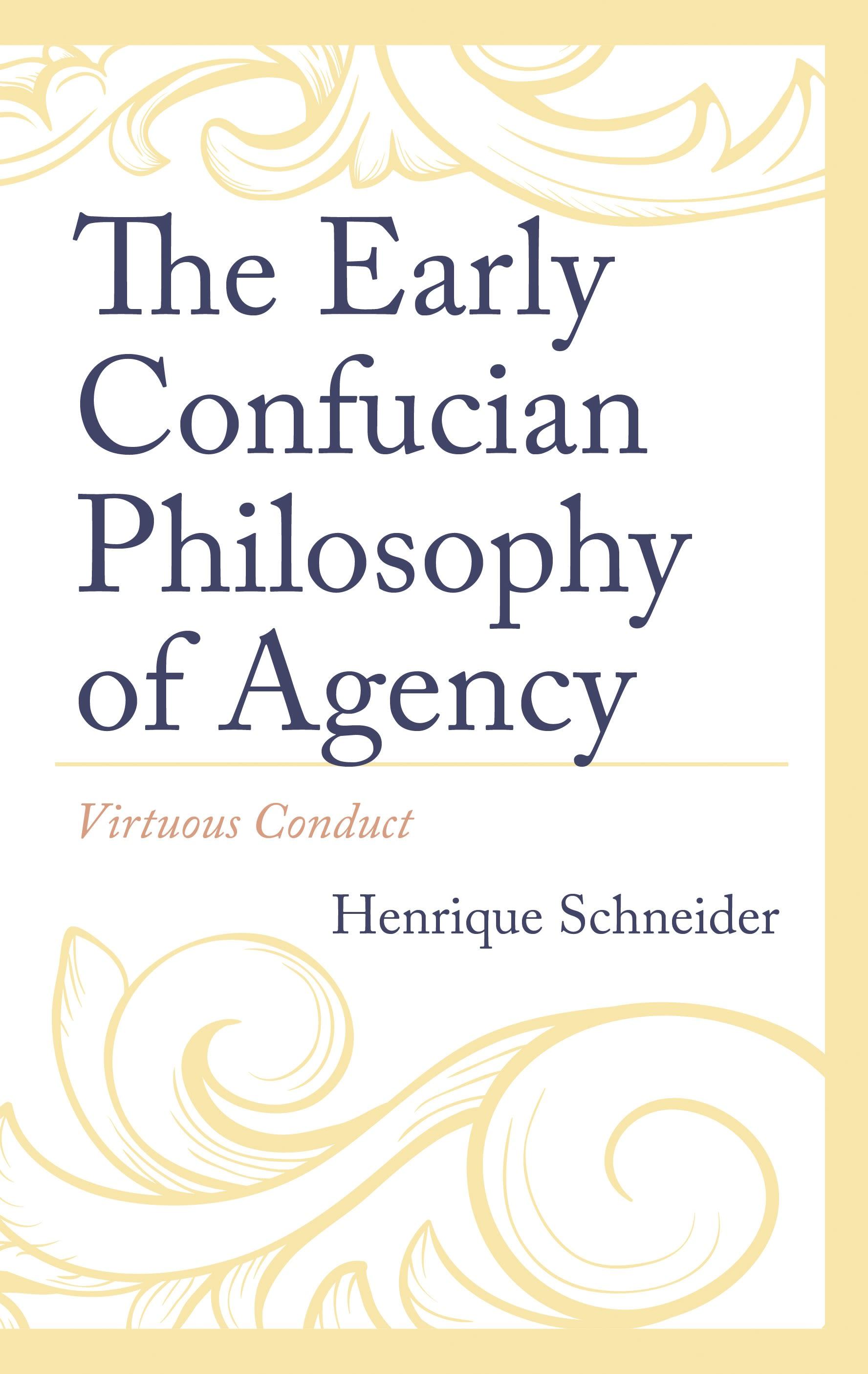
Henrique Schneider argues that understanding the three Early Confucian thinkers—Confucius, Mencius, and Xunzi—as virtue-ethicists, political philosophers, or social conservatives proves too narrow. Championing a broader and more philosophical reading, The Early Confucian Philosophy of Agency: Virtuous Conduct sheds new light on a well-established topic. Virtuous conduct—aligning actions and motivations with virtues, social roles, and rituals—is the philosophy of agency of Early Confucianism. Confucius, Mencius, and Xunzi share a common philosophy of agency, which does more than describe agents and acts: it also represents a progressive social and political program. Schneider characterizes Early Confucianism as a progressive philosophy due to its human-centered program for social reform, its process view of self-cultivation, and its development. Agents who cultivate themselves can produce virtuous conduct, flourish, and become Junzi. This lets them lead each other in self-cultivation, social environment, and polity. As such, virtuous conduct integrates ethics, social and political philosophy in a theory of action.
Betala smidigt med kort, Klarna, Apple Pay eller Google Pay. Är du inte nöjd har du alltid 14 dagars ångerrätt. Läs mer i våra villkor. Har du några frågor, mejla oss på hello@memmo.org.
Memmo gör det enklare att plugga – var du än är i världen. Hos oss samlar du kursböcker och smarta studieverktyg på ett och samma ställe: sammanfattningar, quiz, poddar och flashcards. Och så Ted, din studiekompis som svarar på allt du undrar. Över 50 000 studenter pluggar redan här – byggt för att du ska lära dig snabbare och stressa mindre.