
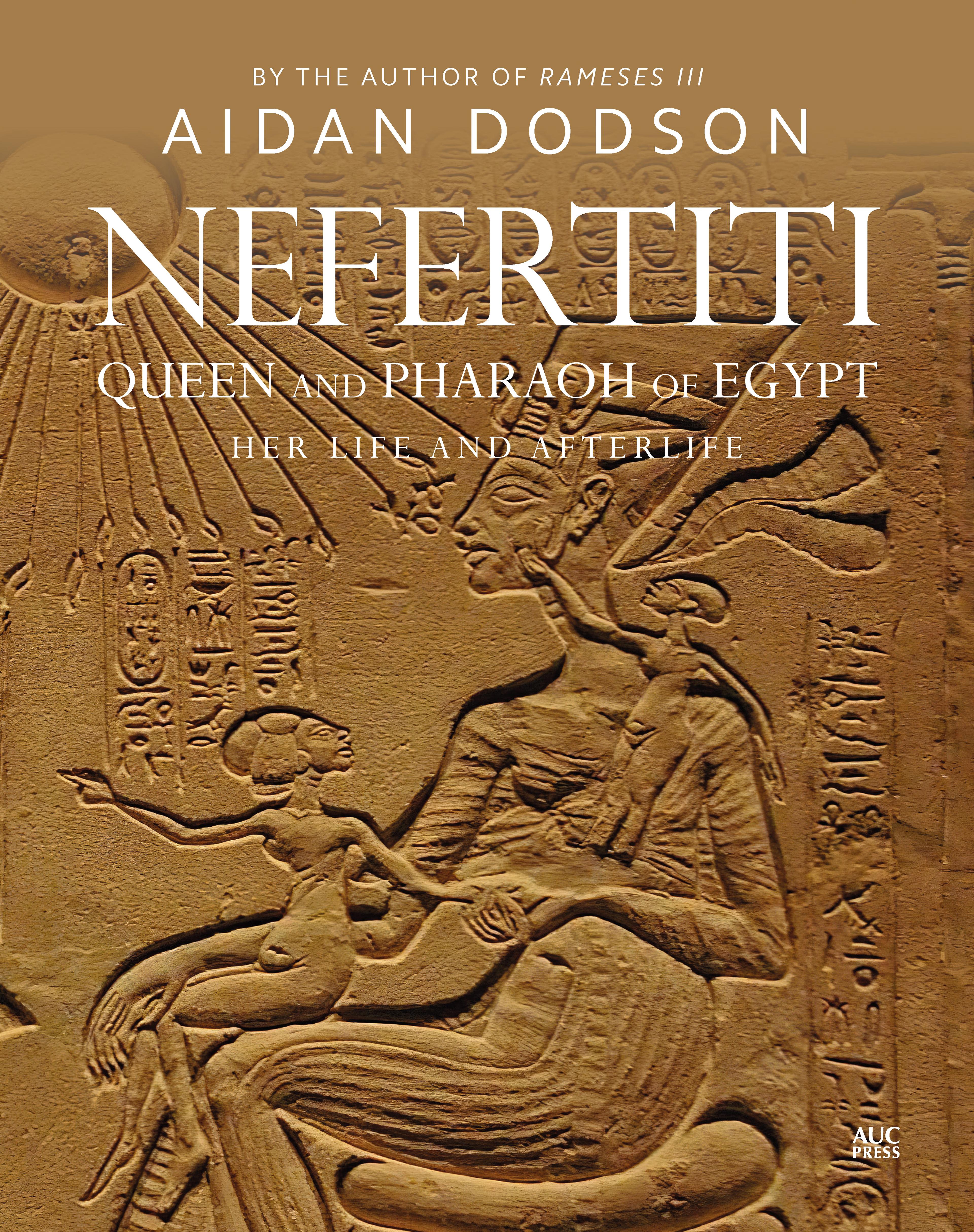
Egypt's sun queen magnificently revealed in a new book by renowned Egyptologist, Aidan Dodson
During the last half of the fourteenth century BC, Egypt was perhaps at the height of its prosperity. It was against this background that the “Amarna Revolution” occurred. Throughout, its instigator, King Akhenaten, had at his side his Great Wife, Nefertiti. When a painted bust of the queen found at Amarna in 1912 was first revealed to the public in the 1920s, it soon became one of the great artistic icons of the world. Nefertiti's name and face are perhaps the best known of any royal woman of ancient Egypt and one of the best recognized figures of antiquity, but her image has come in many ways to overshadow the woman herself.
Nefertiti’s current world dominion as a cultural and artistic icon presents an interesting contrast with the way in which she was actively written out of history soon after her own death. This book explores what we can reconstruct of the life of the queen, tracing the way in which she and her image emerged in the wake of the first tentative decipherment of Egyptian hieroglyphs during the 1820s–1840s, and then took on the world over the next century and beyond.
All indications are that her final fate was a tragic one, but although every effort was made to wipe out Nefertiti's memory after her death, modern archaeology has rescued the queen-pharaoh from obscurity and set her on the road to today’s international status.
Betala smidigt med kort, Klarna, Apple Pay eller Google Pay. Är du inte nöjd har du alltid 14 dagars ångerrätt. Läs mer i våra villkor. Har du några frågor, mejla oss på hello@memmo.org.
Memmo gör det enklare att plugga – var du än är i världen. Hos oss samlar du kursböcker och smarta studieverktyg på ett och samma ställe: sammanfattningar, quiz, poddar och flashcards. Och så Ted, din studiekompis som svarar på allt du undrar. Över 50 000 studenter pluggar redan här – byggt för att du ska lära dig snabbare och stressa mindre.