
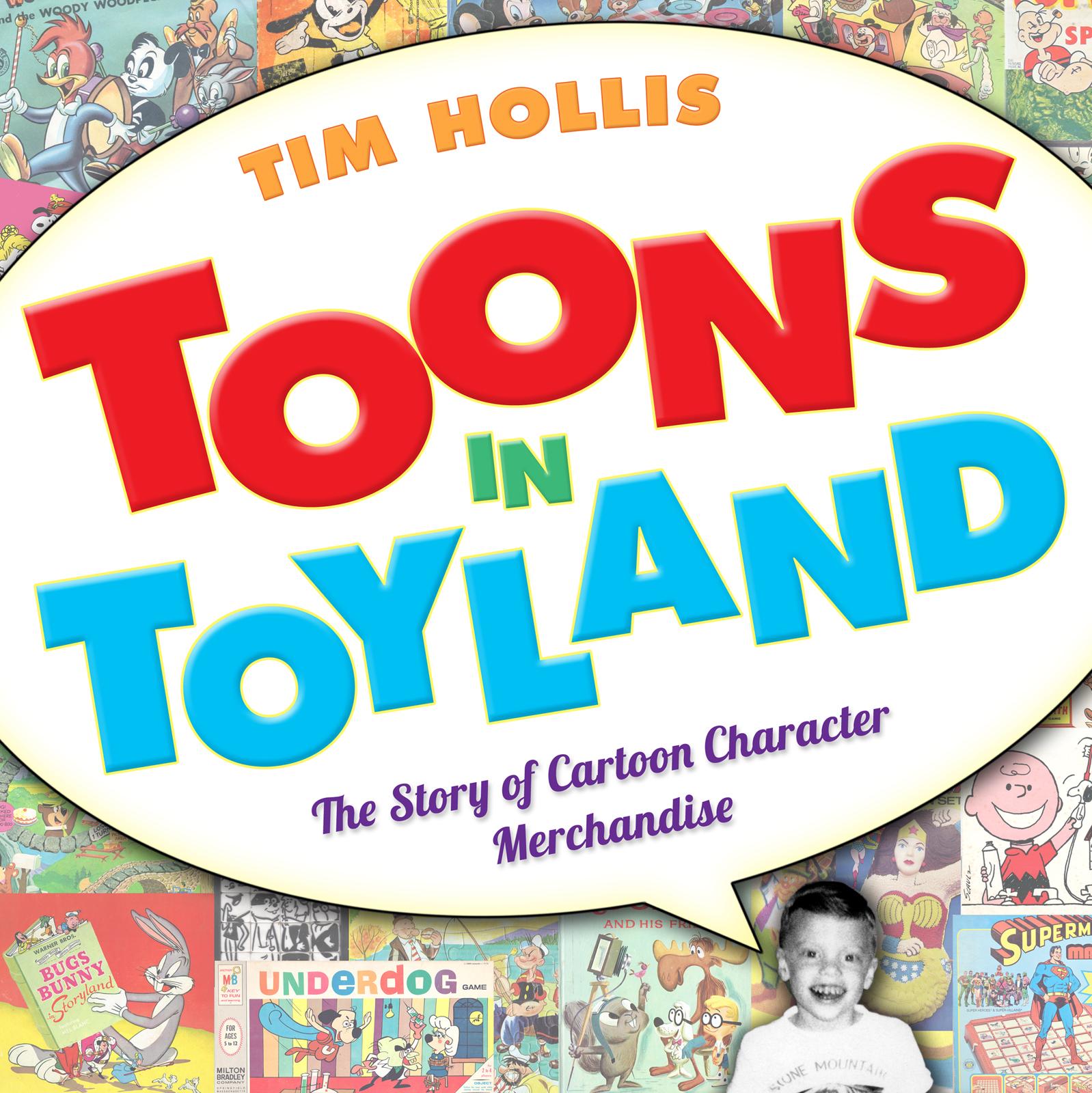
Every living American adult likely prized one childhood toy that featured the happy image of an animated cartoon or comic strip character. There is an ever-growing market for these collectibles, and stacks of books pose as pricing guides. Yet Tim Hollis is the first to examine the entire story of character licensing and merchandising from a historical view.
Toons in Toyland focuses mainly on the post-World War II years, circa 1946-1980, when the last baby boomers were in high school. During those years, the mass merchandising of cartoon characters peaked. However, the concept of licensing cartoon characters for toys, trinkets, and other merchandise dates back to the very first newspaper comics character, the Yellow Kid, who debuted in 1896 and was soon appearing on a variety of items. Eventually, cartoon producers and comic strip artists counted on merchandising as a major part of their revenue stream. It still plays a tremendous role in the success of the Walt Disney Company and many others today.
Chapters examine storybooks (such as Little Golden Books), comic books, records, board games, jigsaw puzzles, optical toys (including View-Master and Kenner's Give-a-Show Projector), and holiday paraphernalia. Extending even beyond toys, food companies licensed characters galore--remember the Peanuts characters plugging bread and Dolly Madison snacks? And roadside attractions, amusement parks, campgrounds, and restaurants--think Yogi Bear and Jellystone Park Campgrounds--all bought a bit of cartoon magic to lure the green waves of tourists' dollars.
Toons in Toyland focuses mainly on the post-World War II years, circa 1946-1980, when the last baby boomers were in high school. During those years, the mass merchandising of cartoon characters peaked. However, the concept of licensing cartoon characters for toys, trinkets, and other merchandise dates back to the very first newspaper comics character, the Yellow Kid, who debuted in 1896 and was soon appearing on a variety of items. Eventually, cartoon producers and comic strip artists counted on merchandising as a major part of their revenue stream. It still plays a tremendous role in the success of the Walt Disney Company and many others today.
Chapters examine storybooks (such as Little Golden Books), comic books, records, board games, jigsaw puzzles, optical toys (including View-Master and Kenner's Give-a-Show Projector), and holiday paraphernalia. Extending even beyond toys, food companies licensed characters galore--remember the Peanuts characters plugging bread and Dolly Madison snacks? And roadside attractions, amusement parks, campgrounds, and restaurants--think Yogi Bear and Jellystone Park Campgrounds--all bought a bit of cartoon magic to lure the green waves of tourists' dollars.
Sidor: 312
Kategori: Film- & Medievetenskap
e-ISBN: 9781626745001
Fraktvikt: 1.2 kg
Skickas inom: 1-2 dagar
Betala smidigt med kort, Klarna, Apple Pay eller Google Pay. Är du inte nöjd har du alltid 14 dagars ångerrätt. Läs mer i våra villkor. Har du några frågor, mejla oss på hello@memmo.org.
Memmo gör det enklare att plugga – var du än är i världen. Hos oss samlar du kursböcker och smarta studieverktyg på ett och samma ställe: sammanfattningar, quiz, poddar och flashcards. Och så Ted, din studiekompis som svarar på allt du undrar. Över 50 000 studenter pluggar redan här – byggt för att du ska lära dig snabbare och stressa mindre.
Du kanske också gillar
Köp boken0