
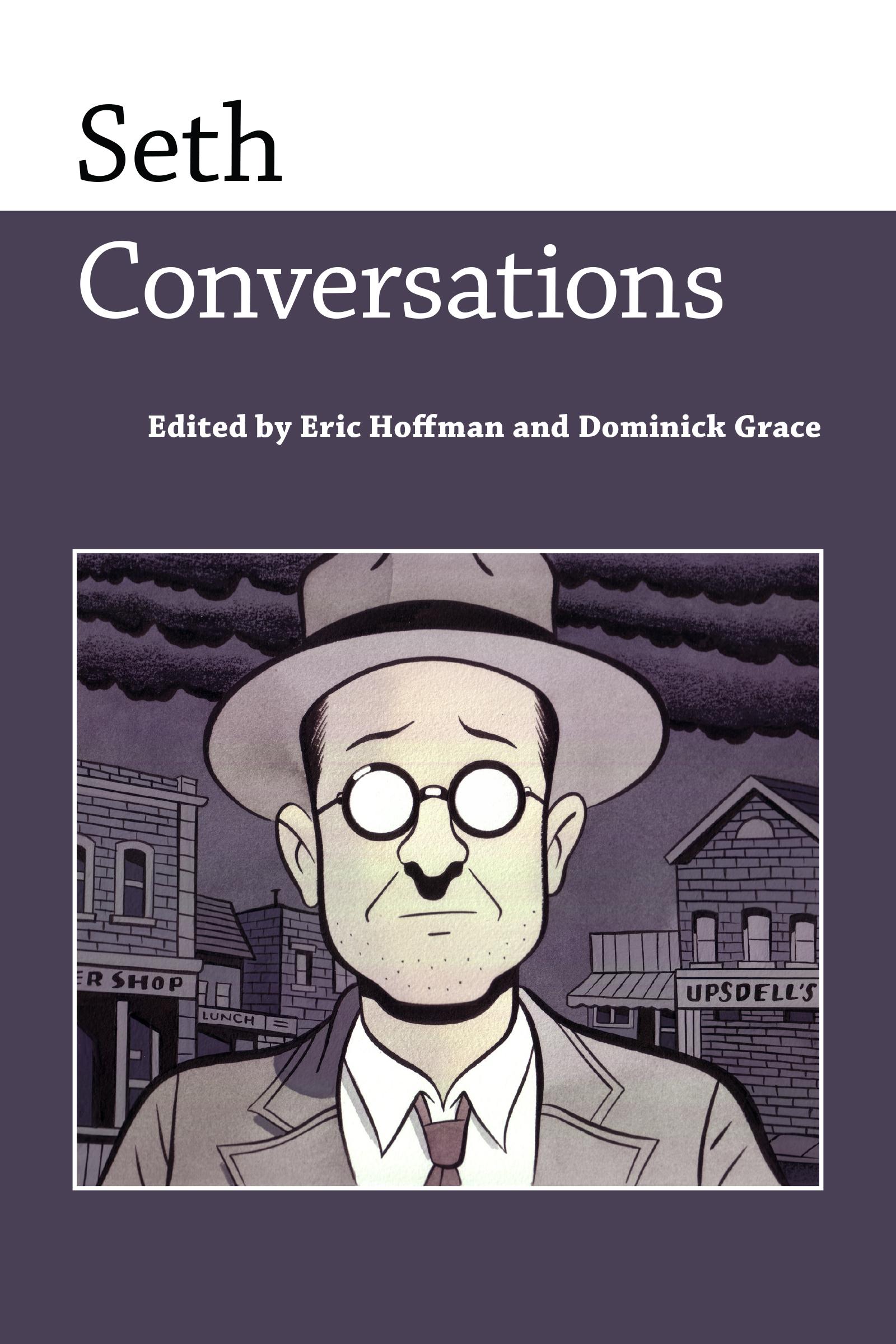
Canadian cartoonist Gregory Gallant, pen name Seth, emerged as a cartoonist in the fertile period of the 1980s, when the alternative comics market boomed. Though he was influenced by mainstream comics in his teen years and did his earliest comics work on Mister X, a mainstream-style melodrama, Seth remains one of the least mainstream-inflected figures of the alternative comics' movement. His primary influences are underground comix, newspaper strips, and classic cartooning.
These interviews, including one career-spanning, definitive interview between the volume editors and the artist published here for the first time, delve into Seth's output from its earliest days to the present. Conversations offer insight into his influences, ideologies of comics and art, thematic preoccupations, and major works, from numerous perspectives—given Seth's complex and multifaceted artistic endeavors. Seth's first graphic novel, It's a Good Life, If You Don't Weaken, announced his fascination with the past and with earlier cartooning styles. Subsequent works expand on those preoccupations and themes. Clyde Fans, for example, balances present-day action against narratives set in the past. The visual style looks polished and contemplative, the narrative deliberately paced; plot seems less important than mood or characterization, as Seth deals with the inescapable grind of time and what it devours, themes which recur to varying degrees in George Sprott, Wimbledon Green, and The Great Northern Brotherhood of Canadian Cartoonists.
These interviews, including one career-spanning, definitive interview between the volume editors and the artist published here for the first time, delve into Seth's output from its earliest days to the present. Conversations offer insight into his influences, ideologies of comics and art, thematic preoccupations, and major works, from numerous perspectives—given Seth's complex and multifaceted artistic endeavors. Seth's first graphic novel, It's a Good Life, If You Don't Weaken, announced his fascination with the past and with earlier cartooning styles. Subsequent works expand on those preoccupations and themes. Clyde Fans, for example, balances present-day action against narratives set in the past. The visual style looks polished and contemplative, the narrative deliberately paced; plot seems less important than mood or characterization, as Seth deals with the inescapable grind of time and what it devours, themes which recur to varying degrees in George Sprott, Wimbledon Green, and The Great Northern Brotherhood of Canadian Cartoonists.
Betala smidigt med kort, Klarna, Apple Pay eller Google Pay. Är du inte nöjd har du alltid 14 dagars ångerrätt. Läs mer i våra villkor. Har du några frågor, mejla oss på hello@memmo.org.
Memmo gör det enklare att plugga – var du än är i världen. Hos oss samlar du kursböcker och smarta studieverktyg på ett och samma ställe: sammanfattningar, quiz, poddar och flashcards. Och så Ted, din studiekompis som svarar på allt du undrar. Över 75 000 studenter pluggar redan här – byggt för att du ska lära dig snabbare och stressa mindre.
Du kanske också gillar
Köp boken0