
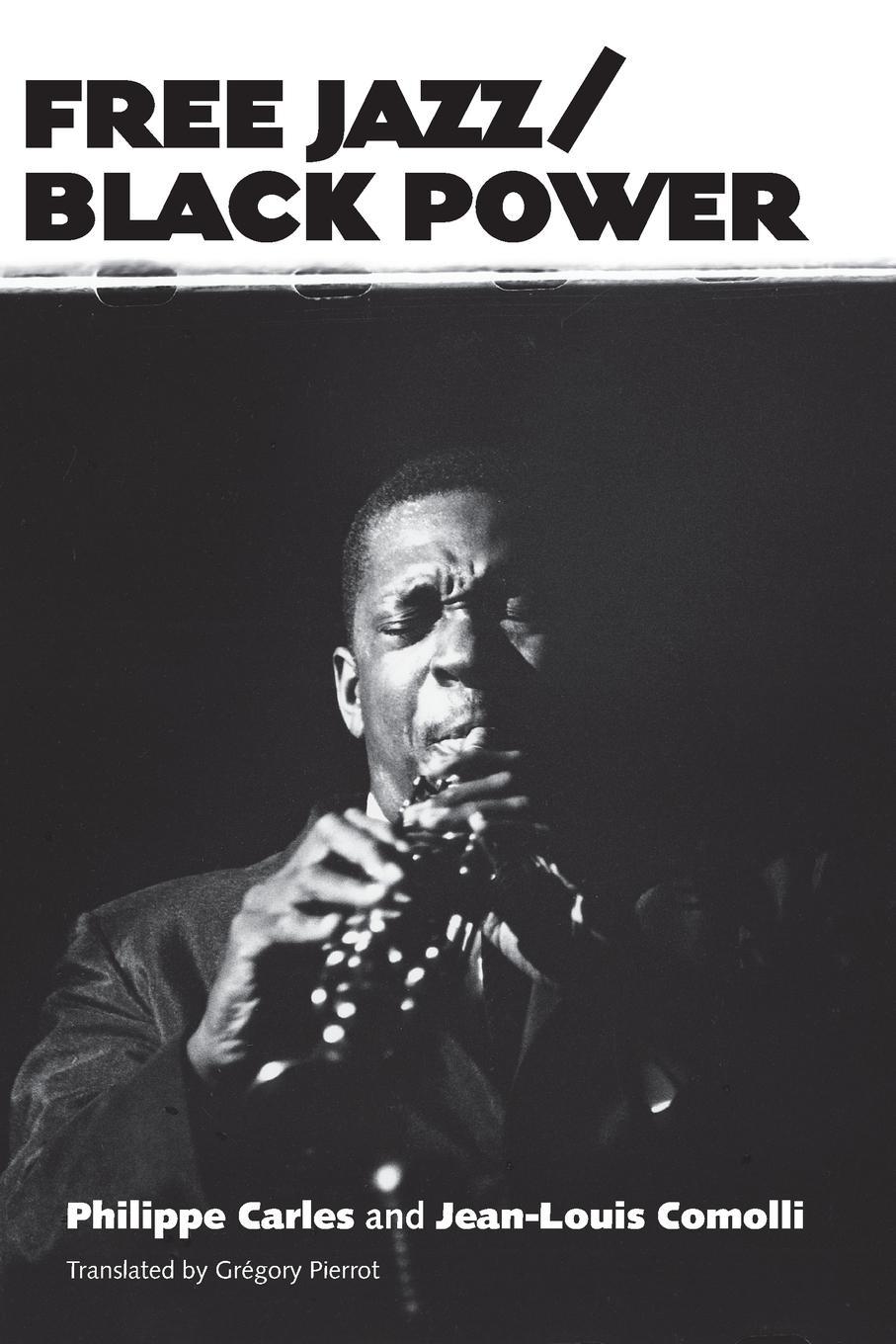
In 1971, French jazz critics Philippe Carles and Jean-Louis Comolli cowrote Free Jazz/Black Power, a treatise on the racial and political implications of jazz and jazz criticism. It remains a testimony to the long-ignored encounter of radical African American music and French left-wing criticism. Carles and Comolli set out to defend a genre vilified by jazz critics on both sides of the Atlantic by exposing the new sound’s ties to African American culture, history, and the political struggle that was raging in the early 1970s. The two offered a political and cultural history of Black presence in the United States to shed more light on the dubious role played by jazz criticism in racial oppression.
This analysis of jazz criticism and its production is astutely self-aware. It critiques the critics, building a work of cultural studies in a time and place where the practice was virtually unknown. The authors reached radical conclusions—free jazz was a revolutionary reaction against white domination, was the musical counterpart to the Black Power movement, and was a musical style that demanded a similar political commitment. The impact of this book is difficult to overstate, as it made readers reconsider their response to African American music. In some cases, it changed the way musicians thought about and played jazz. Free Jazz/Black Power remains indispensable to the study of the relation of American free jazz to European audiences, critics, and artists. This monumental critique caught the spirit of its time and realigned that zeitgeist.
This analysis of jazz criticism and its production is astutely self-aware. It critiques the critics, building a work of cultural studies in a time and place where the practice was virtually unknown. The authors reached radical conclusions—free jazz was a revolutionary reaction against white domination, was the musical counterpart to the Black Power movement, and was a musical style that demanded a similar political commitment. The impact of this book is difficult to overstate, as it made readers reconsider their response to African American music. In some cases, it changed the way musicians thought about and played jazz. Free Jazz/Black Power remains indispensable to the study of the relation of American free jazz to European audiences, critics, and artists. This monumental critique caught the spirit of its time and realigned that zeitgeist.
Betala smidigt med kort, Klarna, Apple Pay eller Google Pay. Är du inte nöjd har du alltid 14 dagars ångerrätt. Läs mer i våra villkor. Har du några frågor, mejla oss på hello@memmo.org.
Memmo gör det enklare att plugga – var du än är i världen. Hos oss samlar du kursböcker och smarta studieverktyg på ett och samma ställe: sammanfattningar, quiz, poddar och flashcards. Och så Ted, din studiekompis som svarar på allt du undrar. Över 50 000 studenter pluggar redan här – byggt för att du ska lära dig snabbare och stressa mindre.
Du kanske också gillar
Köp boken0