
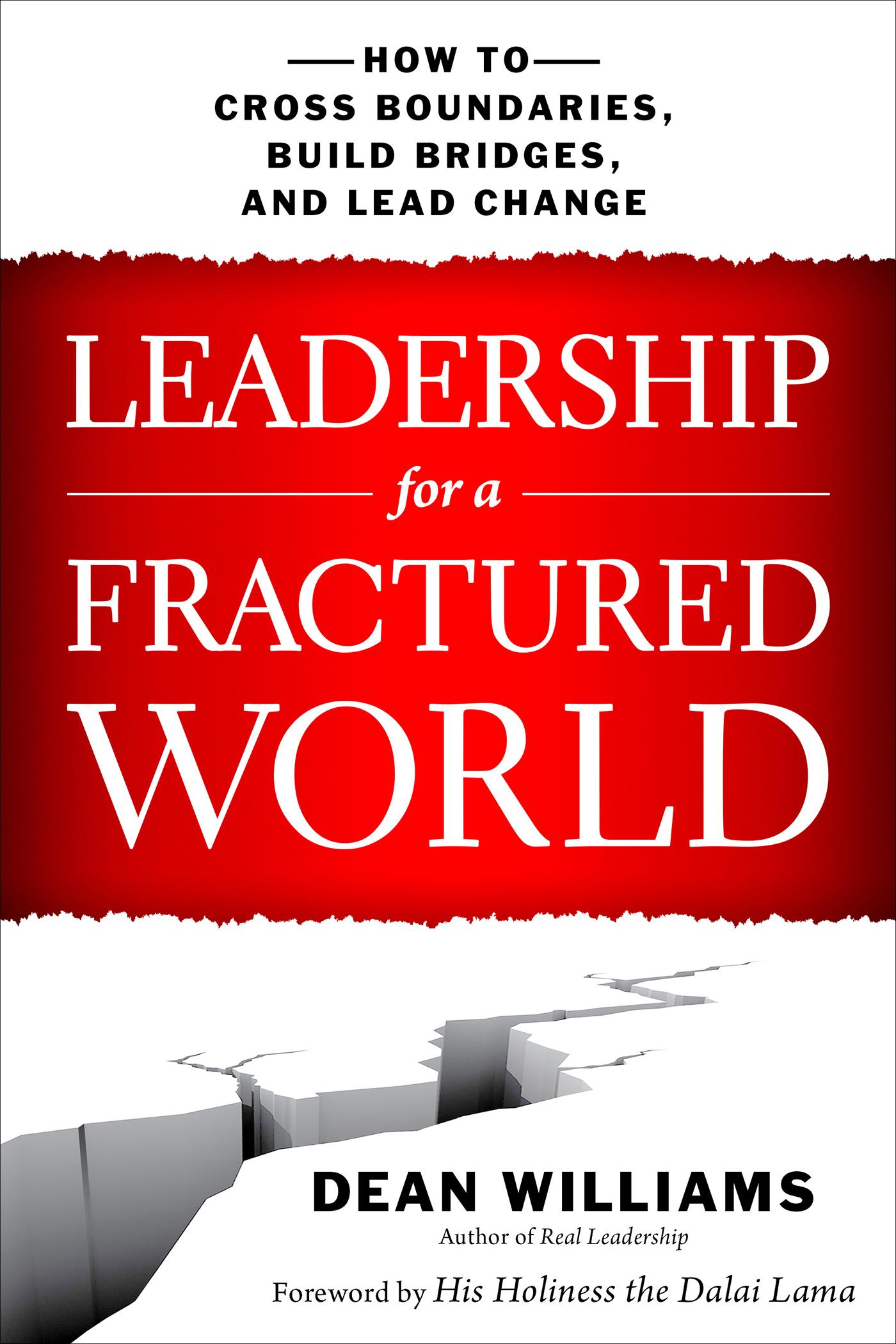
Leaders today—whether in corporations or associations, nonprofits or nations—face massive, messy, multidimensional problems. No one person or group can possibly solve them—they require the broadest possible cooperation.
But, says Harvard scholar Dean Williams, our leadership models are still essentially tribal: individuals with formal authority leading in the interest of their own group. In this deeply needed new book, he outlines an approach that enables leaders to transcend internal and external boundaries and help people to collaborate, even people over whom they technically have no power.
Drawing on what he’s learned from years of working in countries and organizations around the world, Williams shows leaders how to approach the delicate and creative work of boundary spanning, whether those boundaries are cultural, organizational, political, geographic, religious, or structural.
Sometimes leaders themselves have to be the ones who cross the boundaries between groups. Other times, a leader’s job is to build relational bridges between divided groups or even to completely break down the boundaries that block collaborative problem solving. By thinking about power and authority in a different way, leaders will become genuine change agents, able to heal wounds, resolve conflicts, and bring a fractured world together.
But, says Harvard scholar Dean Williams, our leadership models are still essentially tribal: individuals with formal authority leading in the interest of their own group. In this deeply needed new book, he outlines an approach that enables leaders to transcend internal and external boundaries and help people to collaborate, even people over whom they technically have no power.
Drawing on what he’s learned from years of working in countries and organizations around the world, Williams shows leaders how to approach the delicate and creative work of boundary spanning, whether those boundaries are cultural, organizational, political, geographic, religious, or structural.
Sometimes leaders themselves have to be the ones who cross the boundaries between groups. Other times, a leader’s job is to build relational bridges between divided groups or even to completely break down the boundaries that block collaborative problem solving. By thinking about power and authority in a different way, leaders will become genuine change agents, able to heal wounds, resolve conflicts, and bring a fractured world together.
Betala smidigt med kort, Klarna, Apple Pay eller Google Pay. Är du inte nöjd har du alltid 14 dagars ångerrätt. Läs mer i våra villkor. Har du några frågor, mejla oss på hello@memmo.org.
Memmo gör det enklare att plugga – var du än är i världen. Hos oss samlar du kursböcker och smarta studieverktyg på ett och samma ställe: sammanfattningar, quiz, poddar och flashcards. Och så Ted, din studiekompis som svarar på allt du undrar. Över 50 000 studenter pluggar redan här – byggt för att du ska lära dig snabbare och stressa mindre.
Du kanske också gillar
Köp boken0