
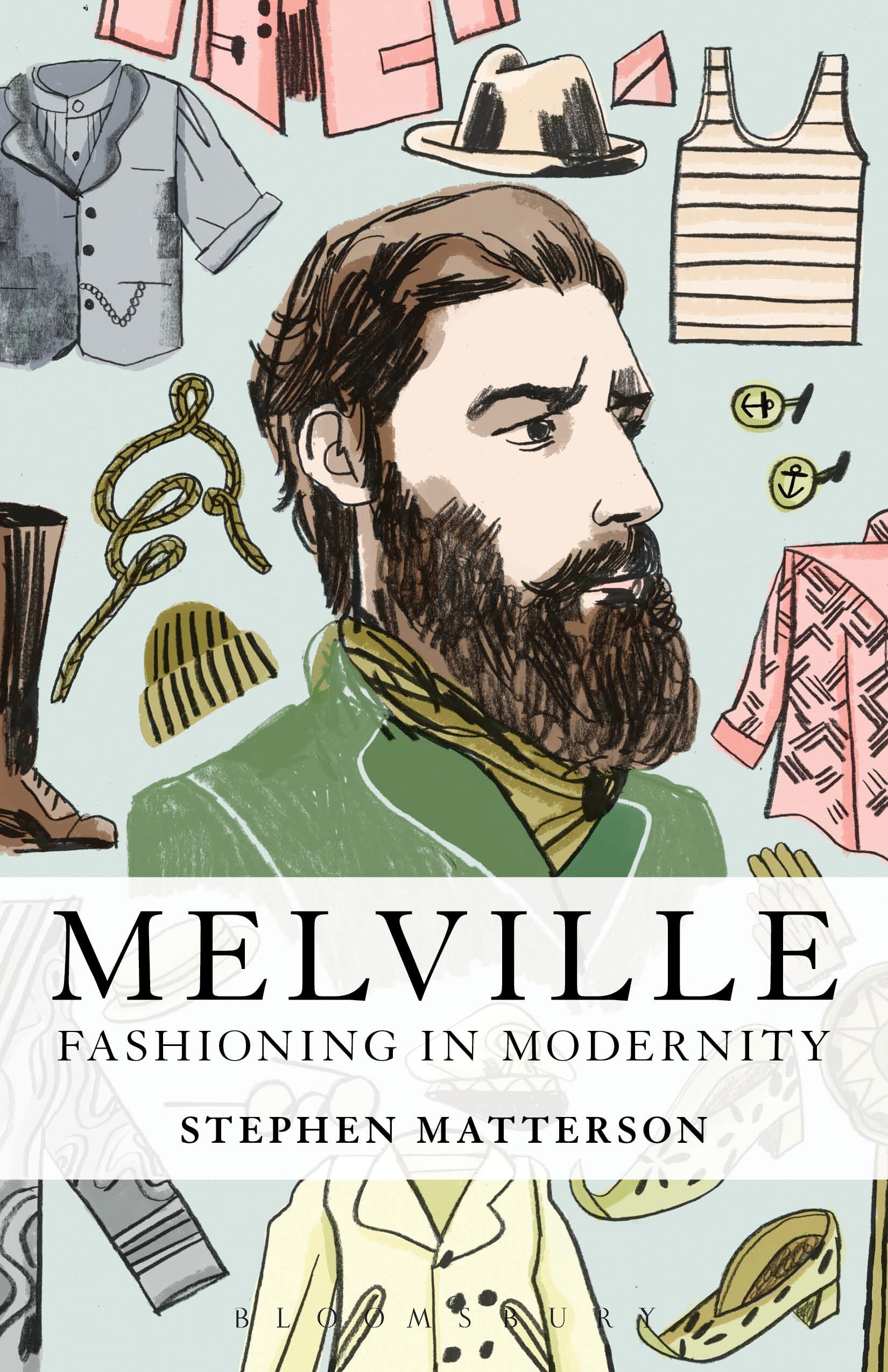
Melville: Fashioning in Modernity considers all of the major fiction with a concentration on lesser-known work, and provides a radically fresh approach to Melville, focusing on: clothing as socially symbolic; dress, power and class; the transgressive nature of dress; inappropriate clothing; the meaning of uniform; the multiplicity of identity that dress may represent; anxiety and modernity. The representation of clothing in the fiction is central to some of Melville's major themes; the relation between private and public identity, social inequality and how this is maintained; the relation between power, justice and authority; the relation between the "civilized" and the "savage."
Frequently clothing represents the malleability of identity (its possibilities as well as its limitations), represents writing itself, as well as becoming indicative of the crisis of modernity. Clothing also becomes a trope for Melville's representations of authorship and of his own scene of writing. Melville: Fashioning in Modernity also encompasses identity in transition, making use of the examination of modernity by theorists such as Anthony Giddens, as well as on theories of figures such as the dandy. In contextualizing Melville's interest in clothing, a variety of other works and writers is considered; works such as Robinson Crusoe and The Scarlet Letter, and novelists such as Fenimore Cooper, Nathaniel Hawthorne, Henry James, Jack London, and George Orwell. The book has at its core a consideration of the scene of writing and the publishing history of each text.
Frequently clothing represents the malleability of identity (its possibilities as well as its limitations), represents writing itself, as well as becoming indicative of the crisis of modernity. Clothing also becomes a trope for Melville's representations of authorship and of his own scene of writing. Melville: Fashioning in Modernity also encompasses identity in transition, making use of the examination of modernity by theorists such as Anthony Giddens, as well as on theories of figures such as the dandy. In contextualizing Melville's interest in clothing, a variety of other works and writers is considered; works such as Robinson Crusoe and The Scarlet Letter, and novelists such as Fenimore Cooper, Nathaniel Hawthorne, Henry James, Jack London, and George Orwell. The book has at its core a consideration of the scene of writing and the publishing history of each text.
Sidor: 224
Kategori: Litteraturvetenskap & Teori
e-ISBN: 9781623566067
Fraktvikt: 1.2 kg
Skickas inom: 1-2 dagar
Betala smidigt med kort, Klarna, Apple Pay eller Google Pay. Är du inte nöjd har du alltid 14 dagars ångerrätt. Läs mer i våra villkor. Har du några frågor, mejla oss på hello@memmo.org.
Memmo gör det enklare att plugga – var du än är i världen. Hos oss samlar du kursböcker och smarta studieverktyg på ett och samma ställe: sammanfattningar, quiz, poddar och flashcards. Och så Ted, din studiekompis som svarar på allt du undrar. Över 50 000 studenter pluggar redan här – byggt för att du ska lära dig snabbare och stressa mindre.