
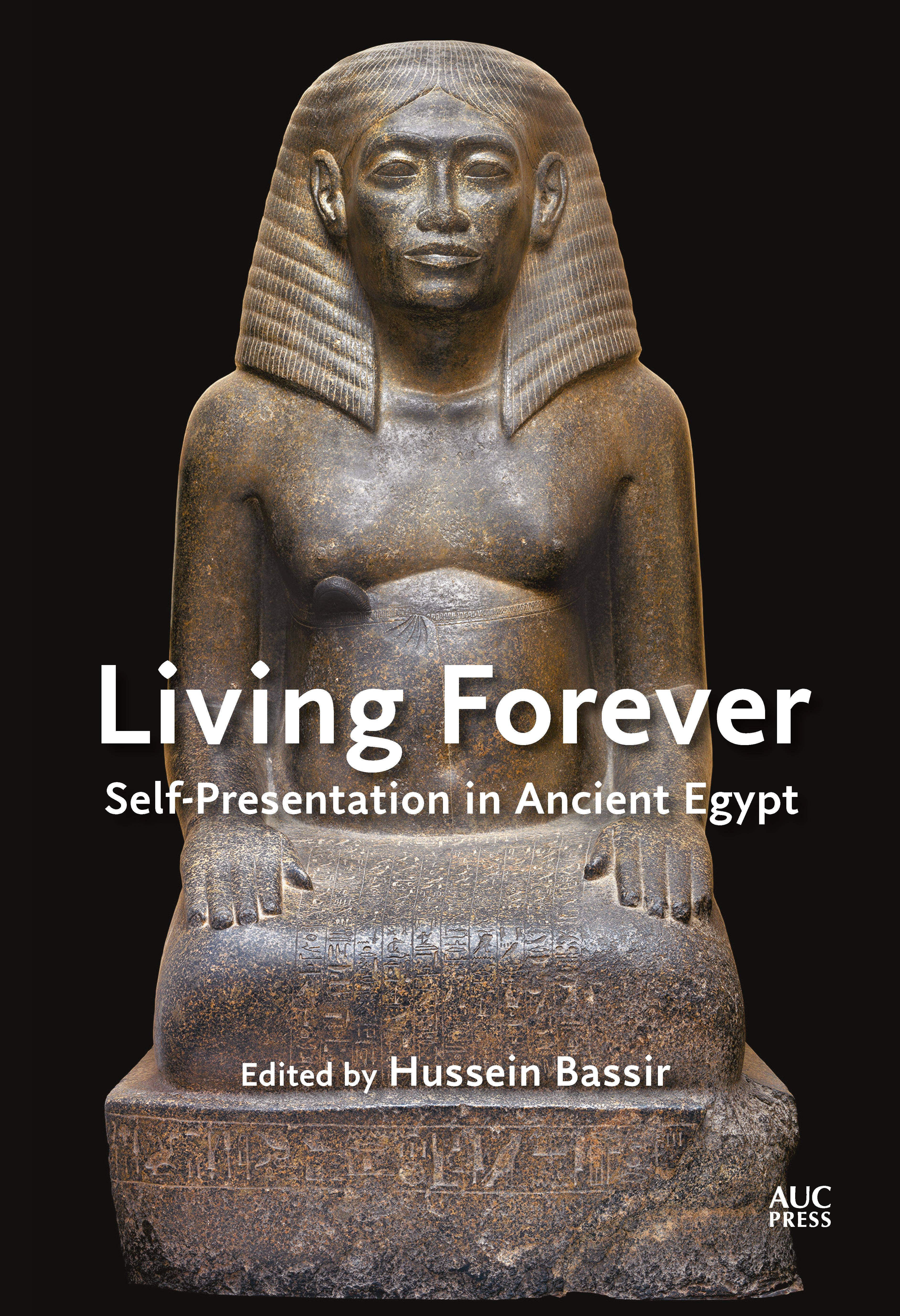
Self-presentation is the oldest and most common component of ancient Egyptian high culture. It arose in the context of private tomb records, where the character and role of an individual—invariably a well-to-do non-royal elite official or administrator—were presented purposefully: published by inscription and image, to a contemporary audience and to posterity.
Living Forever: Self-presentation in Ancient Egypt looks at how and why non-royal elites in ancient Egypt represented themselves, through language and art, on monuments, tombs, stelae, and statues, and in literary texts, from the Early Dynastic Period to the Thirtieth Dynasty. Bringing together essays by international Egyptologists and archaeologists from a range of backgrounds, the chapters in this volume offer fresh insight into the form, content, and purpose of ancient Egyptian presentations of the self. Applying different approaches and disciplines, they explore how these self-representations, which encapsulated a discourse with gods and men alike, yield rich historical and sociological information, provide examples of ancient rhetorical devices and repertoire, and shed light on notions of the self and collective memory in ancient Egypt.
Betala smidigt med kort, Klarna, Apple Pay eller Google Pay. Är du inte nöjd har du alltid 14 dagars ångerrätt. Läs mer i våra villkor. Har du några frågor, mejla oss på hello@memmo.org.
Memmo gör det enklare att plugga – var du än är i världen. Hos oss samlar du kursböcker och smarta studieverktyg på ett och samma ställe: sammanfattningar, quiz, poddar och flashcards. Och så Ted, din studiekompis som svarar på allt du undrar. Över 50 000 studenter pluggar redan här – byggt för att du ska lära dig snabbare och stressa mindre.