
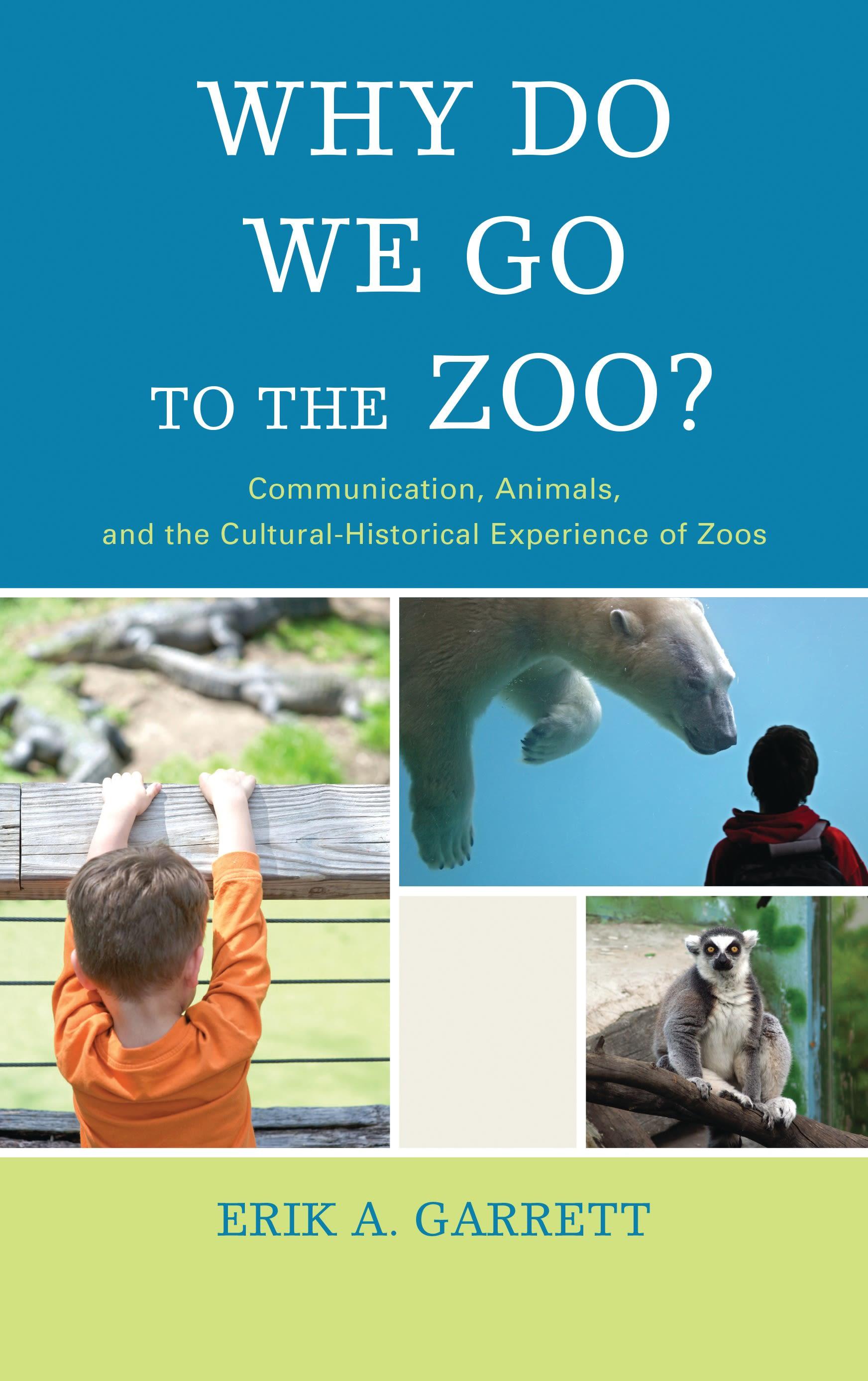
Despite hundreds of millions of visitors each year, zoos have remained outside of the realm of philosophical analysis. This lack of theoretical examination is interesting considering the paradoxical position within which a zoo is situated, being a space of animal confinement as well as a site that provides valuable tools for species conservation, public education, and entertainment. Why Do We Go to the Zoo? argues that the zoo is a legitimate space of academic inquiry. The modes of communication taking place at the zoo that keep drawing us back time and time again beg for a careful investigation. In this book, the meaning of the zoo as communicative space is explored.
This book relies on the phenomenological method from Edmund Husserl and a rhetorical approach to examine the interaction between people and animals in the zoo space. Phenomenology, the philosophy of examining the engaged everyday lived experience, is a natural method to use in the project. Despite its rich history and tradition it is interesting that there are very few books explaining “how to do” phenomenology. Why Do We Go to the Zoo? provides a detailed account of how to actually conduct a phenomenological analysis.
The author spent thousands of hours in zoos watching people and animals interact as well as talking with people both formally and informally. This book asks readers to bracket their preconceptions of what goes on in the zoo and, instead, to explore the meaning of powerful zoo experiences while reminding us of the troubled history of zoos.
This book relies on the phenomenological method from Edmund Husserl and a rhetorical approach to examine the interaction between people and animals in the zoo space. Phenomenology, the philosophy of examining the engaged everyday lived experience, is a natural method to use in the project. Despite its rich history and tradition it is interesting that there are very few books explaining “how to do” phenomenology. Why Do We Go to the Zoo? provides a detailed account of how to actually conduct a phenomenological analysis.
The author spent thousands of hours in zoos watching people and animals interact as well as talking with people both formally and informally. This book asks readers to bracket their preconceptions of what goes on in the zoo and, instead, to explore the meaning of powerful zoo experiences while reminding us of the troubled history of zoos.
Betala smidigt med kort, Klarna, Apple Pay eller Google Pay. Är du inte nöjd har du alltid 14 dagars ångerrätt. Läs mer i våra villkor. Har du några frågor, mejla oss på hello@memmo.org.
Memmo gör det enklare att plugga – var du än är i världen. Hos oss samlar du kursböcker och smarta studieverktyg på ett och samma ställe: sammanfattningar, quiz, poddar och flashcards. Och så Ted, din studiekompis som svarar på allt du undrar. Över 50 000 studenter pluggar redan här – byggt för att du ska lära dig snabbare och stressa mindre.