
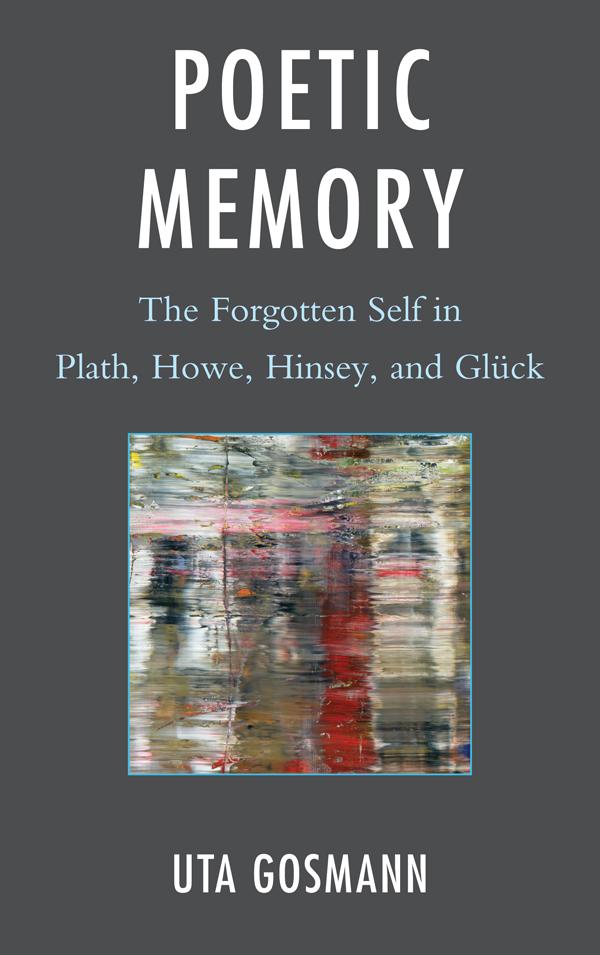
How do poems remember? What kinds of memory do poems register that factual, chronological accounts of the past are oblivious to? What is the self created by such practices of memory? To answer these questions, Uta Gosmann introduces a general theory of “poetic memory,” a manner of thinking that eschews simple-minded notions of linearity and accuracy in order to uncover the human subject’s intricate relationship to a past that it cannot fully know. Gosmann explores poetic memory in the work of Sylvia Plath, Susan Howe, Ellen Hinsey, and Louise Glück, four American poets writing in a wide range of styles and discussed here for the first time together. Drawing on psychoanalysis, memory studies, and thinkers from Nietzsche and Benjamin to Halbwachs and Kristeva, Gosmann uses these demanding poets to articulate an alternative, non-empirical model of the self in poetry.
Betala smidigt med kort, Klarna, Apple Pay eller Google Pay. Är du inte nöjd har du alltid 14 dagars ångerrätt. Läs mer i våra villkor. Har du några frågor, mejla oss på hello@memmo.org.
Memmo gör det enklare att plugga – var du än är i världen. Hos oss samlar du kursböcker och smarta studieverktyg på ett och samma ställe: sammanfattningar, quiz, poddar och flashcards. Och så Ted, din studiekompis som svarar på allt du undrar. Över 50 000 studenter pluggar redan här – byggt för att du ska lära dig snabbare och stressa mindre.